

A pedestrian accident in Provo or anywhere in Utah County can leave you facing surgeries, months of rehabilitation, and insurance adjusters who want to close your file for as little as possible. Robert J. DeBry & Associates has represented injured Utah pedestrians since 1981, handling every stage of a pedestrian accident claim from the first phone call through resolution at the Fourth District Court when necessary.
This page covers how pedestrian accident cases work in Utah County, what Utah law requires of drivers and pedestrians, where many pedestrian accidents happen in the Provo and Orem area, and how the firm serves Utah County clients from its Salt Lake County offices. It does not cover criminal traffic charges or claims outside Utah.
Pedestrian accident lawyers help victims pursue compensation for injuries, and Robert J. DeBry & Associates handles pedestrian injuries while working within Utah injury law to pursue the strongest possible claim. Most pedestrian accident lawyers work on a contingency fee basis, meaning there are no upfront costs, and personal injury lawyers often provide free initial consultations to evaluate your situation.
Key outcomes you can expect from working with Robert J. DeBry & Associates on a Utah County pedestrian accident case:
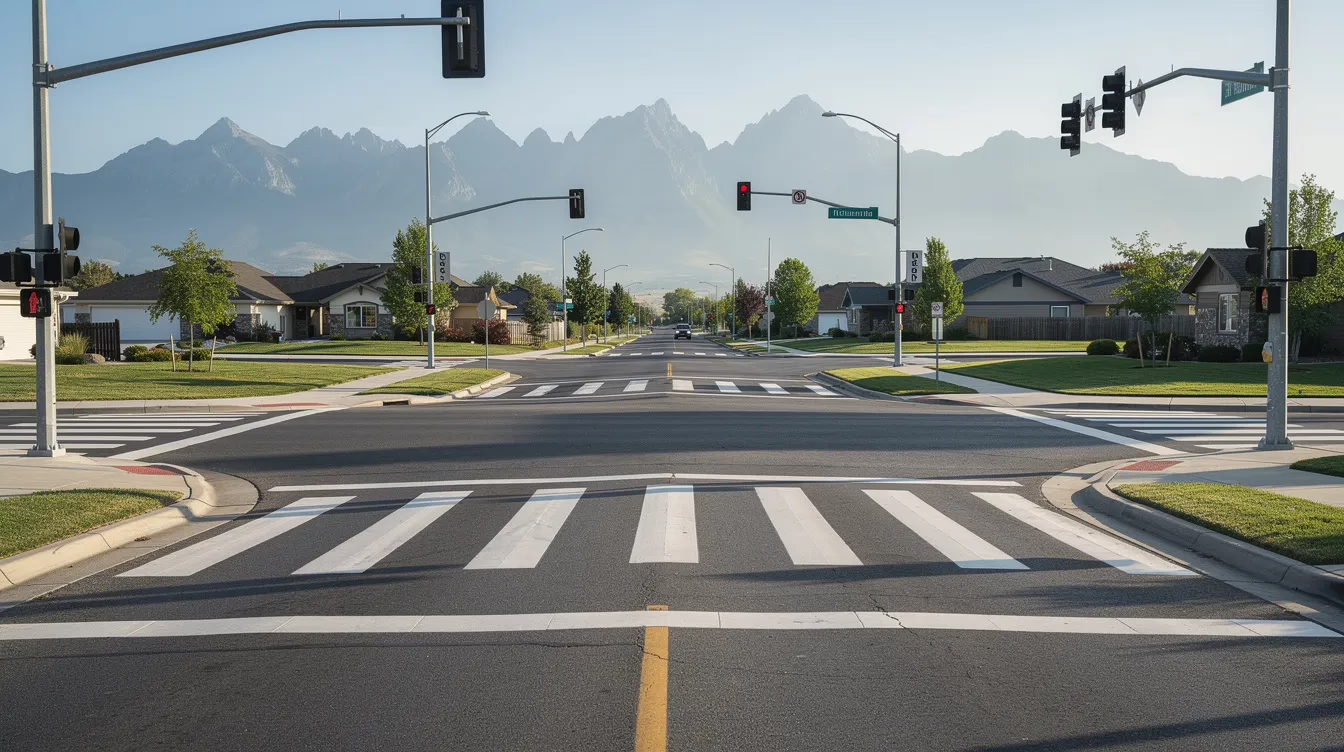

A pedestrian accident claim arises when a person on foot, whether crossing in a marked crosswalk, walking along a sidewalk, or on a road shoulder, is struck by a motor vehicle due to driver negligence or other wrongful conduct. These claims require proving that the driver owed a duty of care, breached that duty, caused the collision, and that measurable damages resulted.
For injured pedestrians in Provo, Orem, and surrounding communities, understanding two areas of Utah law is essential before pursuing a personal injury claim: comparative fault and crosswalk right of way.
Utah follows a modified comparative negligence rule with a 50 percent bar. Under Utah Code section 78B-5-818, a pedestrian may recover damages only if their share of fault does not equal or exceed 50 percent. Comparative negligence allows partial recovery if the driver was the at fault party whose share of fault caused the collision and the pedestrian remains under 50 percent at fault, but the damage award is reduced by the pedestrian’s percentage of responsibility.
This means insurance companies may attempt to shift blame onto you. If an adjuster argues you were jaywalking or distracted, that percentage could reduce or eliminate your recovery. A provo pedestrian accident attorney who understands how fault determination works in Utah County can gather evidence to counter these arguments and hold negligent drivers accountable.
Under Utah Code section 41-6a-1002, drivers must yield the right of way by slowing or stopping when a pedestrian is crossing in a marked crosswalk on the driver’s half of the roadway or is close enough to be in danger. In school crosswalks, drivers must come to a complete stop when the crosswalk is occupied. Vehicles behind another vehicle stopped at a crosswalk may not overtake or pass the stopped vehicle.
Pedestrians also carry responsibilities under Utah traffic laws. Under section 41-6a-1003, pedestrians must obey traffic signals, must not suddenly leave a curb when a vehicle is too close to stop, and in some locations must cross only in marked crosswalks.
These crosswalk laws directly affect fault determination. When a negligent driver fails to yield at a marked crosswalk, that violation strengthens the injured pedestrian’s claim. Understanding exactly where an accident happened and which rules applied is critical to building a strong pedestrian accident case.
The legal rules above take on practical weight when applied to the specific roads and intersections where Utah pedestrian accidents happen most frequently. Several corridors and zones in Utah County present elevated risks for pedestrians.
University Avenue running through Provo and State Street extending through Orem carry heavy volumes of motor vehicles through commercial districts with frequent pedestrian crossings. These multi-lane roads combine high vehicle speeds with pedestrian activity at retail centers, restaurants, and transit stops. Poor visibility at dusk and after dark, combined with inadequate lighting in some stretches, increases the likelihood of pedestrian accidents. Distracted driving causes many pedestrian accidents on these busy corridors, and speeding increases the risk substantially.
Brigham Young University in Provo and Utah Valley University in Orem generate significant daily foot traffic. Students cross multiple lanes at intersections near campus, sometimes at hours when driver awareness is lower. The density of pedestrian activity near these universities creates conditions where even a momentary lapse in attention by a driver, whether from a phone, fatigue, or drivers under the influence, can result in serious injuries or catastrophic injuries including traumatic brain injuries, spinal injuries, and broken bones.
Utah law provides enhanced pedestrian protections in school zones throughout Utah County, requiring complete stops at occupied school crosswalks. Despite reduced speed limits, many pedestrian accidents in these areas involve drivers who fail to yield to children. Residential neighborhoods in Provo, Orem, Spanish Fork, Lehi, and Springville also see pedestrian accidents where poor road design contributes to dangerous conditions, particularly where sidewalks end abruptly or crosswalk markings have faded.

Beyond comparative fault and crosswalk rules, several other areas of Utah law directly affect the claims process and how much an injured pedestrian can recover.
Utah law allows four years to file a pedestrian accident lawsuit under Utah Code section 78B-2-307. This time limit applies to most personal injury cases, including pedestrian accident injuries. For wrongful death claims, the deadline is two years under Utah Code section 78B-2-304.
If a government entity may bear responsibility, such as a city or county that failed to maintain a sidewalk, crosswalk, or adequate lighting, a written notice of claim may be required within one year under the Governmental Immunity Act. Missing any of these deadlines can permanently bar your ability to seek justice.
You have four years to file a lawsuit in Utah, but waiting reduces the quality of available evidence and weakens your position. Contact a personal injury lawyer to start your recovery process as early as possible.
Utah is a no-fault insurance state for pedestrian accidents, requiring drivers to carry Personal Injury Protection coverage. However, PIP insurance limits compensation to 3,000 dollars for medical expenses, which is quickly exhausted when pedestrian accident injuries include emergency surgery, hospitalization, or ongoing rehabilitation. A personal injury claim may be necessary to pursue full compensation beyond limited PIP benefits.
When injuries exceed PIP limits, the at fault party’s liability coverage and any applicable uninsured or underinsured motorist coverage under Utah Code section 31A-22-305 become important. An injured pedestrian struck by an uninsured driver may be able to recover compensation under their own household UM/UIM policy.
Pedestrian accident victims can claim both economic and non-economic damages. Economic damages include medical expenses and lost wages. Non-economic damages compensate for physical pain, emotional pain, emotional distress, and loss of quality of life. Non-economic damages can exceed economic damages in value. In cases involving willful misconduct, punitive damages may be awarded for willful driver negligence.
Catastrophic injuries from pedestrian accidents often lead to complex insurance battles, and severe injuries typically increase case value significantly. Hiring a lawyer can increase settlement amounts by 3.5 times compared to handling the claims process alone.
Preserving evidence such as medical records is crucial after an auto accident involving a pedestrian. The strength of a pedestrian accident case depends heavily on evidence gathered in the days and weeks after the collision. Critical evidence includes:
Seek medical attention immediately after a pedestrian accident. Document all injuries and medical treatments after the accident, even if symptoms seem minor initially. Lawyers collect police reports and other evidence for pedestrian accident cases, and early involvement of a legal team helps someone injured in a pedestrian collision preserve proof before it is lost.
When insurance companies refuse to offer a fair settlement, filing a lawsuit becomes necessary. The Fourth Judicial District Court has jurisdiction over civil personal injury cases in Utah County, including all pedestrian accident claims arising in Provo, Orem, and surrounding communities.
A civil case typically proceeds through several stages: filing the complaint, serving the defendant, discovery where both sides exchange evidence and take depositions, potentially mediation, and trial if no resolution is reached. Local attorneys understand Utah Valley juries and traffic patterns, which can be important during jury selection and trial presentation.
Venue rules generally allow personal injury actions to be filed in the county where the injury occurred or where the defendant resides. For pedestrian accidents in Utah County, the Fourth District Court is the standard venue.
Navigating court deadlines, discovery obligations, and procedural requirements is one of the primary reasons accident victims work with an experienced personal injury lawyer rather than attempting to handle litigation on their own.
Even with strong facts, pedestrian cases face recurring obstacles that can reduce or delay recovery.
Insurance adjusters may delay recognizing liability, request unnecessary independent medical exams, dispute the medical necessity of treatment, or stall payments while conducting prolonged investigations. Insurance companies may attempt to shift blame onto you by pointing to pedestrian behavior such as phone use or crossing outside a crosswalk. Attorneys handle all communications with insurance adjusters in accident claims, preventing injured pedestrians from making statements that could be used against them.
Conflicting accounts about where the pedestrian was crossing, whether signals were obeyed, lighting conditions, and driver distractions are common. Because Utah’s comparative fault system can reduce or eliminate recovery, these disputes carry significant weight. Investigation through accident reconstruction, witness interviews, and video evidence helps resolve conflicting narratives and establish the negligent driver’s responsibility.
Gaps in medical records are one of the most common ways insurance companies undermine pedestrian accident claims. If you delay treatment or miss appointments, adjusters will argue your injuries are less severe than claimed. Comprehensive documentation of both short-term and long-term impairments, including specialist evaluations and physical therapy records, supports the full scope of your injury claim. Life altering injuries such as traumatic brain injuries, spinal injuries, and severe broken bones require thorough expert documentation to establish future medical expenses and lost earning capacity.
Robert J. DeBry & Associates has handled personal injury cases across Utah since 1981 as an experienced utah pedestrian accident attorney team serving Utah County clients. The firm represents pedestrian accident victims throughout Utah County on a contingency fee basis, and contingency fees typically range from 25 percent to 45 percent of recovery. If there is no recovery, the client owes no attorney fee.
The firm provides a free consultation to evaluate your pedestrian accident case, determine applicable deadlines, and identify all potential sources of insurance coverage. For Utah County clients who cannot travel due to their injuries, the firm’s attorneys travel to meet clients at home, in the hospital, or at another convenient location.
Rather than navigating insurance disputes alone, pedestrian accident victims who work with experienced utah pedestrian accident lawyers benefit from a legal team that understands the claims process, evidence preservation requirements, and Fourth District Court procedures specific to Utah County.
Robert J. DeBry & Associates serves Utah County from its offices in Salt Lake City and Sandy. There is no physical office in Provo or Orem, but the firm represents clients throughout Utah County, including Provo, Orem, Spanish Fork, Lehi, Springville, and all surrounding communities.
For injured pedestrians who cannot travel, the firm arranges consultations at the client’s location. The process begins with a phone call or online form to schedule a free case evaluation. During that initial consultation, the legal team gathers basic accident information, reviews your injuries and medical treatment, and explains your legal options and the applicable time limit for filing.
Call 801-888-8888 or request a free case evaluation online.
Yes. Experienced utah pedestrian accident attorneys represent injury victims in Provo and throughout Utah County. Robert J. DeBry & Associates handles pedestrian accident cases for Utah County residents and travels to clients who are unable to visit an office due to their pedestrian accident injuries.
No. The firm does not have a physical office in Provo or Orem. Robert J. DeBry & Associates serves Utah County clients from its Salt Lake City and Sandy offices and arranges in-person consultations in Utah County when needed, including visiting clients at home or in the hospital.
Most pedestrian accident lawyers work on a contingency fee basis, meaning there are no upfront costs. The attorney’s fee is a percentage of any settlement or court award. If there is no recovery, the client pays no attorney fee. Contingency fees typically range from 25 percent to 45 percent of recovery. Other case-related costs such as filing fees or expert witness fees may also apply.
Insurance claims are filed directly with the applicable insurance carriers. If a lawsuit becomes necessary, it is filed in the Fourth Judicial District Court, which has jurisdiction over civil cases in Utah County, including pedestrian accident claims. Your legal team handles all filing procedures and court deadlines.
Utah law provides a four-year deadline for most personal injury cases, including pedestrian accident injuries, under Utah Code section 78B-2-307. Wrongful death claims must be filed within two years. Claims involving government entities may require notice within one year. Consulting a personal injury lawyer promptly after the accident helps ensure all deadlines are met and critical evidence is preserved.
This is general information, not legal advice.