

If you were struck by a vehicle while crossing in a crosswalk, the legal questions surrounding your case are different from those in a typical pedestrian accident. Crosswalk accident cases turn on specific statutory duties that drivers owe to people in crosswalks, precise definitions of where a crosswalk begins and ends, and evidence that general pedestrian claims rarely require. Pedestrian accident cases often involve unique issues like visibility and right-of-way laws, and crosswalk cases sharpen those issues considerably.
What sets crosswalk accident claims apart is the framework of Utah Code Title 41, Chapter 6a, Part 10, which defines crosswalks, assigns yield duties to drivers, imposes a duty of due care, and creates specific prohibitions such as the ban on passing a vehicle stopped at a crosswalk. Insurance companies routinely argue that the person walking was not actually in the crosswalk, stepped out too suddenly, or was distracted. Those defenses require crosswalk-specific legal analysis that a general personal injury claim does not.
Crosswalk accident attorneys represent pedestrians injured by vehicles, and these pedestrian accident lawyers handle issues such as determining the exact crossing location, whether the crosswalk was marked or unmarked, whether traffic signals were present, whether the driver obeyed yield obligations, and how fault is divided under Utah’s comparative fault system. Because each state has its own laws on fault and deadlines for filing claims, working with attorneys who handle Utah crosswalk accident cases specifically matters.
Robert J. DeBry & Associates is a personal injury law firm that has represented personal injury cases, including pedestrian and crosswalk accidents, since 1981. The firm represents clients from its Salt Lake City and Sandy offices and handles cases statewide across Utah.
After reading this page, you will understand:
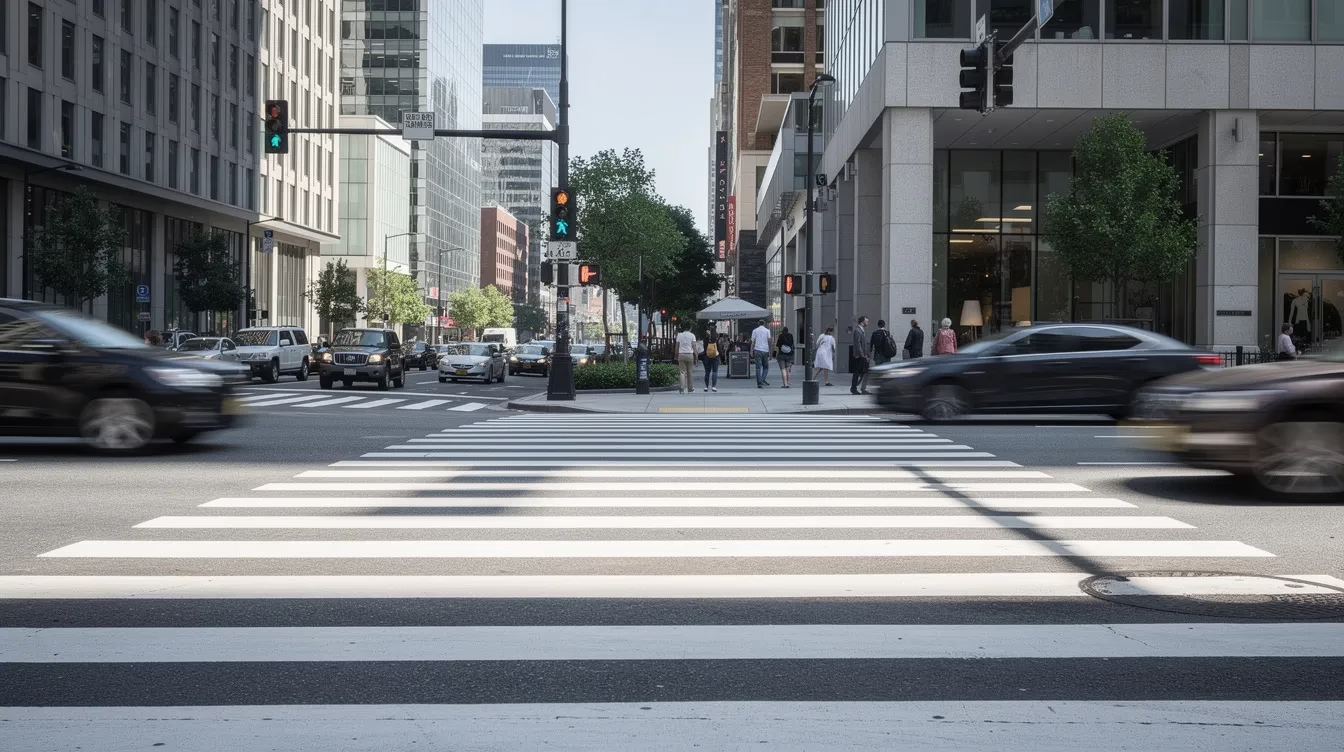

The outcome of a crosswalk accident case frequently depends on whether the injured party was legally in a crosswalk at the moment the accident happened. This is not always as straightforward as it sounds. Utah law defines crosswalks more broadly than most people realize, and that definition directly affects whether the at fault driver had a legal obligation to yield.
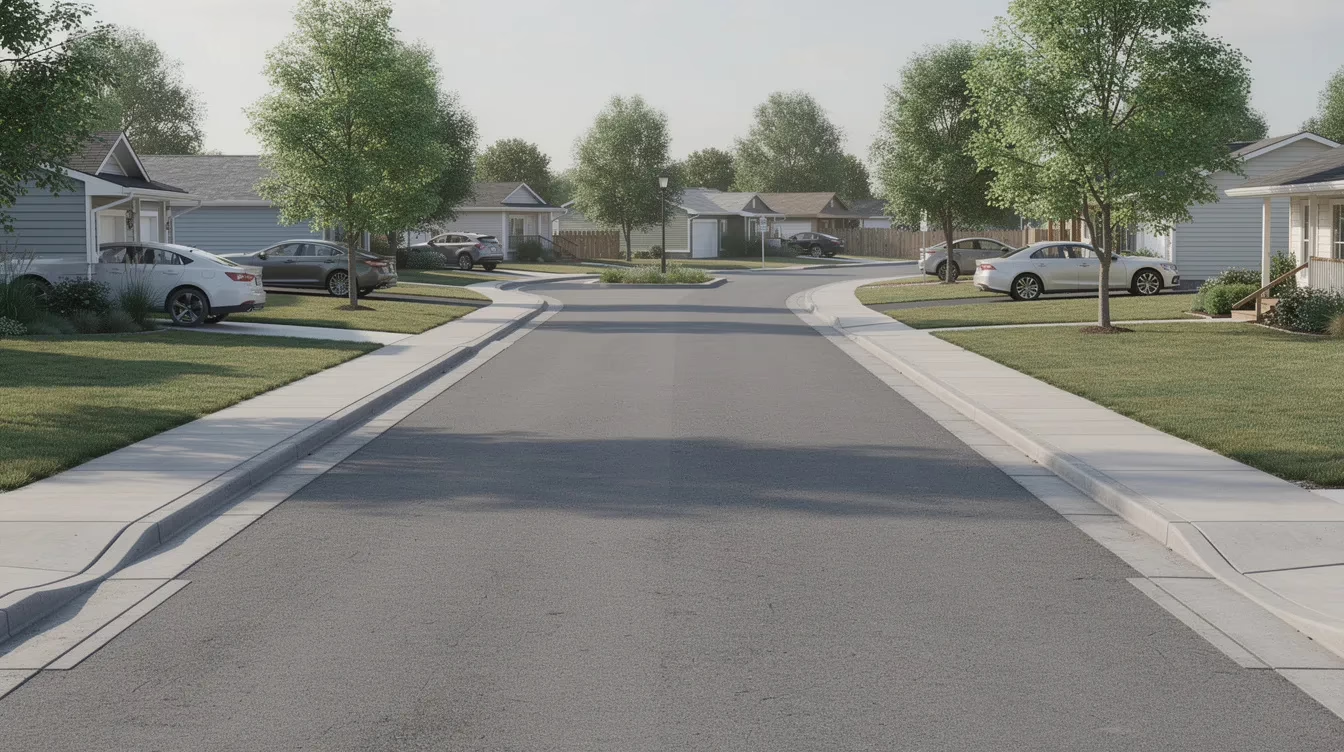
Under Utah Code section 41-6a-101, the term “crosswalk” includes both marked crosswalks and unmarked crosswalks at intersections. The statute defines an unmarked crosswalk as the portion of a roadway at an intersection included within the connections of the lateral lines of the sidewalks on opposite sides of the road, or the extension of those lines when one side does not have a sidewalk.
This means that at virtually any intersection where sidewalks exist or would logically connect, there is a legally recognized crosswalk even if no paint, lines, or markings are present. A person walking across at that location has crosswalk protections under the law. This is the single most important thing an accident victim may not know about a case: the absence of painted lines does not mean the absence of a crosswalk.
Both marked and unmarked crosswalks at intersections carry statutory protections under Utah law. Under Utah Code section 41-6a-1002, a driver must yield the right of way to a pedestrian crossing within a crosswalk, whether that crosswalk is marked or unmarked, when the pedestrian is on the driver’s half of the roadway or approaching so closely from the opposite half as to be in danger.
A marked crosswalk provides stronger visual evidence of where the crossing occurred, which can simplify proof at the accident scene. But the legal right of way does not depend on paint. Municipal traffic codes may affect signage or marking practices, but the statutory definition of a crosswalk is inclusive. An attorney can advise on state-specific rules that may affect a case, including whether local ordinances create additional protections or restrictions.
Understanding these definitions is the foundation for the right-of-way rules that determine who bears fault in a pedestrian crash.
With the crosswalk definition established, the next question is who had the right of way when the collision occurred. Utah statutes assign specific duties to both drivers and pedestrians, and these duties determine liability in a pedestrian accident case.
Utah Code section 41-6a-1002 requires that the operator of a motor vehicle yield the right of way, by slowing or stopping if necessary, when a pedestrian is crossing within a crosswalk on the half of the roadway where the vehicle is traveling or when the pedestrian is approaching so closely from the opposite half that the pedestrian is in danger. Drivers must yield to pedestrians in crosswalks under this provision.
In school crosswalks, the duty is stricter. Under the same statute, a vehicle must come to a complete stop when a school crosswalk is occupied. This applies in school zones with crossing guards and signage.
The statute also prohibits a driver from overtaking and passing another vehicle that has stopped at a marked or unmarked crosswalk to allow a pedestrian to cross. This specific prohibition addresses a dangerous pedestrian hit incident where a second vehicle struck a pedestrian because the driver failed to recognize why traffic ahead had stopped.
Under Utah Code section 41-6a-1002, pedestrians may not suddenly leave a curb or other place of safety and walk or run into the path of a vehicle that is so close as to constitute an immediate hazard. This provision does not eliminate the driver’s duty of due care. It establishes that pedestrians also have responsibilities when crossing.
Additionally, Utah Code section 41-6a-1010 allows highway authorities to designate locations where crossing is prohibited or where pedestrians must yield to vehicles. Those restrictions apply only when traffic-control devices are installed to give notice.
Importantly, even if a pedestrian shares some fault, Utah’s comparative negligence framework allows recovery even if a pedestrian shares partial fault. Under Utah Code section 78B-5-818, an injured pedestrian can still seek compensation as long as the pedestrian’s fault does not reach 50 percent or more. A pedestrian’s partial responsibility reduces the recovery but does not automatically eliminate it.
Utah Code section 41-6a-1006 imposes on every driver the duty to exercise care to avoid colliding with a pedestrian, to give audible signals when necessary, and to take appropriate precautions when encountering vulnerable pedestrians, including children and incapacitated individuals. This duty applies regardless of whether the pedestrian made an error.
This legal principle means that even when a pedestrian does something unexpected, the driver still had an obligation to watch for and attempt to avoid hitting that person. A driver who violates this duty of due care can be held liable even when the pedestrian was partly at fault. This is a critical distinction in crosswalk accident cases where negligent drivers argue the pedestrian should bear all responsibility.
The right-of-way rules above play out in predictable patterns. Most pedestrian accidents occur in circumstances where the driver either did not see the pedestrian or chose not to yield. Here are the crosswalk accident scenarios our legal team handles regularly.
Nationally, 72 percent of pedestrian fatalities occur at non-intersections, which underscores the danger of mid-block and non-signalized crossings. Pedestrian accidents often result in broken bones and traumatic brain injuries, along with common injuries like neck injuries and spinal injuries from impacts. Soft tissue injuries like cuts and lacerations are frequent in pedestrian accidents as well. Emotional trauma can occur alongside physical injuries in pedestrian accidents, compounding the harm that injured pedestrians suffer.
Evidence determines the outcome of a crosswalk accident case more than almost any other factor. A pedestrian accident attorney gathers and preserves critical evidence, and timing matters because surveillance footage can be overwritten, signal data can be lost, and witnesses can become unreachable.
The following types of evidence are most important in crosswalk accident cases:
You must report the accident to the police for documentation. Gather evidence like photos of the accident scene as quickly as possible. Contact a lawyer quickly to avoid missing filing deadlines.
A crosswalk accident attorney investigates crashes and establishes legal responsibility by proving that the driver breached a duty (such as failing to yield under section 41-6a-1002 or violating the duty of due care under section 41-6a-1006), that the breach caused the injuries, and that the injured party suffered real damages including medical bills, lost wages, and pain and suffering when pursuing financial compensation.
Authorities may require accident reconstruction experts and medical specialists for serious cases. Reconstruction experts analyze the geometry of the crossing, vehicle speed, braking distance, sight lines, and signal timing to determine what the driver could and should have done. Key responsibilities of a pedestrian accident attorney include investigating accidents thoroughly and working with these experts to support obtaining compensation for the injured party.
Under Utah Code section 78B-2-307, most personal injury claims must be filed within four years of the injury. Although many pedestrian accident cases settle through insurance, the ability to file a pedestrian accident lawsuit before that deadline is essential to protect the claim. For claims involving government entities, additional notice requirements and potentially shorter deadlines may apply.
Insurance adjusters often attempt to minimize payouts by shifting blame to pedestrians. In crosswalk accident cases, insurers deploy specific defenses designed to reduce or eliminate the insurance claim. Legal representation protects victims from insurance company tactics, and understanding those tactics in advance helps injured pedestrians prepare.
Experienced attorneys can navigate complex liability questions in accidents by demonstrating that even if the pedestrian made an error, the driver still owed a duty of due care under Utah Code section 41-6a-1006. Pedestrian accident attorneys help calculate all recoverable losses for clients, including medical expenses, lost wages, and the long-term costs of serious injuries such as traumatic brain injuries and head injuries, and they pursue maximum compensation for those losses.
Using Utah’s comparative fault framework strategically is essential. Under Utah Code section 78B-5-818, fault is allocated proportionately. If the pedestrian’s share of fault remains below 50 percent, financial recovery is still possible. Attorneys build comprehensive liability cases using surveillance footage, expert reconstruction, medical records, and statutory analysis to demonstrate the driver’s negligence.
Legal representation can increase compensation beyond initial insurance offers by pursuing full and fair compensation through a fully documented case that the insurer cannot easily dismiss. Crosswalk accident attorneys negotiate with insurance companies based on the full scope of the pedestrian’s losses.
Crosswalk accident cases involve layered legal questions: statutory definitions, right-of-way analysis, comparative fault allocation, evidence preservation, and insurer tactics designed to minimize what accident victims receive. An experienced accident lawyer who handles these cases regularly understands how each element affects the others and how to build the strongest possible pedestrian injury claim.
If you have been hit by a car in a crosswalk or near a crosswalk, seek medical attention immediately and then consult an attorney to protect your rights after an accident. Compensation can cover medical bills and lost wages, along with other losses resulting from the injury.
Robert J. DeBry & Associates represents crosswalk accident victims on a contingency fee basis, meaning there is no fee unless the firm recovers for you. The firm offers a free no-obligation consultation to evaluate your case, and attorneys are available to visit clients who cannot travel due to their injuries. Attorneys work on a contingency fee basis for pedestrian cases so that financial barriers do not prevent injured pedestrians from obtaining legal assistance.
For a free initial consultation with no obligation, contact Robert J. DeBry & Associates. The firm provides legal services for pedestrian accident victims statewide across Utah.
Fault depends on whether the driver obeyed yield duties under Utah Code section 41-6a-1002, whether the driver exercised due care under section 41-6a-1006, and whether the pedestrian was following traffic laws at the time. Fault is allocated under Utah’s comparative fault statute, section 78B-5-818. In many crosswalk cases, the driver bears primary fault because the law required the driver to yield, but every case depends on the specific facts.
No. Under Utah Code section 41-6a-101, a crosswalk includes both marked crosswalks and unmarked crosswalks at intersections. An unmarked crosswalk exists at any intersection where sidewalks on opposite sides of the road would logically connect. The absence of painted lines does not eliminate crosswalk protections.
Signal timing is a critical issue in these cases. Whether you had a walk signal, whether the signal changed to “don’t walk” while you were already crossing, and how much time the signal allowed for crossing all affect the analysis. Even if the signal had changed, the driver still owed a duty of due care to avoid hitting you.
Possibly. Outside a crosswalk, statutory protections for pedestrians are weaker, and pedestrians crossing at points other than crosswalks often must yield to vehicles. However, comparative fault analysis may still allow partial recovery if the driver also breached duties. The specific facts and location determine the outcome.
The value of a pedestrian accident claim depends on the severity of pedestrian accident injuries, medical expenses, lost wages, pain and suffering, the allocation of fault, and available insurance coverage, including uninsured motorist coverage if applicable. Pedestrian accident attorneys help calculate all recoverable losses by reviewing medical records, employment documentation, and the long-term impact of serious injuries. No responsible law firm can estimate a value without evaluating the specific facts of the case.
You can file a claim on your own. However, crosswalk accident cases involve statutory definitions, fault allocation, evidence preservation requirements, and insurance company defenses that can significantly affect the outcome. Legal representation helps navigate these issues and protects accident victims from tactics designed to reduce fair compensation.
This is general information, not legal advice.