

Utah's mandatory no-fault Personal Injury Protection benefits are written for passenger vehicles, and motorcycle policies are not required to include PIP. For most Utah riders that means there is no automatic first-party benefit waiting to pay the first round of medical bills, and the payment path after a crash runs through other coverage instead.
If you are looking at emergency room bills after a motorcycle crash, this is the difference that hits you first. The coverage that helps pay a car driver’s medical costs regardless of fault is not there for a rider by default. It is one of the most consequential and most misunderstood gaps between a Utah car accident claim and a Utah motorcycle accident claim, and it changes how your medical bills, lost wages, and rehabilitation costs actually get paid.
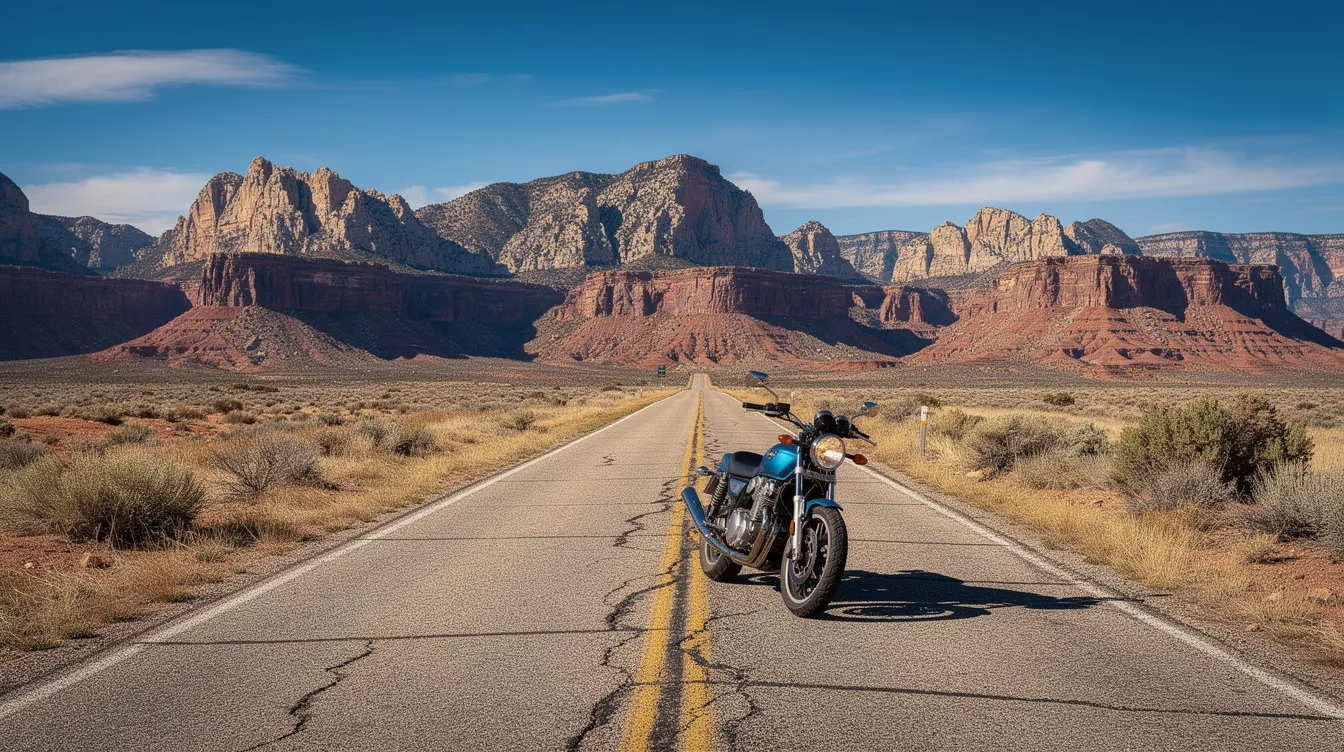
Utah is a no-fault state for car accidents. For drivers of passenger vehicles, Personal Injury Protection pays a set amount of medical bills regardless of who caused the crash, along with portions of lost wages and funeral expenses, without anyone having to prove fault first. Utah’s required PIP medical benefit is $3,000.
That structure gives car drivers an immediate source of payment for early medical costs. For motorcycle riders, the situation is different.
Utah Code 31A-22-302 addresses which policies must carry PIP, and motorcycle policies are not required to include it. Riders can buy PIP as an optional endorsement on a motorcycle policy, but it is not automatic, and many riders decline it to hold premiums down. Declining it can leave a rider depending on health insurance or other sources to cover immediate medical costs after a crash, which is a real financial risk when injuries are serious.
Check your own policy. If you did not specifically add PIP or medical payments coverage, you very likely do not have it.
For car accident claims in Utah, an injured person generally has to meet a statutory threshold before pursuing non-economic damages for pain and suffering. Those thresholds include medical expenses above $3,000, permanent disfigurement, a bone fracture, or permanent disability. How that threshold applies to a motorcycle rider who was never inside the mandatory PIP system is a question that turns on the specific policies involved and the facts of the crash, and it is worth reviewing with an attorney before you assume it limits your claim.

Utah updated its minimum liability coverage requirements effective January 1, 2025. These minimums apply to motor vehicle policies in the state, including motorcycle policies:
Carrying at least those limits is required to register and operate a motorcycle on Utah public roads. They are also frequently far short of what a serious motorcycle crash actually costs once emergency surgery, hospitalization, and long-term rehabilitation are counted.
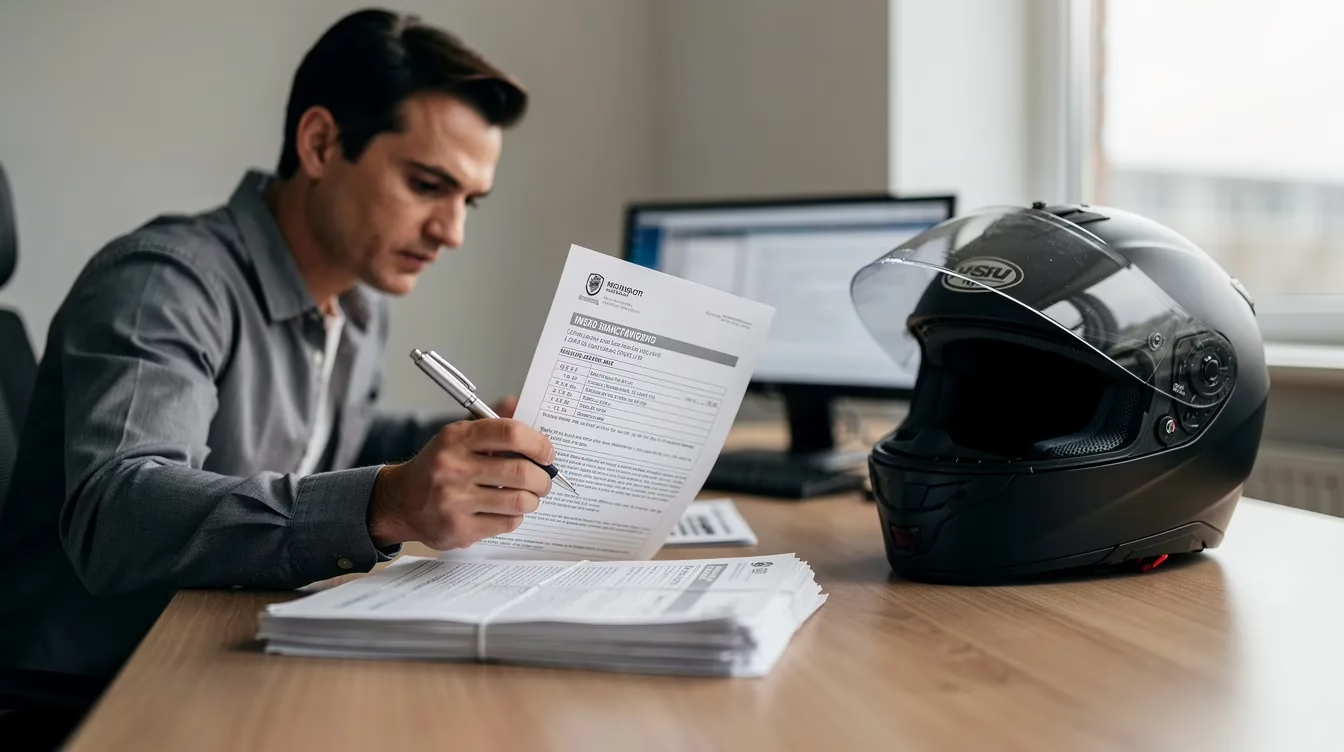
Beyond basic liability limits, a Utah motorcycle policy generally involves:
PIP is the outlier. It is not required on a motorcycle policy and can be declined. Optional coverages that riders can add include PIP, medical payments coverage, collision, comprehensive, custom parts and accessory coverage, and roadside assistance. If you carry passengers, ask your agent specifically about guest passenger liability.
You have to show proof of valid coverage meeting the minimums when you register a motorcycle, and carry proof while riding. Utah runs insurance verification against registration records. Penalties for operating without required coverage include fines starting at $400 for a first offense, along with potential license suspension and registration revocation. The cost of maintaining minimum coverage is small next to the exposure of riding without it, so shop premiums without dropping the protections that matter.
Without an automatic PIP benefit, an injured rider usually has to work through health insurance or the at-fault driver’s liability insurance. There is no first-party payment sitting there to absorb the early bills the way PIP does for a car driver, so understanding the order of payment sources matters.
When another motorist caused your crash, their liability coverage is the primary source for medical costs, lost wages, pain and suffering, and damage to your bike. If that driver carries Utah’s minimum bodily injury limit of $30,000 per person, it may handle a minor injury and fall well short of a crash involving surgery, a long hospital stay, or permanent disability.
Timing is the other problem. Liability money does not arrive right away. It comes through settlement negotiation or a judgment, which can take months. The bills do not wait.
Your own health insurance may cover initial treatment, but several complications tend to follow:
Health insurance is a bridge, not a resolution. It keeps treatment moving, and it adds another layer to coordinate when the liability claim resolves.
Medical payments coverage, usually called MedPay, is one of the more valuable optional add-ons for a Utah rider. Unlike liability coverage, MedPay helps pay your medical expenses no matter who caused the crash. It works much like PIP in that it pays on a first-party basis, though the benefit structures and limits differ.
For riders who do not carry PIP, adding MedPay can cover the stretch between the crash and an eventual liability settlement, including the ambulance, the emergency room, and the first round of hospital care, without waiting for anyone to sort out fault.
When coverage is slow and you need treatment now, an attorney can sometimes arrange a Letter of Protection with a medical provider. The provider agrees to hold off on collecting until your case resolves. It keeps injured riders in treatment who might otherwise go without care, though it does add complexity to how medical costs are handled at settlement. If you’re navigating this situation, working with a motorcycle accident lawyer who understands these arrangements is important.
Uninsured and underinsured motorist coverage belongs on every Utah motorcycle policy, and for riders it is arguably the single most important line on the declarations page. Motorcycle crash injuries tend to be severe, and with no automatic PIP benefit, the gap between what the at-fault driver’s policy pays and what the injuries actually cost can be very large.
Under Utah Code 31A-22-305, a motorcycle policy includes both uninsured motorist and underinsured motorist coverage unless the policyholder rejects it in writing. Your insurer has to offer it, and turning it down takes an affirmative written waiver.
Set those limits to match or exceed your liability limits. Carrying the bare minimum is legal and leaves riders badly exposed when the other driver has no coverage or nowhere near enough of it. For guidance on how much insurance coverage you need, consider both your personal assets and the severity of injuries common in motorcycle crashes.
Uninsured motorist coverage applies when the driver who hit you carried no liability insurance at all. It also applies in hit-and-run situations where the driver is never identified, which is a real scenario for riders.
Underinsured motorist coverage applies when the at-fault driver has insurance but not enough of it. If a driver carries $30,000 in bodily injury liability and your medical bills reach $150,000, your UIM coverage is what reaches into that gap, up to your own policy limits.

Even with good preparation, motorcycle claims often run into the limits of the available coverage. Injuries involving traumatic brain injury, spinal damage, or multiple fractures routinely outrun the policy limits on the table.
Once the at-fault driver’s liability limits are exhausted and your damages are not covered:
Insurers dispute motorcycle claims regularly. Common flashpoints include:
When an insurer disputes your claim or puts an inadequate offer in front of you, understanding your rights is essential. A motorcycle accident attorney can evaluate whether the insurance company is acting on good faith.
Many riders have access to more coverage than they realize. A careful review can turn up:
If you are a Utah rider sitting on unpaid medical bills after a crash, do not assume you are out of options. The interaction between motorcycle insurance, auto insurance, health insurance, and the at-fault driver’s liability coverage creates a lot of places to look.
The takeaway for Utah riders is simple: your bike is not inside the state’s mandatory no-fault system the way a car is. Every dollar of medical cost, lost wages, and recovery expense has to come from somewhere else. Four things worth doing before your next ride:
If you have unpaid medical bills from a motorcycle accident, you are in a coverage dispute with an insurer, or you have an offer in hand that does not come close to your actual damages, talk to a motorcycle accident lawyer who works with these coverage gaps. The earlier you get guidance, the more options are still open.
Motorcycle policies in Utah are not required to carry Personal Injury Protection. Utah Code 31A-22-302 governs which policies must include PIP, and motorcycle coverage is treated differently from passenger vehicle coverage. PIP can be added to a motorcycle policy as an option, but it is not automatic, so without it there is generally no first-party medical benefit waiting after a crash.
Utah requires liability coverage of at least $30,000 per person and $65,000 per accident for bodily injury, plus $25,000 for property damage, effective January 1, 2025. Uninsured and underinsured motorist coverage is included unless you reject it in writing. PIP is not required on a motorcycle policy. Riders who carry passengers should also ask about guest passenger liability.
Injured riders generally recover through their own health insurance or the at-fault driver’s liability insurance. Other sources include optional medical payments coverage on your own motorcycle policy, uninsured or underinsured motorist coverage when the other driver has no coverage or not enough of it, and arrangements such as a Letter of Protection with a treating provider.
Utah’s threshold for pursuing non-economic damages in a car accident claim includes medical expenses above $3,000, a bone fracture, permanent disfigurement, or permanent disability. How that threshold applies to a rider who was not inside the mandatory PIP system depends on the policies involved and the facts of the crash, so it is worth reviewing with an attorney rather than assumed either way.
Underinsured motorist coverage pays when the at-fault driver has liability insurance but not enough of it to cover your damages. Riders face higher injury severity and have no automatic PIP benefit, which makes this coverage especially important. It is included on Utah motorcycle policies unless you reject it in writing.
Yes. PIP is not required on a Utah motorcycle policy, but many insurers offer it as an optional endorsement. Adding PIP or medical payments coverage gives you payment for medical bills regardless of fault, which fills the gap most riders otherwise have by default.
Riding without required coverage in Utah carries penalties including fines starting at $400 for a first offense, license suspension, and registration revocation. Being uninsured also affects which coverages you can turn to for your own losses. The at-fault driver’s liability coverage may still be available if that driver caused the crash, so it is worth having your situation reviewed. For guidance on this situation, see our article on what happens if you have no insurance but the other driver was a fault.
This is general information, not legal advice. Contacting Robert J. DeBry & Associates or submitting a form does not create an attorney-client relationship.