a

Facebook

© 2026 Robert J. DeBry and Associates, All Rights Reserved

Available 24/7

Contact Us Anytime Day or Night

801.888.8888

Call Us For Free Consultation

Facebook

Search

What to Do After a Motorcycle Accident in Utah

Get to safety, call 911, and get medical attention even if you feel fine. Photograph everything before it moves. Get the police report number. Do not give a recorded statement to the other driver's insurance company before you have talked to a lawyer. What happens in the first 48 hours shapes the claim more than anything that comes after.

The minutes after a crash are chaotic. Adrenaline is up, traffic may still be moving around you, and the instinct is to get up and go look at the bike. Almost every decision that protects a claim runs against that instinct. This page covers scene safety, medical priorities, the evidence to collect, the police report, how to handle adjusters, and the mistakes that quietly wreck a case.

After reading this page, you will understand:

A safety protocol for the first ten minutes after a crash

Why medical treatment cannot wait, even with no visible injuries

A complete evidence checklist for the scene

What to say, and what never to say, to an insurance adjuster

Why your motorcycle and gear are physical evidence you should not release

When and why to bring in a motorcycle accident lawyer

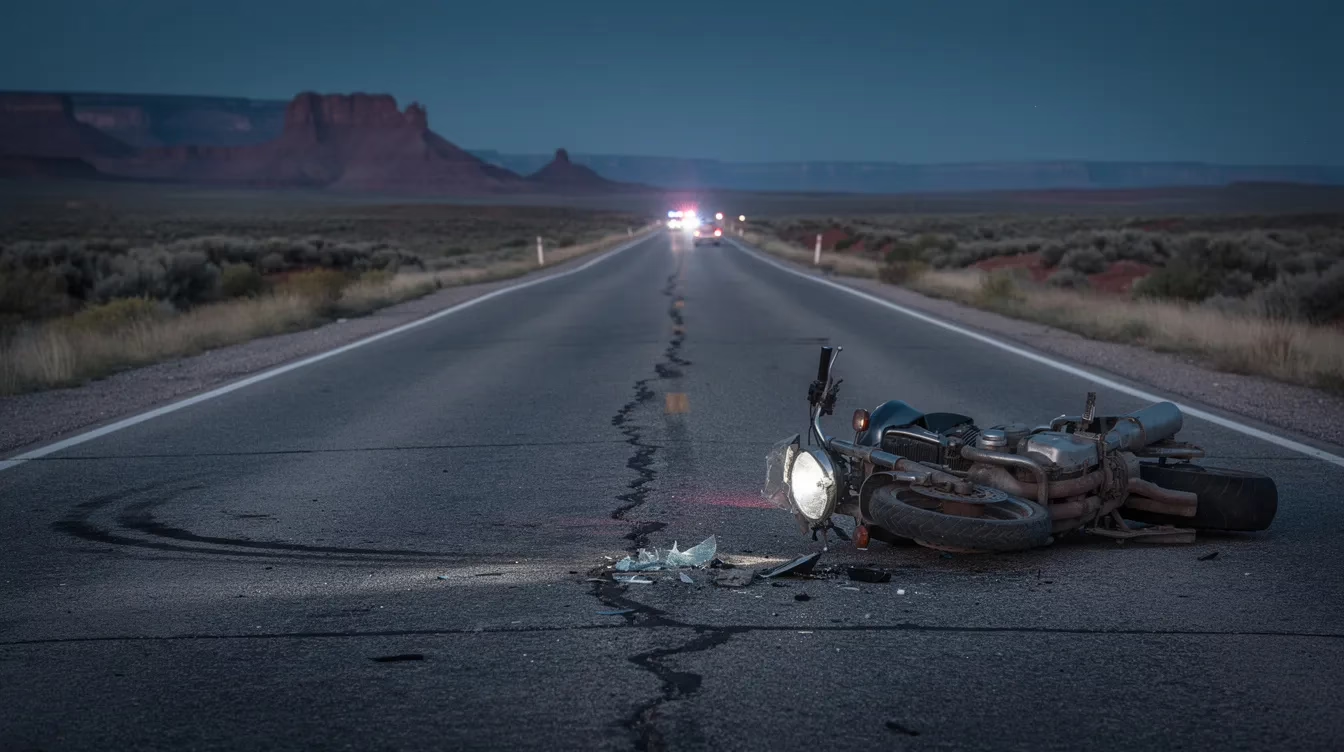
The image depicts a motorcycle accident scene on a rural Utah highway, with emergency lights flashing in the distance. Emergency responders are present, and the area shows signs of a motorcycle collision, emphasizing the importance of immediate medical attention and the need for insurance information exchange among the involved parties.

The First Ten Minutes

Get safe and call 911

Assess your body before you move. If you feel neck or back pain, stay put and wait for emergency responders unless there is immediate danger

If you can move safely, get out of traffic. A shoulder, curb, or median, anywhere away from moving vehicles

Call 911. Tell the dispatcher it is a motorcycle crash, give your location, and request both medical and law enforcement response

Turn on hazard lights if you can reach them safely, and use reflective triangles or flares if you have them. If someone is bleeding heavily, apply firm pressure with a clean cloth until help arrives

Protect your head and spine

Do not remove your helmet unless your airway is blocked and you cannot breathe. Improper removal can worsen a spinal injury, and EMS are trained to take it off while preserving alignment

If another rider is down, keep them still and keep them talking. Do not straighten limbs or reposition their body

The helmet also holds evidence of impact direction and force, which is another reason to leave it alone. Utah data shows unhelmeted riders are roughly 1.78 times more likely to die in a crash

Leave the motorcycle where it is

If the bike is not creating an immediate hazard, leave it. Its resting position, together with skid marks and the debris field, is how investigators reconstruct what happened

If it has to be moved to clear a lane, photograph its orientation relative to lane markings, curbs, and landmarks first

A person is seated at a desk, diligently writing notes while surrounded by medical documents and a phone, likely organizing important information related to a motorcycle accident. The scene suggests preparation for dealing with insurance claims, medical treatment, and legal rights following a motorcycle collision.

Contact us now

free consultation

    Free Consultation

    available 24/7
    No fee unless we win. Available day or night to take your call. Speak directly with an attorney about your case.

    Get Medical Attention Even If You Feel Fine

    Adrenaline masks serious injuries. Riders have walked away from crashes with fractured vertebrae, internal bleeding, and concussions, and collapsed hours later.

    Why immediate care matters

    Adrenaline and stress hormones suppress pain signals, sometimes for hours. Internal bleeding and traumatic brain injury can produce no obvious symptoms at the scene

    An emergency room visit within hours of the crash links your injuries to the crash in the medical record. Without that link, an insurer can argue the injuries came from something else

    Early diagnosis usually means earlier treatment and a better medical outcome

    Delayed symptoms to watch for

    In the 24 to 72 hours after a crash, watch for:

    Concussion signs: headaches, dizziness, confusion, blurred vision, memory gaps, nausea

    Internal injury signs: abdominal pain or tenderness, shortness of breath, chest tightness

    Soft tissue damage: neck pain, back stiffness, swelling in joints or limbs

    Any new symptom at all, which should go to a doctor and into your records

    If any of these show up, do not wait for a scheduled appointment. Go to urgent care or the emergency room. For more on how injuries develop after the initial shock, read our article on delayed symptoms after a car accident, which applies equally to motorcycle crashes.
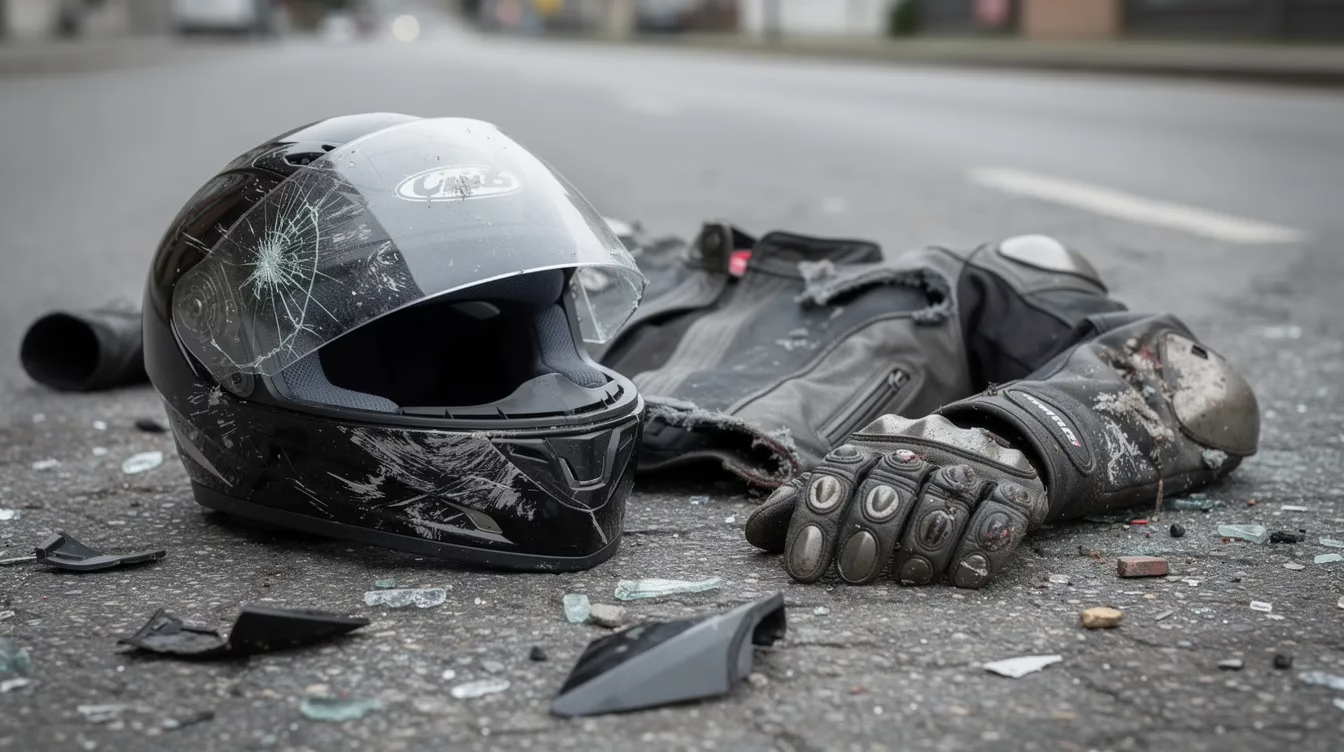
    The image depicts a damaged motorcycle helmet and protective gear spread out on the pavement, surrounded by scattered debris from a motorcycle accident. This scene highlights the aftermath of a motorcycle crash, emphasizing the importance of safety and the need for immediate medical attention for any accident victim involved.

    What to Document at the Scene

    Evidence disappears fast. Rain washes away fluid trails, tow trucks haul off vehicles, witnesses leave. What you capture at the scene may end up being the only record of what actually happened.

    Your motorcycle and gear

    Photograph the motorcycle from at least six angles: front, rear, both sides, top down, and close-ups of impact points such as dents, scratches, bent forks, and cracked fairings

    Document helmet damage inside and out. Cracks, scuffs, and deformation show direction and force of impact

    Photograph all protective gear: jacket, gloves, boots, pants. Note where gear shifted or came off, because road rash patterns on clothing correspond to road rash on your body

    Photograph visible injuries before anyone cleans them, with timestamps on the photos

    Scene and road conditions

    Road surface: asphalt condition, loose gravel, potholes, oil, wet pavement

    Skid marks and the debris field, including glass, plastic, and fluid trails

    Sight lines and visibility: sun angle, shadows, and obstructions such as parked cars, hedges, or signs

    Traffic control devices and signage: speed limit signs, stop signs, yield signs, signals

    Weather and lighting conditions at the time of the crash

    These details are what allow a reconstruction later, and they establish whether the other driver actually had adequate visibility and warning.

    The other vehicle and driver

    Photograph the other vehicle's damage and license plate

    Exchange driver's license, insurance, and vehicle registration information

    Get witness names, phone numbers, and email addresses. If they are willing, record a short statement on your phone about what they saw

    Write down the details while your memory is fresh: direction of travel for every vehicle, approximate speeds, and what the other driver was doing before impact, such as phone use, failing to signal, or running a light

    The Police Report in Utah

    A police report is third-party documentation of your crash. It records the officer’s observations, statements from the parties and witnesses, any citations issued, and a preliminary read on fault. It becomes central evidence in an insurance claim or a lawsuit.

    When a report is required

    Under Utah Code 41-6a-402, you have to notify law enforcement immediately if a crash involves:

    Any injury or death

    Property damage that appears to be $2,500 or more

    The investigating officer files an electronic copy with the Utah Department of Public Safety. If law enforcement does not respond to the scene, the operator or owner of the vehicle may be required to file a written report. Failing to file can carry a license suspension.

    Even where a crash seems minor, having a report strengthens the claim. Get the report number before you leave, and write down the responding officer’s name, badge number, and agency. For more on Utah’s reporting obligations, see our article on whether you must report an accident in Utah.

    How to get your report

    Reports are generally available within about 10 business days

    Request your copy from the Utah Department of Public Safety or the local agency that responded

    Some jurisdictions allow online ordering, others require an in-person visit or a mailed request with valid identification

    A small fee may apply

    Protect the Motorcycle and Your Gear

    Your damaged motorcycle and gear are physical evidence. Repairing, altering, or discarding them before they have been inspected is the kind of evidence destruction that can seriously weaken a claim, and it is difficult to undo.

    Handling the motorcycle

    Do not authorize repairs until the bike has been photographed and inspected

    Do not release it to salvage without written documentation and legal advice. Get everything from the towing company in writing

    Before it is towed, take a final round of photos showing its condition, and keep a clear record of where every damaged item went

    Preserving your gear

    Keep all damaged helmets and protective clothing. A cracked helmet shows the severity of impact and a torn jacket documents road rash

    Do not wash, repair, or alter any of it. Stains, scuffs, and tears are evidence

    Store it somewhere safe and dry, bagged separately where possible

    Before You Talk to Any Insurance Adjuster

    Notify your own insurer promptly. Your policy almost certainly requires it, and an unexplained delay gives your own carrier grounds to question the claim. Reporting to your insurer and talking to the other driver’s insurer are two very different things.

    What an adjuster is actually doing

    Adjusters work for the insurance company. Their job is to control what the company pays. A casual remark that you are feeling okay becomes evidence that your injuries were minor, and a recorded statement given without preparation is one of the more effective tools they have.

    Your insurer versus the other driver's insurer

    Your own insurer: report the crash truthfully, including date, location, vehicles involved, and the basic facts, and check your policy for what coverage is available. Uninsured and underinsured motorist coverage matters here if the other driver has no insurance or not enough of it

    The at-fault driver's insurer: you are not required to give a recorded statement. Provide your name, contact information, and the fact that a crash occurred, and leave it there until you have talked to an attorney

    Medical authorizations: insurers routinely ask for blanket access to your entire medical history, which they use to argue a pre-existing condition caused your injuries. Authorize only records related to the crash

    Keep records of every expense tied to the crash: medical bills, pharmacy receipts, ambulance charges, imaging costs. That documentation is the foundation of the claim.

    What Not to Do

    At the scene

    Never admit fault or apologize. An apology at the scene gets repackaged later as an admission

    Do not guess about what happened. Estimating your speed or wondering aloud whether you missed a signal creates statements that get used against you

    Do not describe your injuries as minor or say you are fine. You do not yet know what is wrong

    In the days after

    Do not post about the crash on social media. Photos, check-ins, and even a cheerful update that you are okay get used to contradict an injury claim, and insurers do monitor accounts

    Do not accept an early settlement offer before your medical picture is complete. Early offers rarely account for future treatment, lost income, or long-term effects

    Do not sign a broad medical authorization

    Do not give a recorded statement to the other driver's insurer without a lawyer

    A person is seated at a desk, diligently writing notes while surrounded by medical documents and a phone, likely organizing important information related to a motorcycle accident. The scene suggests preparation for dealing with insurance claims, medical treatment, and legal rights following a motorcycle collision.

    When to Call a Lawyer

    If the injuries are serious, talk to someone early. Even where injuries seem moderate, an early consultation protects evidence, deadlines, and your position with the insurer.

    Evidence preservation. Traffic camera footage, road sensor logs, and witness recollections all degrade or get overwritten, and an attorney knows what to secure and how fast

    Insurance communication. Having someone else handle the adjuster removes the risk of damaging your own claim in an offhand remark

    Deadlines. Utah generally allows four years from the date of the crash to file a personal injury lawsuit, and two years for wrongful death. Property damage deadlines run separately. Where a government entity is involved, notice requirements arrive much sooner

    Robert J. DeBry & Associates offers free consultations and case evaluations for injured riders in Utah, and handles motorcycle cases on a contingency fee basis, which means no attorney fee unless there is a recovery. If you have been hurt in a motorcycle crash, the first 48 hours matter, and every day that passes is a day evidence fades while the insurance company builds its file.

    Frequently Asked Questions

    What should I do immediately after a motorcycle accident?

    Get to safety and out of traffic if you can move. Call 911 for medical services and law enforcement. Do not remove your helmet unless you cannot breathe. Photograph the scene, the vehicles, and your gear. Exchange information with the other driver. Get medical attention even if the injuries seem minor. Do not admit fault, and do not give a recorded statement to the other party’s insurer.

    Do I have to report a motorcycle accident in Utah?

    Yes. Under Utah Code 41-6a-402, a crash involving injury, death, or property damage of $2,500 or more has to be reported to law enforcement immediately, and failing to report can carry a license suspension. Even for smaller incidents, a police report creates documentation worth having.

    Should I go to the hospital after a motorcycle crash?

    Yes. Adrenaline masks serious injuries, and internal bleeding, traumatic brain injury, and spinal damage may not produce symptoms for hours or days. Prompt treatment also links your injuries to the crash in the medical record, which matters later. Follow up on every appointment and report any new symptom.

    Should I give the other driver's insurance a recorded statement?

    Not without talking to a lawyer first. You have no obligation to give a recorded statement to the at-fault driver’s insurer. Adjusters use them to find inconsistencies and reduce what the company pays. You do need to report the crash to your own insurer, which is a different thing.

    How long do I have to file a claim in Utah?

    Utah statute of limitations gives you four years from the date of the crash to file a personal injury lawsuit, and two years for wrongful death. Deadlines for property damage claims run separately and are worth confirming for your situation. If a government entity is involved, for example through road design or maintenance, separate notice requirements and much shorter deadlines can apply.

    This is general information, not legal advice. Contacting Robert J. DeBry & Associates or submitting a form does not create an attorney-client relationship.

    Hurt in a crash caused by someone else? Talk with our team about your options. No fee unless we win.

    Related Articles