

After a Utah crash, your vehicle's fair market value, expressed by insurers as actual cash value (ACV), is the ceiling for your property damage claim. It is the amount your vehicle would have sold for locally the moment before the crash, and understanding how it works puts you in a stronger position to get a fair settlement.
This guide covers Utah-specific rules for vehicle valuation after a crash, including how insurers determine your car’s worth, total-loss thresholds under Utah law, diminished value claims, and practical steps to challenge a low offer. It focuses on property damage recovery and is separate from injury compensation. It is general information, not legal advice.
Fair market value is the price your car would command in a private sale between a willing buyer and seller in your local area, with neither under pressure. It reflects what your vehicle was worth the day before the crash, not what you paid, not what you owe, and not what a replacement costs at a dealership today. For Utah accident victims, this figure directly controls your payout, whether you are claiming under your own comprehensive or collision coverage or against the other driver’s liability coverage.
Actual cash value (ACV) is the term insurers use most often, and the Utah Insurance Department defines it as the market value of your car, calculated by subtracting depreciation from replacement cost. While the two terms are often used interchangeably, they can differ in practice: fair market value reflects real-world transaction prices in your area, while ACV may rely more heavily on formula-driven depreciation models and third-party appraisal software that do not always capture local conditions or your car’s actual condition. That is why insurers often start with a low offer based on algorithmic ACV rather than true local market data, which gives you grounds to negotiate.
Several factors influence your vehicle’s ACV after a crash:
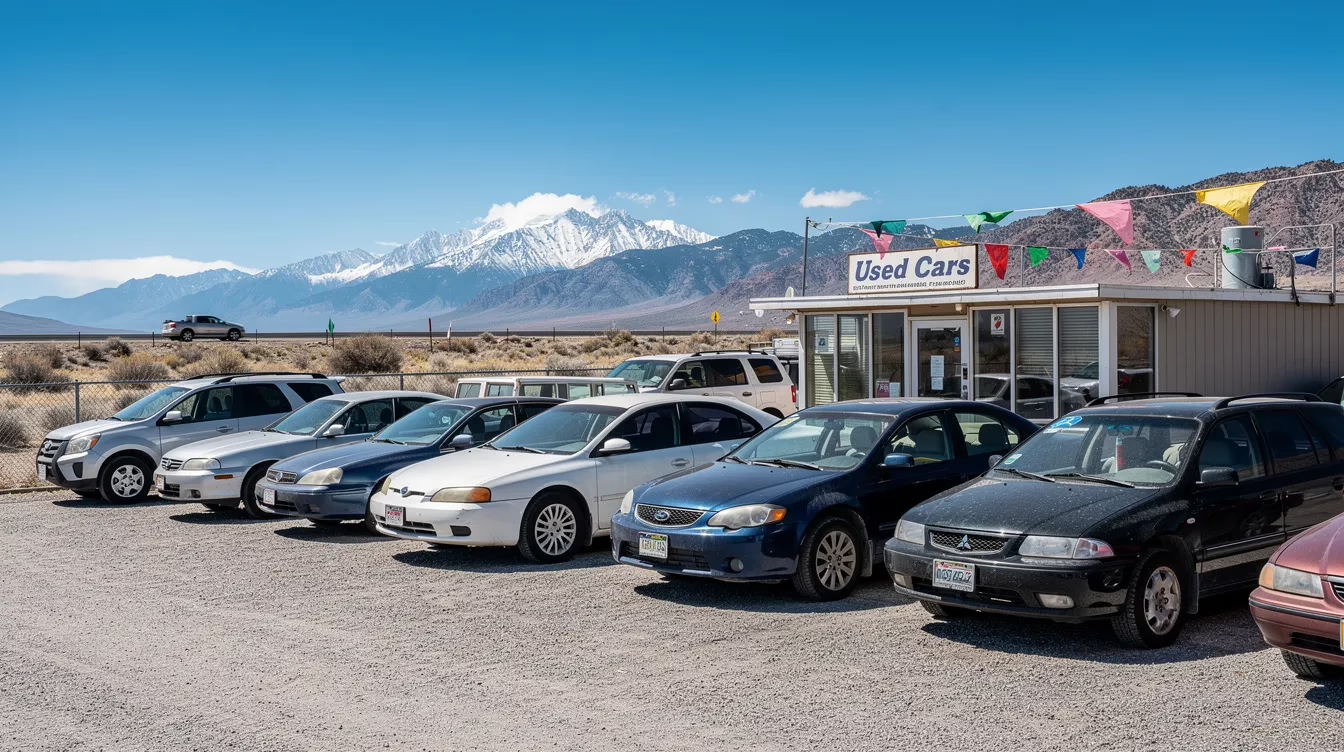
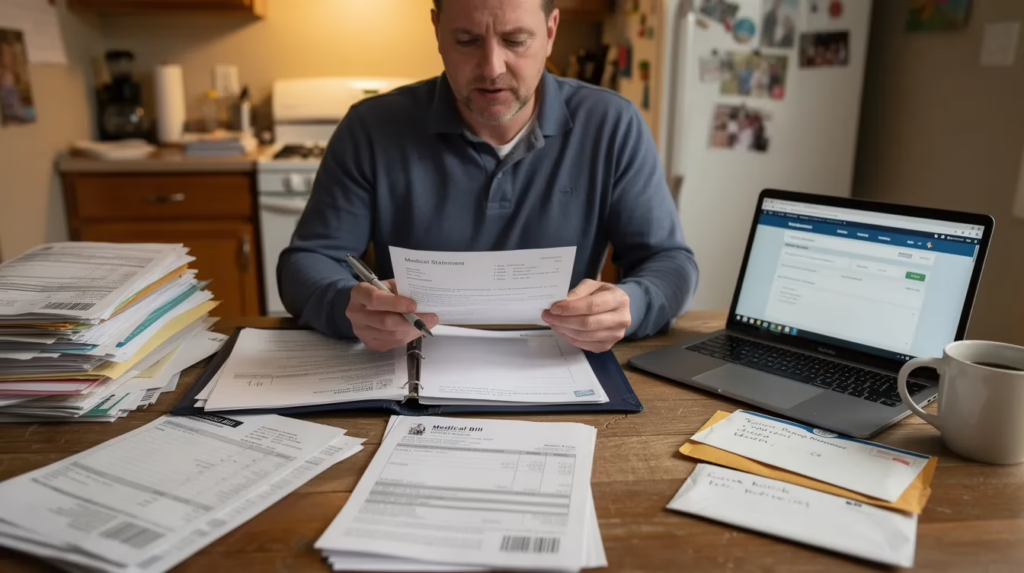
When you file a property damage claim, the insurer follows a structured process, and knowing each step helps you spot errors and prepare your own evidence.
After you report the claim, a claims adjuster inspects your vehicle, evaluates visible damage, takes photographs, and assesses the pre-accident condition based on wear patterns, interior quality, and mechanical indicators. The adjuster then uses valuation databases such as CCC, Mitchell, or Audatex, which pull from auction results, dealer listings, and private-party sales, to generate an ACV, and may request a body-shop repair estimate to compare against it.
Under Utah Administrative Rule R590-190, insurers must consider comparable automobiles in your local market area of the same manufacturer, same year, similar body style, and similar options in as good or better condition. So the insurer should pull listings for similar vehicles actually available in your part of Utah, not from distant states or drastically different markets. If the comparables the insurer cites are in worse condition, have higher mileage, or come from outside your geographic market, that is a valid basis for dispute.
To support a claim for higher value, provide vehicle history reports showing a clean title, maintenance records proving consistent service, photos of pre-accident condition, dealer appraisals or recent purchase documentation, and receipts for covered upgrades. The more documentation you supply, the harder it becomes for the insurer to justify a low number.
A car is totaled when repair costs exceed its value to the point where repairs no longer make financial sense, and Utah uses specific thresholds and legal definitions to govern that decision.
Many insurers use a percentage of a car’s ACV to decide when a total loss is appropriate. Under Utah law, a vehicle is substantially damaged when repair costs to return it to safe operation exceed its fair market value, and in practice Utah insurers commonly apply a threshold of about 80 percent, meaning when estimated repair costs reach roughly 80 percent of ACV, the insurer declares a total loss. For example, a vehicle with a pre-crash ACV of $12,000 would likely be totaled if repair costs reach about $9,600, and the insurer would then pay the ACV minus applicable deductions rather than cover repairs. This example is illustrative only. Safety concerns such as structural or frame damage can also trigger a total loss even when repair costs fall below the threshold, and Utah Code Title 41, Chapter 1a defines a salvage vehicle as one damaged such that the cost of repairing it for safe operation exceeds its fair market value.
When a car is totaled, the insurer pays the ACV minus your deductible when you file under applicable coverage. Typically the insurer calculates ACV using comparable sales, condition, and depreciation. If you have a loan, the lienholder is paid first, and if the loan balance exceeds ACV you owe the difference unless you have gap insurance. The insurer issues payment after paperwork is complete, and under R590-190-11 the ACV should include taxes and other fees incurred in replacing the vehicle. You can keep the totaled vehicle (receiving ACV minus the salvage deduction, with a salvage title) or transfer ownership to the insurer. Standard policies typically cover ACV rather than the cost of a new vehicle, unless optional gap or new-car replacement coverage changes that.
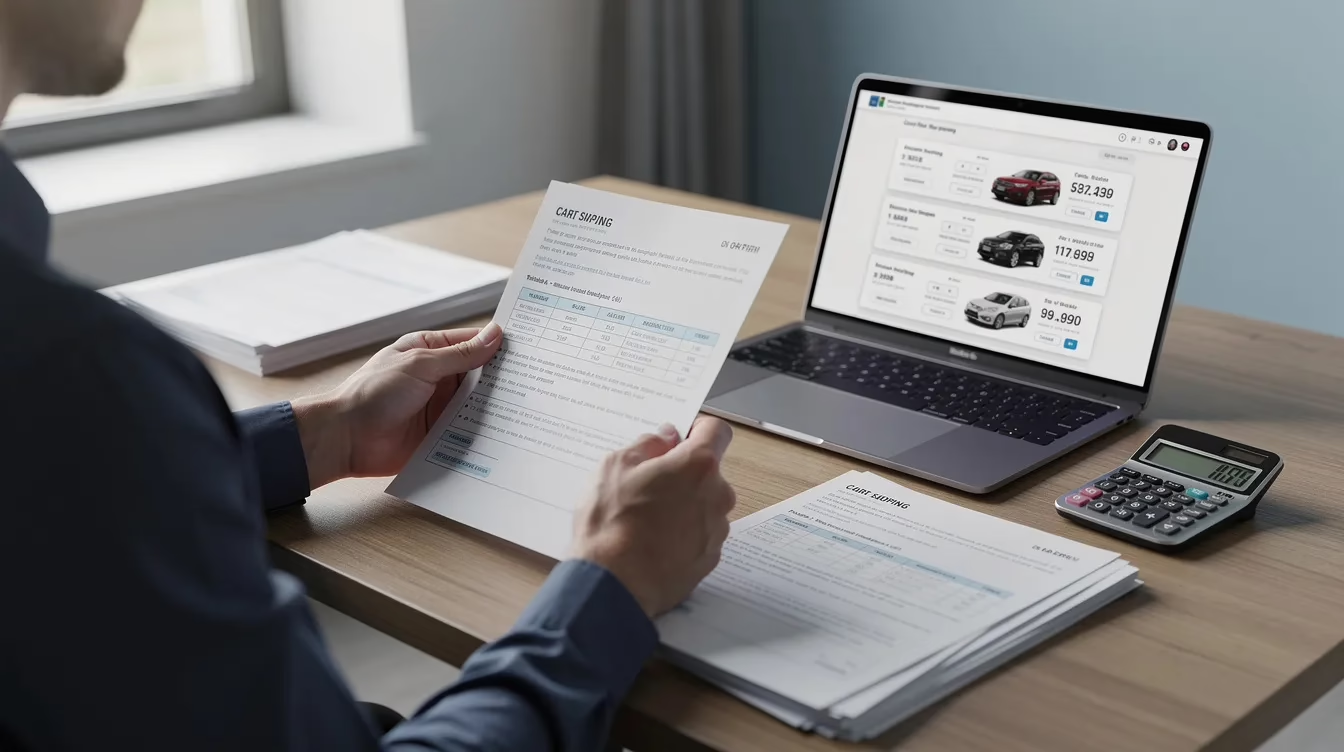
Even after proper repairs, a car’s post-accident value is typically lower than before, because accident history reports can permanently reduce resale value. This loss, called diminished value, is the difference between the pre-accident and post-repair value, and cars can lose a meaningful share of their value after a crash. Under Utah law, diminished value claims are generally allowed as third-party claims against the at-fault driver’s liability coverage, though first-party claims under your own collision coverage are generally not permitted without a special endorsement. Key details:
Evidence for a diminished value claim includes repair invoices, vehicle history reports showing the collision, comparable sales data for accident-free vehicles of the same make and model year, pre-accident and post-repair photographs, and ideally an independent appraisal quantifying the loss.
If the settlement offer does not reflect your vehicle’s true value, Utah law gives you tools to push back, and you should gather evidence before accepting anything.
Start by researching what comparable cars are actually selling for in your area, then build your case: pull 3 to 5 similar vehicles currently for sale or recently sold, with screenshots of prices, mileage, and condition. Document your car’s condition with maintenance records, repair receipts, and photos. Obtain an independent appraisal from a certified appraiser if you are unsatisfied with the offer. Review the insurer’s comparables, since under R590-190 the insurer must explain the basis for valuation deductions, so request their comparable list and challenge any that do not match your car’s condition, mileage, or market. The June 2024 updates to R590-190-11 strengthen your position by requiring insurers to assess actual wear and tear individually rather than relying solely on age-based benchmarks.
Many policies contain an appraisal provision that activates when you disagree with the insurer’s valuation: either party can demand an appraisal in writing, each side selects an independent appraiser, and if the two cannot agree they select an umpire whose decision is typically binding, with costs generally split. This is a powerful tool that does not require a lawsuit, so check your policy for the specific language and deadlines. For property damage disputes, Utah also allows small claims actions for claims up to $20,000, and a small claims decision on property damage does not affect any separate bodily injury claim.
Consider consulting a car accident lawyer when the insurer’s valuation seems unreasonably low despite strong comparable evidence, when you are pressured to accept an offer quickly or sign release documents, when your vehicle had a high value and the gap between your evidence and the offer is substantial, or when you have both property damage and injury claims and need to ensure one does not compromise the other. Be cautious with release documents, since some may waive rights beyond property damage, potentially affecting diminished value claims or injury compensation. Always verify exactly what you are releasing before signing.

This is general information, not legal advice. Your car’s fair market value is the foundation of every property damage settlement, and you have protections under Utah Administrative Code R590-190 requiring transparent, individualized valuations. Document your vehicle’s condition, research comparable sales in your area, request the insurer’s full ACV calculation, and do not accept the first offer without independent review. If the offer does not reflect your car’s true value or you are dealing with a complex total loss or diminished value claim, contact Robert J. DeBry & Associates for a free consultation.
Fair market value is determined by analyzing comparable vehicle sales in your local area for the same make, model year, trim, and condition. Insurers use valuation databases, comparable listings, and condition assessments, and under Utah law they must base valuations on vehicles in the local market area in similar or better condition. Depreciation factors include age, mileage, and condition.
A car is totaled in Utah when repair costs exceed its fair market value or when repairs cannot restore it to safe operating condition. Total loss thresholds vary by state, typically between 70 and 80 percent of ACV, and in Utah practice insurers commonly apply about 80 percent. Insurers declare a total loss based on estimated repair costs compared to actual cash value.
Diminished value is the loss in market value due to accident history, even after quality repairs. In Utah, you can generally file a diminished value claim against the at-fault driver’s liability coverage, but not against your own collision coverage unless your policy has a special endorsement. The claim must be filed within four years and requires evidence such as repair records, vehicle history reports, and comparable sales data.
You can negotiate a higher offer by gathering comparable listings in your area, obtaining an independent appraisal, and presenting maintenance records that show your vehicle’s true condition. If the insurer will not budge, invoke the appraisal provision in your policy or file a small claims action for property damage up to $20,000 in Utah.
Yes. Gap insurance covers the difference between your remaining loan balance and the ACV the insurer pays on a totaled vehicle, protecting you from owing money on a car you can no longer drive. It is especially valuable for newer vehicles or when you financed with a low down payment.
Yes. In Utah you can retain a totaled vehicle, but the insurer will deduct the salvage value from your settlement, and the vehicle receives a salvage title that must be disclosed to future buyers and significantly reduces resale value. You would need to pass a safety inspection before returning it to the road with a rebuilt title.
Utah’s unfair claims practices rules require insurers to handle claims promptly and in good faith. No single fixed deadline applies to every situation, but the insurer must acknowledge your claim, complete its investigation, and issue payment within a reasonable time after all paperwork is completed. Unreasonable delays may constitute bad faith.
The strongest evidence includes maintenance records, recent repair receipts, photos of pre-accident condition, comparable listings from your local area showing similar vehicles at higher prices, dealer appraisals, and documentation of factory options or upgrades. A vehicle history report showing a clean title also supports higher valuations.
This is general information, not legal advice. Contacting Robert J. DeBry & Associates or submitting a form does not create an attorney-client relationship.