

Utah's ski resorts attract millions of visitors each season to some of the most celebrated slopes in the country. When a skiing or snowboarding accident causes serious injuries, the legal path to financial compensation depends on whether the injury resulted from an inherent risk of the sport or from someone's negligence. Utah has specific state laws governing recreational liability, and understanding where that line falls is critical before pursuing any personal injury claim.
45+ years of experience · 500+ five-star reviews · No fee unless we win
Ski accidents can involve multiple potential defendants beyond the resort, including ski lift operators, equipment manufacturers, rental companies, instructors, and other skiers. An experienced ski accident attorney can evaluate which parties may be at fault, a skiing accident lawyer can identify liable parties and help clients obtain compensation, and Utah law may permit recovery under the circumstances.
This page covers how Utah’s ski safety laws work, common accident types that lead to valid claims, the legal process and compensation available, and practical challenges that injured skiers face when seeking compensation. It does not constitute medical advice or predict outcomes for any specific case.
After reading, you will understand:

Utah law treats ski and snowboarding accidents differently from most personal injury cases because the state has enacted specific statutes addressing who bears responsibility when someone is hurt on the slopes. Utah has specific state laws governing recreational liability, and the most important of these is the Inherent Risks of Skiing Act, codified under Utah Code Title 78B, Chapter 4, Part 4. This statute establishes that certain dangers are simply part of skiing and snowboarding, and that ski area operators generally cannot be sued for injuries caused by those dangers.
Utah’s Safe Skier Act limits ski resort liability for inherent risks. This means that before any legal action can move forward, the threshold question is whether the injury arose from an inherent risk or from negligent conduct that goes beyond what the sport naturally involves.
Additionally, Utah’s Winter Sports Activities liability framework, effective from May 7, 2025, expanded limitations on liability for winter sports activities more broadly, including updated definitions, notice requirements, liability agreements, and limitation on damages.
Under Utah Code section 78B-4-402, the inherent risks of skiing include, but are not limited to:
Under Utah Code section 78B-4-403, no skier may make any claim against, or recover from, a ski area operator for injury resulting from any of the inherent risks of skiing. This bar applies even if the resort was negligent with respect to those inherent risks, which makes it one of the most significant legal hurdles in any Utah skiing accident case.
Ski resorts must also warn about inherent risks like weather and terrain. Specifically, ski resorts must post trail boards warning of skiing dangers as required under Utah Code section 78B-4-404. When an operator has posted those required warning signs, it has satisfied its legal duty to warn regarding inherent risks.
However, not every injury on the mountain falls into the inherent risk category. The legal question is whether the specific risk that caused injury was truly “integral” to the sport under the circumstances, or whether the ski area operator’s conduct created a danger that went beyond what any skier should reasonably expect.
Ski resorts are liable for injuries from their own negligence, and ski area operators must maintain safe premises for guests. Legal action is possible for injuries from negligent ski area operators when the cause falls outside the statutory definition of inherent risks. Situations where a resort may be held liable include:
Negligence requires proving duty, breach, causation, and damages. To prove negligence, a ski accident claim must establish that the resort or other party owed a duty of care, breached that duty, and that the breach directly caused the injuries suffered.

Understanding the legal framework is essential because different types of ski accidents trigger different liability analyses. Some accidents fall squarely within the inherent risks of skiing, while others arise from circumstances where a ski accident attorney can build a strong case for compensation. Skiing accidents may involve claims against instructors or equipment manufacturers, broadening the potential scope of any case.
Ski lift accidents occupy a distinct legal category because mechanical equipment failures and operator errors are generally not considered inherent risks of the sport itself. Common causes of ski lift accidents include:
Ski lift operators are held to higher safety standards because they are transporting passengers on mechanical equipment. When a ski lift malfunction causes head injuries, broken bones, or other injuries, claims may proceed under both premises liability and product liability theories. The ski area operator’s duty to maintain safe equipment is separate from the inherent risks that the skiing act addresses.
Defective ski equipment is another category where liability often extends beyond the ski area operator. Victims can sue for injuries caused by defective ski equipment, and potential claims may target manufacturers, distributors, or rental companies. Common equipment failures include:
When faulty equipment causes injury, product liability law applies alongside personal injury law. The responsible parties may include the equipment manufacturer, the rental company, or both. Skiing accidents may involve claims against instructors or equipment manufacturers depending on how the defective ski equipment reached the injured person.
Utah Code section 78B-4-402 lists collisions with other skiers as an inherent risk of skiing, which generally bars claims against the ski area operator for such incidents. However, when a collision occurs due to another skier’s reckless or negligent behavior, the at fault party may bear personal liability.
The skier responsibility code plays a role in determining liability in these cases. When one skier violates established rules of conduct, such as skiing out of control, failing to yield, or stopping in a blind spot, it can help establish that the other party was negligent.
Insurance coverage for skier-on-skier collisions is often complicated. The responsible skier’s homeowner’s or renter’s insurance may provide coverage, but insurance companies frequently dispute these claims or argue that inherent risks apply.
Once it is established that an injury may have resulted from negligence rather than an inherent risk, the legal process for a ski accident claim follows a structured path. Attorneys should assess evidence preservation quickly after a ski accident because conditions on the mountain change rapidly.
Personal injury claims in Utah typically have a statute of limitations of four years. Missing this deadline generally means losing the right to pursue compensation entirely, which makes consulting with a lawyer in the early stages particularly important.
A valid claim may help ski accident victims seek fair compensation across several categories of damages:
Comparative negligence in Utah reduces compensation based on fault. If a court or jury finds that the injured skier was partly responsible for the accident, the total compensation is reduced proportionally.
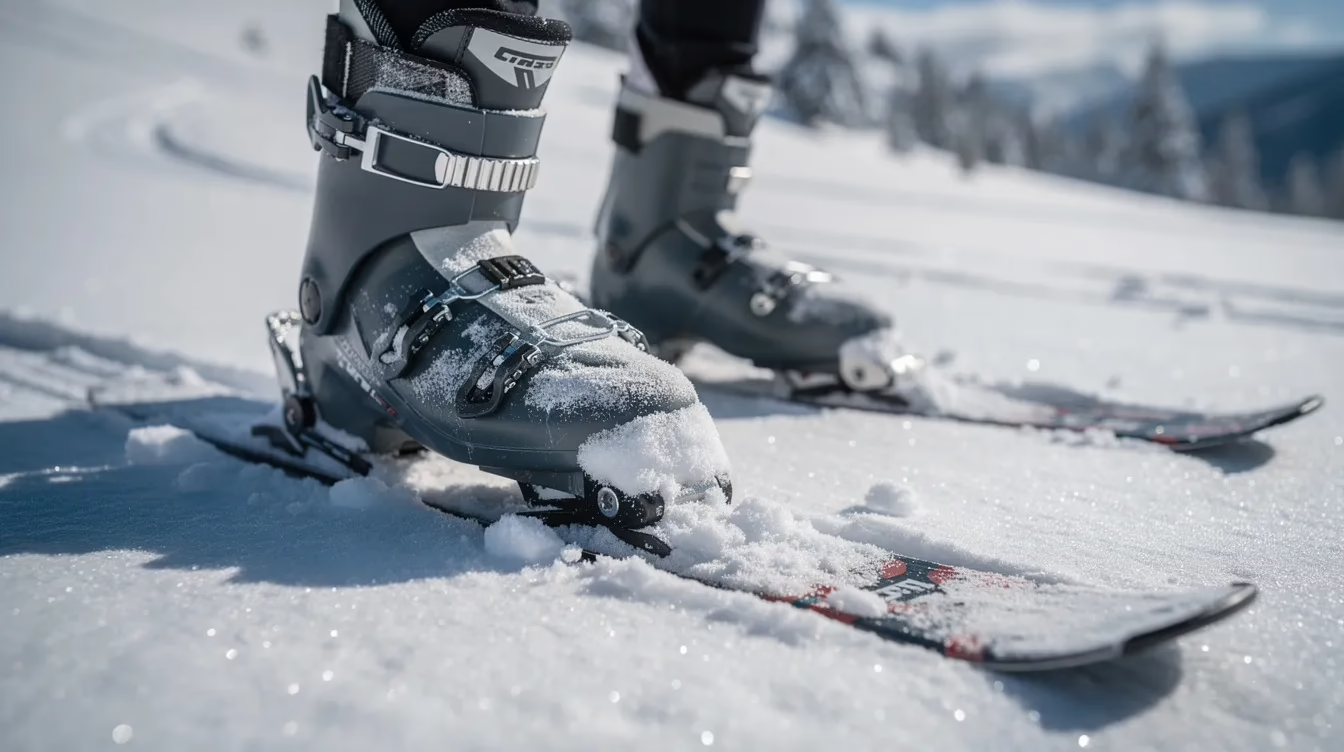
Ski accident cases present legal difficulties that go beyond typical personal injury claims. The intersection of Utah’s inherent risks statute, liability waivers, and the practical challenges of preserving mountain evidence creates obstacles that require careful navigation.
Nearly every ski resort requires visitors to agree to some form of liability waiver, whether through ticket purchases, season pass agreements, or equipment rental contracts. However, a signed waiver does not automatically prevent recovery.
Under Utah law, preinjury releases may be unenforceable when they violate public policy, are ambiguous, attempt to cover gross negligence or willful misconduct, or were signed by minors. Utah courts have found that waivers attempting to broadly eliminate ski area operator liability for negligence can run counter to the public policy embodied in the Inherent Risks of Skiing Act itself, as referenced in Utah Code Title 78B, Chapter 4. More recently, courts have examined employer liability waivers in the ski industry, holding that waivers signed by employees releasing their employer from negligence in a work context may be void.
An experienced attorney evaluating your case will review the specific language of any waiver you signed, the circumstances under which you signed it, and whether it validly covers the type of negligence that caused your injury.
Insurance companies routinely employ strategies to minimize or deny ski accident claims. Common tactics include:
Insurance companies have financial incentives to undervalue claims. Injured skiers should be cautious about accepting any offer or providing detailed statements without first understanding the full scope of their damages and legal rights. Legal help during negotiations can significantly affect the outcome.
Evidence at ski resorts is uniquely perishable. Snow conditions change within hours, grooming equipment reshapes terrain overnight, and weather conditions that contributed to an accident may be impossible to reconstruct later. Steps to take as soon as possible after a skiing or snowboarding accident include:
An attorney can send a formal preservation letter to the resort and any other negligent parties to prevent the destruction of relevant evidence, maintenance logs, and operational records.
Selecting the right accident lawyer for a skiing accident case requires evaluating specific factors. Ski accident attorneys must understand Utah’s Inherent Risks of Skiing Act and how it interacts with negligence and product liability claims. Choosing a ski accident lawyer should include evaluating whether the firm has experienced trial attorneys, along with trial readiness and negotiation skills, since many cases are resolved before trial but the credibility of a trial-ready case can influence settlement negotiations.
If you are ready to take legal action after a ski or snowboard accident:
If you are still evaluating whether you have a viable claim, a free case evaluation can help clarify whether the circumstances of your accident fall outside the inherent risks statute and whether there are grounds to pursue compensation against the at fault party.
Related areas of law that may be relevant to your situation include premises liability for unsafe conditions, product liability for defective ski equipment, and wrongful death claims when a skiing accident results in a fatality. Utah’s beautiful natural environment draws skiers to destinations like Park City, Park City Mountain, and resorts throughout Salt Lake City and the surrounding areas, and legal representation familiar with the local ski industry and Utah law can make a meaningful difference.
This is general information, not legal advice.