

If you or a family member were hit by an impaired driver in Salt Lake City, you have the right to pursue a personal injury claim against the at fault driver and potentially other responsible parties. A Salt Lake City drunk driving accident lawyer at Robert J. DeBry & Associates represents drunk driving accident victims throughout Salt Lake County, helping them seek compensation for medical expenses, lost wages, property damage, and pain and suffering that follow serious accidents involving intoxicated drivers.
Drunk driving accident cases are often more complex than a typical car accident because they involve overlapping criminal penalties and civil liability, strict DUI laws unique to Utah, potential claims against alcohol-serving establishments, and aggressive insurance companies looking to minimize payouts. A qualified drunk driving accident lawyer should specialize in personal injury from intoxicated driving incidents and understand how to navigate each of these layers on a victim’s behalf.
Utah law provides meaningful protections for people injured by a drunk driver. Understanding those rights early can make the difference between a fair recovery and an outcome that falls short of what you actually need to move forward.
Your first priority after any car crash is to seek medical treatment. Even if injuries seem minor at the accident scene, conditions like traumatic brain injuries, spinal cord injuries, and internal bleeding may not produce obvious symptoms right away. Prompt medical attention creates the documentation you will need later and protects your health.
You also have the right to a thorough police investigation. Law enforcement officers at the scene will conduct field sobriety tests and chemical testing on a suspected impaired driver. Under Utah law, drivers can face immediate license suspension for refusing a chemical test. Request a copy of the police report, which will contain witness statements, BAC test results, and the officer’s observations. These details become important evidence in both the criminal case and your personal injury lawsuit.
Beyond the police report, preserve every piece of evidence you can. Photograph the accident scene, vehicle damage, road conditions, and your injuries. Identify witnesses. If nearby businesses have surveillance cameras, note their locations so your attorney can request footage before it is overwritten. A lawyer can help preserve your rights after an accident by securing this time-sensitive evidence before it disappears.
One of the most important things drunk driving accident victims need to understand is that a civil legal claim is separate from the criminal case. You can file a personal injury lawsuit or a wrongful death claim regardless of whether the drunk driver is convicted, takes a plea, or has charges dropped entirely. The civil standard of proof, preponderance of the evidence, is different from the criminal standard. Drunk drivers can face both civil and criminal liability for the same incident.
You also have the right to pursue compensation from multiple potentially liable parties, including for serious injuries caused by an auto accident. Beyond the drunk driver, your case may involve claims against:
Lawyers can identify all liable parties in your case, which is critical because a single defendant’s insurance policy may not cover the full extent of catastrophic injuries like spinal cord injuries, traumatic brain injuries, or life changing injuries requiring years of future medical care.
Insurance adjusters often contact accident victims within days of a crash, sometimes offering a quick settlement before the victim fully understands the extent of their injuries. You have every right to refuse these early offers. Insurance companies are motivated to close claims quickly and for as little as possible, not to ensure you receive fair compensation for your medical bills, lost income, emotional distress, and ongoing treatment needs.
Having legal assistance during insurance negotiations changes the dynamic. A lawyer ensures accurate calculation of your damages, including future medical expenses that should be included in damage calculations. A firm with trial experience may negotiate better settlements with insurance companies because the insurer knows the case can proceed to a courtroom if necessary. You should never admit fault or provide a recorded statement to an insurer without consulting an attorney first.
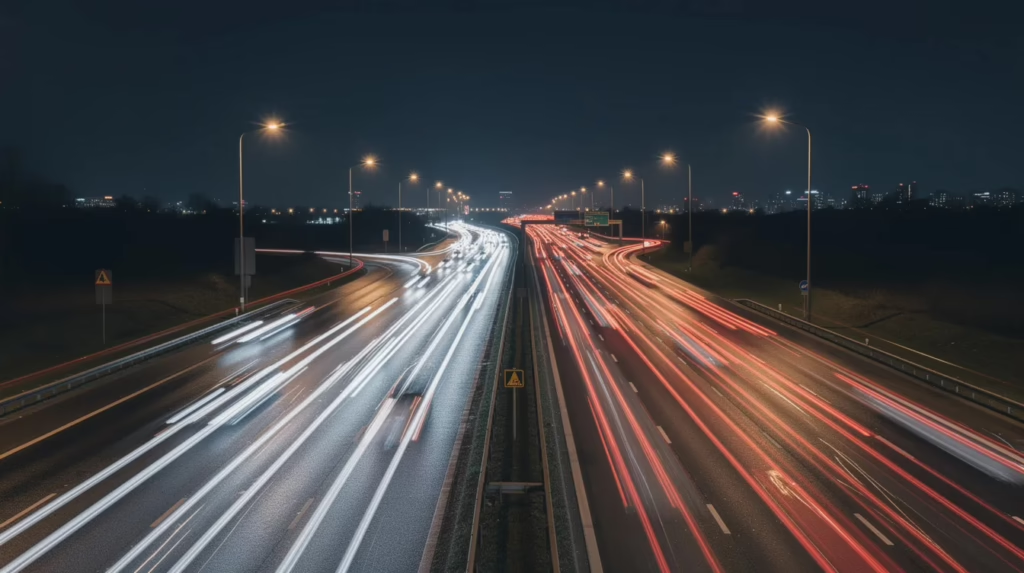
Salt Lake City has specific court procedures, high-risk corridors, and law enforcement practices that affect how drunk driving cases unfold. Local knowledge matters because it shapes case strategy from the earliest stages.
Personal injury lawsuits in Salt Lake City are generally filed in the Third District Court covering Salt Lake County. In Utah, the statute of limitations is four years from the date of injury for a personal injury claim, as provided under Utah Code section 78B-2-307. For wrongful death claims, the deadline is two years from the date of death under Utah Code section 78B-2-304. Victims can pursue wrongful death claims after fatal accidents, but these shorter deadlines make early legal consultation essential.
Many cases in the Third District Court involve mandatory mediation or settlement conferences before trial. Attorneys familiar with local court procedures, judges, and scheduling practices can navigate these steps more efficiently than someone unfamiliar with the Salt Lake City legal landscape.
If a government vehicle or government employee was involved in your drunk driving accident, separate notice requirements apply. A claim against a government entity generally requires notice within one year after the claim arises under the Utah Governmental Immunity Act.
Certain areas of Salt Lake City see a disproportionate number of DUI accidents:
According to the Utah Highway Safety Office, from 2020 through 2024 there were 4,408 alcohol-related crashes statewide, resulting in 274 alcohol-related fatalities. Alcohol-related crashes are 15.1 times more likely to result in death than all other crashes. In 2022, Utah had 62 fatal drunk driving crashes. Salt Lake City police data indicates that more alcohol-related crashes occur on Fridays, Saturdays, and Sundays, with male drivers aged 21 to 39 disproportionately involved.
Salt Lake City Police Department officers follow specific protocols during DUI investigations, including standardized field sobriety testing and chemical breath or blood testing. Utah’s legal BAC limit is 0.05 percent, the lowest in the U.S., meaning drivers can face DUI charges at lower levels of impairment than in other jurisdictions. DUI penalties increase with the number of offenses, and ignition interlock devices are required for certain DUI offenders.
From a civil claim perspective, the criminal case file is a valuable resource. A DUI conviction or guilty plea can establish what is known as negligence per se, meaning the violation of the DUI statute is treated as a breach of the driver’s duty of care. Your attorney can monitor the criminal proceedings, obtain the police report, BAC results, and witness statements, and use those findings to strengthen your car accident claim. Even without a conviction, the evidence gathered during the criminal investigation often proves essential to the civil case.
Personal injury cases involving drunk driving are often more complex because of liability issues spanning multiple parties, intersecting criminal and civil proceedings, and insurance disputes. Our approach is built around thorough preparation and aggressive advocacy at every stage of the legal process.
When we take a drunk driving accident case, we move quickly to hold the drunk driver accountable while building the strongest possible claim. Lawyers should have resources to secure time-sensitive evidence in DUI cases, and our team begins working immediately:
Drunk driving accidents often result in catastrophic injuries that require substantial compensation to address. A lawyer ensures accurate calculation of your damages across all applicable categories:
The documentation needed to support these claims includes medical bills, employment records, expert reports, photographs, the police report, criminal case records, and testimony from treating physicians and vocational experts.
We prepare every drunk driving case as if it will go to trial. That level of preparation creates leverage during settlement negotiations because insurance companies recognize when a claim is backed by solid evidence and a credible trial threat. Hiring a lawyer can maximize your potential compensation by ensuring nothing is left on the table during negotiations. Lawyers negotiate settlements on behalf of their clients with the goal of reaching a fair resolution without unnecessary delay.
When insurance companies refuse to offer a reasonable settlement, we are prepared to take the case to the Third District Court. Utah’s comparative negligence rule under Utah Code section 78B-5-818 means that in Utah car accident cases, fault is evaluated by assigning each party a percentage of responsibility, and a victim’s recovery is reduced proportionally if they share some fault. However, comparative negligence can reduce compensation in Utah drunk driving cases only up to a point: a victim whose fault reaches 50 percent or more is barred from recovery entirely. In most drunk driving cases, the at fault driver bears the overwhelming share of responsibility, but we prepare for this defense because insurers frequently raise it.
Our Salt Lake City office is located at 35 West Broadway, Suite 300, Salt Lake City, UT 84101. We serve car accident victims and drunk driving accident victims throughout Salt Lake County and across the state of Utah.
We understand that victims injured in serious accidents may not be able to travel to our office. We can arrange to meet clients at their home, hospital, or another convenient location. Many personal injury lawyers offer free initial consultations, and we provide a free consultation to discuss your legal options and help you understand whether you have a viable car accident case. Most personal injury representation operates on a contingency fee basis, meaning you pay no attorney fees unless we recover compensation on your behalf.
If you were hurt by a drunk driver in Salt Lake City, contact Robert J. DeBry & Associates for a free legal consultation to discuss your case.
Yes. A civil personal injury claim is separate from the criminal case. You can file a legal claim and seek compensation even if the drunk driver is acquitted, has charges reduced, or is never criminally charged. The burden of proof in civil court is lower than in criminal court.
Utah has a four year statute of limitations for personal injury claims under Utah Code section 78B-2-307. For wrongful death claims, the deadline is two years from the date of death. Missing these deadlines typically means losing the right to file. Claims involving government entities have even shorter notice requirements.
If the drunk driver lacks insurance, you may be able to recover through your own uninsured motorist coverage. Your attorney can also investigate whether other parties, such as an alcohol-serving establishment or the drunk driver’s employer, may share liability and carry their own insurance.
Under Utah’s dram shop law, Utah Code section 32B-15-201, a commercial establishment may be liable if it served alcohol to someone who was visibly intoxicated or underage and that person then caused injury. Specific conditions must be met, including timing and proximity requirements. Punitive damages are not available under the dram shop statute.
Every case is different. Compensation depends on the severity of your injuries, your medical expenses, your lost wages, the degree of fault assigned to each party, and the available insurance coverage. An attorney can evaluate your specific situation during a free initial consultation.
Even when an insurer does not dispute fault, it may still undervalue your claim. Insurance adjusters may not account for future medical expenses, lost earning capacity, or non economic damages like pain and suffering. Legal assistance helps ensure the full scope of your damages is calculated and pursued.
Drunk driving cases often involve the legal doctrine of negligence per se, where a DUI violation establishes the driver’s breach of duty as a matter of law. They may also involve dram shop claims, criminal case evidence that can strengthen a civil case, and the potential for punitive damages in cases involving gross negligence. Drunk driving accidents often result in catastrophic injuries because impaired drivers frequently travel at high speeds or go the wrong direction.
Punitive damages are separate from compensatory damages and are intended to punish particularly reckless or willful conduct. They may be available in a civil claim against a drunk driver whose behavior rises to the level of gross negligence or willful disregard for safety. However, punitive damages are not available under Utah’s dram shop statute. Whether punitive damages apply depends on the specific facts of your case.
This is general information, not legal advice.