

Driving in snow becomes dangerous when traction is significantly reduced, typically at 4 or more inches of accumulation on unplowed roads, when visibility drops below 1,000 feet, or when ice forms on the road surface. Plowed and salted roads are much safer than untreated ones, so conditions vary block by block.
This guide covers Utah-specific winter driving conditions, safe techniques for snow and ice, black ice and hail hazards, legal fault after weather-related crashes, and how to check road conditions before heading out. Whether you commute through the Salt Lake Valley or drive Utah’s mountain canyons, these thresholds and strategies apply. It is general information, not legal advice.

There is no single inch-count that makes snow universally unsafe, since accumulation, visibility, ice, vehicle capabilities, and driver experience all factor in, but research and Utah frameworks provide concrete benchmarks. Under about 2 inches of dry snow, roads are usually manageable with proper tires, though braking distances increase. At 2 to 4 inches, roads become slippery enough that vehicles without winter tires face elevated risk. Above 4 inches on unplowed surfaces, even four-wheel-drive vehicles can struggle. Accumulation rate matters too: Utah’s Ground Transport Risk Assessment assigns elevated risk when snow falls at 1 to 3 inches per hour and higher risk at 3 to 6 inches per hour, and designates blizzard conditions as No Go.
Visibility is another critical threshold. Visibility drops below 1,000 feet during heavy snowfall, and Utah Administrative Code R909-2-11 prohibits certain oversize commercial vehicles when it falls below that mark. The National Weather Service defines a blizzard as sustained winds of 35 or more mph with visibility at or below one-quarter mile for 3 or more hours, and you should avoid driving during blizzard conditions or when visibility is near zero. Vehicle capabilities can create a false sense of security: all-wheel drive does not improve stopping ability on snow. UDOT explicitly warns that 4WD and AWD help with acceleration and climbing but do nothing to reduce stopping distance once you lose traction. Winter tires provide better traction than all-season tires, and tires should be inflated to the manufacturer’s recommended pressure. In the mountains, canyon passes see colder temperatures, wind-driven drifts, and shaded roads where melting and refreezing create ice, and UDOT issues traction device requirements for specific segments like the Cottonwood Canyons.

Snow depth alone does not tell the full story. The type of precipitation, ice formation, and how far you can see all determine whether driving is merely slow or genuinely dangerous.
Light snow under about 2 inches dampens road friction moderately, roughly doubling stopping distance compared to dry pavement. Moderate accumulation of 2 to 4 inches creates slush and uneven traction, especially where other cars have packed down tire tracks. Heavy accumulation above 4 inches on untreated roads dramatically increases the chance of getting stuck or losing control, and driving in slush can lead to hydroplaning at speeds as low as 30 mph.
Black ice forms on bridges and shaded areas when moisture freezes into a thin, nearly invisible layer that looks like wet pavement but provides almost zero traction, and bridges freeze before regular roads because cold air circulates both above and below the deck. Packed snow compressed by traffic into a smooth, hard surface can be just as slippery as ice, and intersections get especially slick in the afternoon when temperatures near freezing create a layer of water over ice that refreezes after sunset.
Blowing snow can reduce visibility to near zero even when accumulation on the ground is light, and whiteout conditions eliminate the horizon and all visual contrast, making it virtually impossible to judge distance or speed. When bad weather reduces what you can see to a few car lengths, the safest decision is usually to stay home or pull over until conditions improve.
Knowing conditions are dangerous is only useful if you know how to adjust, and technique matters far more than the vehicle you drive.
Slow down below the posted speed limit, which is set for dry, clear conditions. On moderate snow, reduce speed by at least half, and on ice or heavy snow, 20 to 30 mph may be the maximum safe speed, with even lower speeds on steep mountain passes, where you carry momentum carefully before a hill instead of trying to accelerate on it. Never use cruise control on snowy or icy surfaces, since you need full control of the brake and accelerator at all times.
Allow triple the stopping distance on snow-covered roads compared to dry pavement. In practice, increase your following distance to at least 7 to 14 seconds, far beyond the standard 3-second rule, which at highway speed may mean staying several hundred feet behind the car ahead. Watch the brake lights of cars well ahead to anticipate stops early, and avoid quick stops, starts, and turns.

Smooth inputs are everything on slick surfaces, so accelerate gently, steer gradually, and apply firm, steady pressure to the brake. With antilock brakes (ABS), press the pedal hard and let the system pulse for you rather than pumping. Without ABS, apply gentle, repeated pressure. If your vehicle begins sliding, look where you want to go and keep the wheels pointed there without overcorrecting: if the rear end slides out, steer gently into the skid, and if the front end pushes wide, ease off the accelerator and steer toward your intended path. All-wheel drive does not improve stopping ability, so relying on it without adjusting speed and following distance gives a false sense of security that leads to winter accidents.
Black ice and hail are two of the most abrupt winter dangers, and both can appear with little warning and demand calm responses.
Black ice forms when moisture freezes on pavement, particularly overnight or on shaded surfaces, and visual cues include a glossy or slightly wet-looking surface when surrounding pavement appears dry. Common locations include bridges, overpasses, shaded curves, and areas near water runoff. If you hit black ice, avoid slamming the brakes: lift your foot gently off the accelerator, keep the steering wheel steady, and let the vehicle pass over the patch, since abrupt steering or braking will send it into an uncontrolled skid.
Hailstones of roughly 1 inch or larger can crack windshields, dent body panels, and reduce visibility to near zero, and even smaller hail creates distracting noise and scars glass. If caught in hail, pull off the road under an overpass or into a covered structure, and if no shelter is available, stop, turn on hazard lights, angle away from the wind, and stay in the car. Do not park under trees, since branches can snap under hail and ice weight.
If you lose control on ice or in a storm, ease off the accelerator, avoid slamming the brakes, and steer gently toward where you want to go. Every Utah winter driver should carry an emergency kit: blankets, water, a flashlight, non-perishable food, a snow shovel, an ice scraper, traction mats or sand, jumper cables or a portable power pack, and extra warm clothing. Keep your gas tank close to full, since fuel runs the heater and reduces condensation in fuel lines, verify your cooling system has enough coolant rated for freezing temperatures, and make sure the exhaust pipe is clear of snow before idling.
Bad weather does not erase legal fault. Utah still holds drivers responsible for adjusting to winter conditions, and being in a weather-related crash does not automatically shield you from liability. Under Utah’s modified comparative negligence statute (Utah Code 78B-5-818), fault is allocated by percentage: you can still recover damages if you are less than 50 percent at fault, but your recovery is reduced by your share of blame. Driving too fast for conditions, ignoring traction requirements, or using worn tires can all increase your fault, even if you were technically under the posted speed limit. Courts and adjusters evaluate whether a driver took reasonable precautions, including appropriate speed, proper tires, adequate following distance, and compliance with UDOT advisories.
Immediate post-crash steps in winter weather: stay at the scene if it is safe and move to a protected area if possible. Call emergency services. Document everything by photographing snow accumulation, ice on the road, visibility, skid marks, road signage, tire tread depth, and vehicle damage. Collect witness contact information and obtain a police report. Seek medical attention even for seemingly minor injuries, since cold can mask pain. Report the accident as required by Utah law. Snow left on vehicles can fly off and cause crashes, so clear all snow and ice from your vehicle before every trip. This is general information, not legal advice.
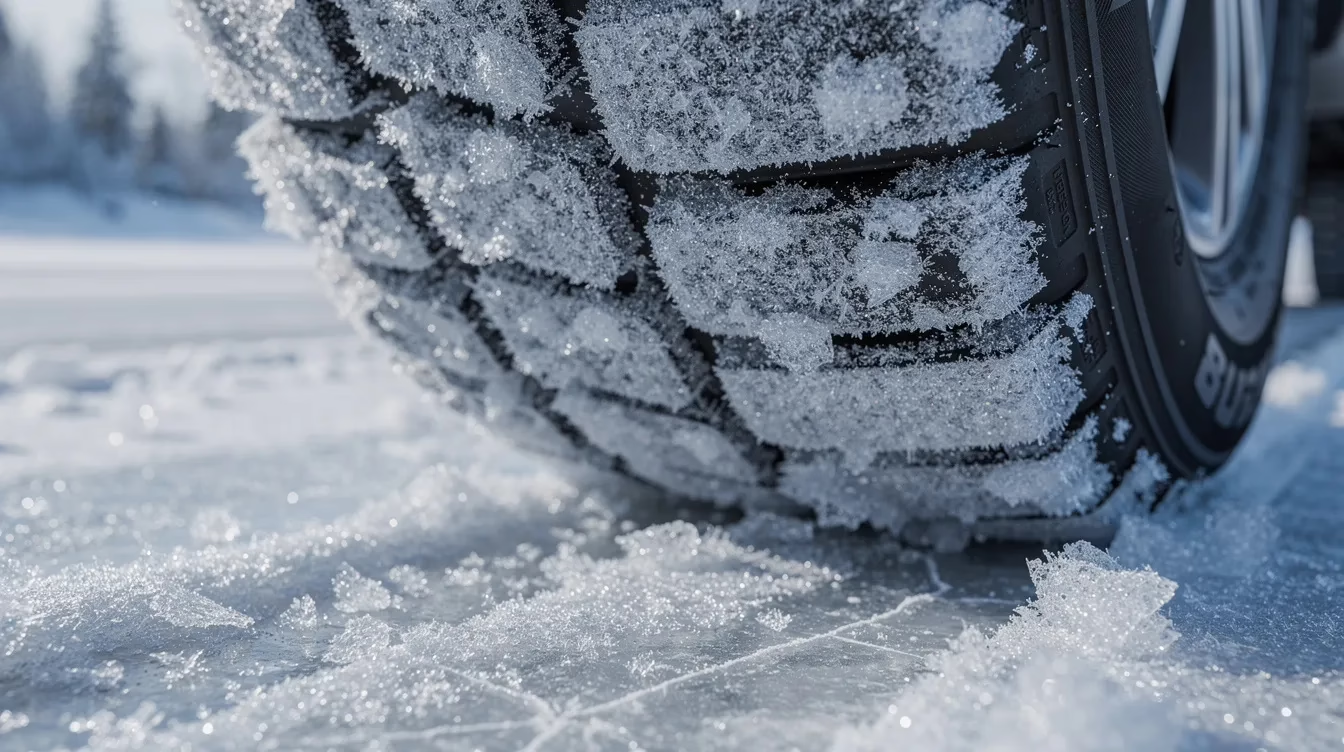
Before heading out in winter weather, check current conditions using UDOT’s resources, which include more than 1,200 traffic cameras and road-surface sensors statewide providing real-time data on current road conditions. UDOT’s road weather alert system uses a green-yellow-red color code, where red means travel is expected to be significantly impaired. Chain and traction requirements apply to specific highway segments, particularly canyon routes: under Utah Administrative Code R920-6, UDOT can mandate snow tires, chains, or snow socks on drive tires, and vehicles over 12,000 pounds must carry traction devices on all drive tires during required periods, communicated through variable message signs, the UDOT app, and social media. Consider postponing travel when mountain forecasts call for 4 to 6 or more inches, when a Winter Storm Warning or Blizzard Warning is active for your route, when road maps show red alerts, or when chain requirements are posted and your vehicle is not equipped. State and federal highways get priority for plowing, so local and secondary roads may remain uncleared during heavy storms.
A few recurring problems and how to handle them:
Driving in snow becomes most dangerous above 4 inches of accumulation on untreated roads, when visibility drops below 1,000 feet, or when ice, especially black ice, coats the surface, but even lighter snow demands slower speeds, longer following distance, and heightened attention. Prepare now: install winter tires or verify your current tires meet 3PMSF standards with adequate tread. Assemble a winter emergency kit. Bookmark UDOT’s road conditions page and check it before every trip. Keep your gas tank at least half full and maintain your battery and cooling system. Adjust your driving by slowing down, increasing following distance, and never using cruise control on snow or ice. If you were injured in a weather-related crash in Utah, fault still applies, and understanding your rights is critical. This is general information, not legal advice.
Driving becomes dangerous when traction is significantly reduced. Generally, 4 or more inches of unplowed accumulation creates serious hazards for most vehicles, but even 2 inches on untreated roads increases stopping distance and accident risk substantially. When visibility drops below 1,000 feet or blizzard conditions develop, it is safest to stay home.
Slow down below the posted speed limit in bad weather. In moderate snow, reduce speed by at least half. On icy roads, reducing speed significantly may be necessary, sometimes to 20 to 30 mph or less. Driving too fast is the leading cause of winter crashes.
If you encounter black ice, do not slam the brakes or jerk the steering wheel. Ease off the accelerator, keep the wheels pointed where you want to go, and let the vehicle glide across the patch. If you have ABS, press the brake pedal firmly and let the system work. Black ice forms on bridges and shaded areas when moisture freezes, so be especially cautious at these locations.
Utah follows modified comparative negligence under Utah Code 78B-5-818. Bad weather is not an automatic defense, since drivers are expected to adjust speed, tires, and following distance for conditions. If you are less than 50 percent at fault, you may still recover damages, reduced by your percentage of responsibility.
Use chains or traction devices whenever UDOT posts requirements for your route, which is common on canyon highways during winter storms. Vehicles with two-wheel drive must have 3PMSF-rated winter tires or chains or snow socks, and vehicles over 12,000 pounds must have traction devices on all drive tires during mandatory periods.
Stay at the scene, call emergency services, and document the weather and road conditions with photographs. Collect witness information, obtain a police report, and seek medical attention. Photograph tire tread, road signage, and visibility conditions, since this evidence is critical for insurance and legal purposes.
This is general information, not legal advice. Contacting Robert J. DeBry & Associates or submitting a form does not create an attorney-client relationship.