

In Utah, the driver changing lanes usually bears primary liability in a sideswipe accident when they fail to signal, check blind spots, or leave enough room before moving over. But because Utah applies a modified comparative fault rule under Utah Code 78B-5-818, the other driver may also share fault, and if your share exceeds 50 percent, you cannot recover damages at all.
When two vehicles make side-to-side contact during a lane change, a highway merge, or an intersection maneuver, the immediate question is who is at fault. In Utah, fault in a sideswipe collision typically falls on the driver who changed lanes unsafely, failed to yield right-of-way, or violated a traffic statute, but the state’s comparative fault system means both drivers can share fault, which affects how much each can recover. This guide covers fault in Utah sideswipe crashes, merging accidents, and intersection collisions under Title 41 and Title 78B. It is general information, not legal advice.
Utah operates a fault-based insurance system, so the driver whose negligence caused the crash is responsible for paying damages, including medical bills, lost wages, and property damage, through their insurance or in court. The legal foundation is negligence: the failure to exercise reasonable care. Every driver owes a duty of care that includes obeying traffic laws, keeping a safe lane position, using turn signals, checking blind spots before changing lanes, and yielding right-of-way when required. When a driver breaches that duty and causes a collision, they are negligent, and a traffic-law violation can amount to negligence per se if it was the proximate cause of the crash.
Under Utah Code 78B-5-818, Utah follows a modified comparative negligence system. When an injured party files a claim, the judge or jury assigns a percentage of fault to each party. If the injured party’s own fault exceeds 50 percent, they are completely barred from recovery. If it is 50 percent or less, their damages are reduced in proportion to their share. For example, if you are found 20 percent responsible, your recovery is reduced by 20 percent, and no defendant pays more than their allocated percentage. This rule applies to sideswipe crashes, merging collisions, and intersection wrecks alike.
Several Utah statutes govern the situations that most often produce sideswipe collisions:
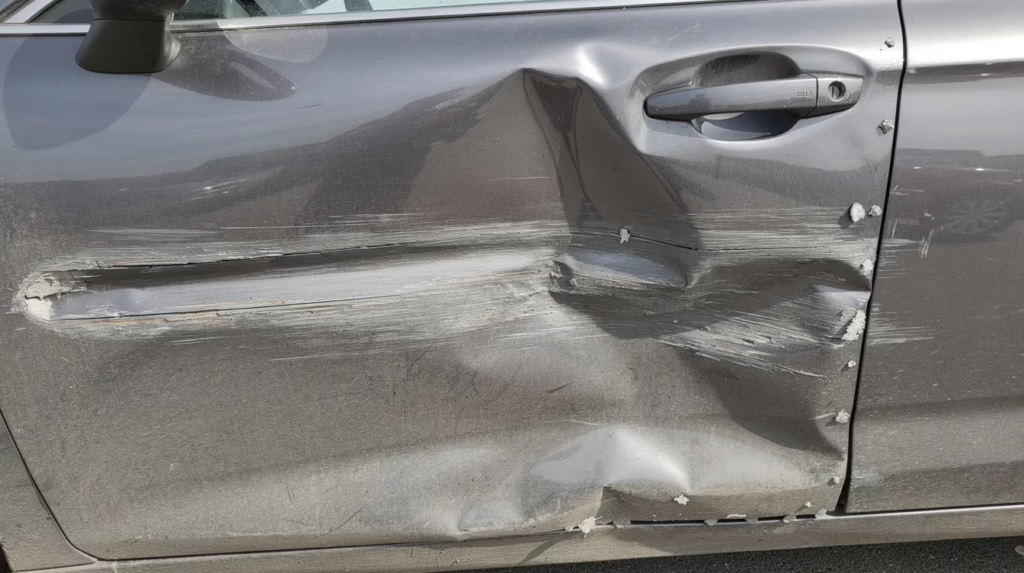
Sideswipe accidents happen when the sides of two vehicles traveling in the same or opposite direction make contact. Utah’s crash reporting distinguishes same-direction from opposite-direction sideswipes, and the fault analysis differs for each. Unsafe lane changes are among the most common causes on Utah roads.
When one driver is changing lanes and strikes the other car, fault typically lies with the driver changing lanes. Under 41-6a-710, that driver must ensure the move can be made safely before starting it, which means signaling and checking blind spots. Common scenarios where the lane-changing driver bears full responsibility include failing to signal before moving over, drifting into an adjacent lane without checking mirrors, cutting off another vehicle without leaving room, or drifting out of the lane due to distraction. Utah courts have emphasized that safety is the touchstone of a legal lane change, not merely whether the driver momentarily occupied two lanes. An improper lane change is a reportable violation with a three-year reporting period.
Not every sideswipe is clear-cut. Both drivers can share fault when, for example, two vehicles try to change into the same lane at once, one driver makes an unsafe lane change while the other is speeding, a merging vehicle signals properly but the continuing-lane driver accelerates to block it, or one vehicle drifts slightly while the other fails to keep a safe distance in the adjacent lane. Under 78B-5-818, the jury or adjuster assigns fault percentages to each party after weighing witness statements and other evidence.
Setting matters. Highway sideswipes involve higher speeds, narrower margins, and faster closing distances, so a driver changing lanes at 70 mph is held to a higher standard for checking blind spots and signaling early, and wet or icy roads raise the risk at those speeds. City-street sideswipes involve lower speeds but more complex patterns, such as intersections, turn lanes, parked cars, and pedestrians, so visibility, signal timing, and intersection geometry weigh more heavily and fault is more often shared. In both settings the core question is the same: which driver failed to keep their lane or yield right-of-way.
Merging accidents are a subset of sideswipe crashes that occur when a vehicle entering a highway or leaving an ending lane collides with a vehicle already in the continuing lane. The framework is similar to lane-change liability but adds obligations under 41-6a-903.
A merging driver who fails to yield typically bears fault. Key obligations include:
While the merging driver carries the primary burden, drivers in the continuing lane can share fault, for instance by accelerating to block a merging vehicle that has signaled and begun entering, failing to adjust when signage indicates a merge ahead, changing lanes aggressively without signaling near a merge, or driving distracted. Utah Code 41-6a-903.1 also establishes zipper-merge requirements in certain areas, where vehicles in both lanes proceed to the merge point and alternate entry. When both drivers ignore zipper-merge protocol, both may bear fault.
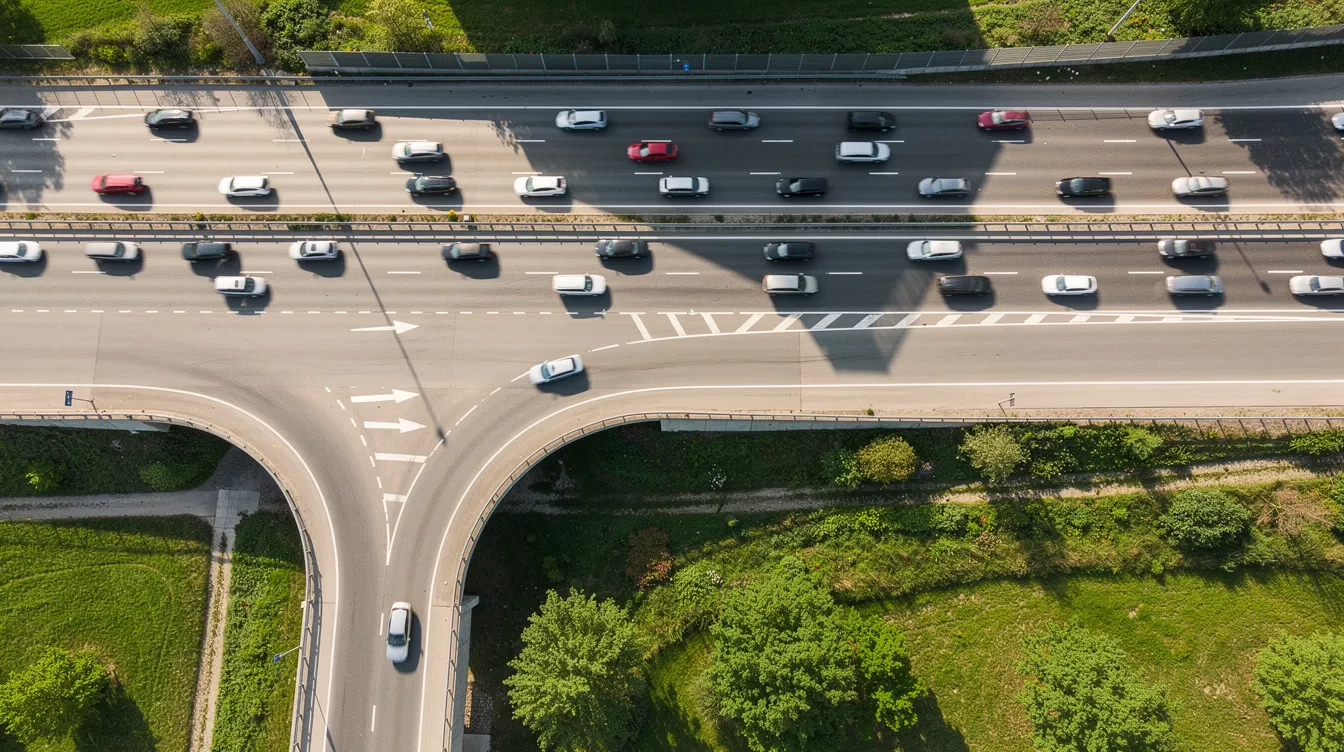
Intersection sideswipes present different dynamics. Traffic signals, stop signs, and turning lanes create more defined right-of-way rules, but also more room for disputes about who violated them.
Under 41-6a-903, vehicles turning left across traffic must yield to oncoming vehicles close enough to be an immediate hazard, which creates a strong presumption that the left-turning driver is at fault in most left-turn collisions, including sideswipe-type contact where the turning vehicle clips a vehicle going straight. The left-turning driver is not automatically liable, though. Utah courts weigh factors such as signaling, perception, and the reasonableness of the turning driver’s reliance on the other driver’s behavior. The oncoming driver may share responsibility if they were speeding significantly, ran a red light or ignored a traffic control, or were distracted or impaired.
When more than two vehicles are involved in an intersection collision, fault analysis grows more complex. Key factors include the order of entry and which vehicle had established right-of-way, traffic-control compliance, road markings and turning restrictions, and right-of-way violations such as failing to yield from a stop-sign-controlled leg. In these cases, fault may be spread across three or more parties, with each driver’s percentage set by their contribution to the crash.
If you were partially at fault, understanding how Utah’s comparative fault rule affects your compensation is critical, because even mostly-right drivers can see recovery reduced or eliminated. On a hypothetical $100,000 in damages, the math works like this:
Insurance adjusters and juries commonly assign partial fault for minor speeding, late or improper signaling, inattentive driving, missing a yield sign or merge markings, or drifting toward the center line during another vehicle’s legal pass. An insurer will actively look for contributory negligence to reduce payouts, so anticipating these arguments helps you protect your claim.
The difference between winning and losing a sideswipe claim often comes down to evidence, and some of it disappears within hours or days, so act quickly.
Physical evidence tells the story: vehicle damage patterns and paint transfer suggest which driver crossed the lane boundary and where contact began. Skid marks and debris fields show evasive braking and the point of impact. Crush depth and angle help reconstruct the angle of approach and relative speeds. Final vehicle positions relative to lane markings reveal the collision dynamics. Photograph everything thoroughly, including vehicle damage, road markings, traffic signs, and the surrounding area, especially if the other driver later disputes contact or leaves the scene.
Contact law enforcement to report the accident immediately. A police report creates an official record of observations, statements, and any citations, and while it is not conclusive on fault, it carries significant weight with insurers and courts. Eyewitness accounts from other drivers, passengers, pedestrians, or nearby employees can clarify what happened when driver accounts conflict, particularly on whether a driver signaled, was speeding, or appeared distracted. A citation issued to the other driver for an unsafe lane change or failure to yield supports, though does not conclusively establish, fault.
Modern technology provides powerful tools: dashcam footage that captures the other driver crossing the lane line without signaling is often the single most persuasive piece of evidence. Traffic, highway, and business surveillance cameras can capture the collision from an independent angle. Vehicle event-data recorders log speed, braking, and steering at impact. Smartphone location and speed data, if preserved promptly, can corroborate or contradict driver statements. Timing is critical, because dashcam footage may be overwritten within hours and business surveillance is routinely deleted. If this was a hit-and-run or the at-fault driver cannot be identified, review your uninsured motorist coverage as soon as possible.

This is general information, not legal advice. Determining fault comes down to which driver violated their duty of care through an unsafe lane change, a failure to yield while merging, or a right-of-way violation, and the evidence you preserve in the hours and days after the crash can make all the difference. If you were injured in a Utah sideswipe, merging, or intersection crash, Robert J. DeBry & Associates handles these claims and can evaluate yours at no cost, with no fees unless we recover compensation for you.
In most Utah sideswipe accidents, fault lies with the driver who left their lane unsafely, typically the driver changing lanes without signaling, without checking blind spots, or without ensuring adequate clearance. If the other driver contributed through speeding, distraction, or their own unsafe lane position, fault may be shared under Utah’s comparative negligence system. Adjusters review damage patterns, witness statements, dashcam footage, and the police report.
The merging driver is most often at fault, because Utah Code 41-6a-903 requires the vehicle in the merging lane to yield to traffic in the continuing lane. A main-lane driver who accelerated to block the merge, failed to signal their own lane change, or drove aggressively may share fault. Liability is never automatic. It depends on the specific facts.
In intersection crashes involving left turns, the left-turning driver typically bears fault for failing to yield to oncoming traffic under 41-6a-903. But if the oncoming driver ran a red light, was speeding, or violated another traffic control, fault may shift or be shared. Multi-vehicle intersection crashes require analysis of signal compliance, order of entry, and road markings.
Under Utah Code 78B-5-818, your compensation is reduced by your percentage of fault. If you are 30 percent at fault on a crash with $100,000 in damages, you recover $70,000. If your fault exceeds 50 percent, you are barred from recovery, and no defendant pays more than their allocated share.
This is general information, not legal advice. Contacting Robert J. DeBry & Associates or submitting a form does not create an attorney-client relationship.