

Utah recorded 4,408 alcohol related crashes and 274 alcohol related fatalities over recent multi-year tracking cycles, according to the Utah Highway Safety Office. Despite having the lowest legal blood alcohol concentration limit in the country at 0.05 percent, impaired driving remains a persistent and deadly problem across the state. These numbers represent real people, families permanently changed by preventable crashes.
Utah holds a unique position in the nation as the first state to lower its legal blood alcohol concentration limit from 0.08 to 0.05 percent. That lower limit took effect on December 30, 2018, under HB 155. Since then, the state has collected years of data showing both the effect of the law change and the persistent danger that impaired driving poses on Utah roads.

The scope of drunk driving in Utah remains significant. According to the Utah Highway Safety Office, statewide tracking logs roughly 4,408 alcohol related crashes over recent multi-year cycles, with 274 alcohol related fatalities recorded over the same period. Utah had 274 alcohol-related fatalities in 2021. The deadliest year was 2022 with 67 alcohol related fatalities.
Utah had 10,923 DUI arrests in 2024, according to the Utah Highway Safety Office. Law enforcement agencies make approximately 30 DUI arrests per day in Utah. The average BAC for DUI arrests in Utah is 0.15 percent, three times the legal limit, a point that underscores how many drivers arrested for DUI are substantially impaired, not borderline offenders.
Alcohol-impaired driving accounts for roughly 18 percent of all traffic fatalities in Utah, based on data from 2021 through 2025 published by the Utah Highway Safety Office. That share has remained relatively consistent even as total motor vehicle crashes have fluctuated. Alcohol-related crashes peaked in 2021 during the pandemic, reflecting a troubling rise in risky behavior on the roads during that period, including speeding, aggressive driving, distracted driving, and impaired driving.
The law change has had a measurable effect on outcomes, and Utah’s results have been closely watched by other states considering similar reforms. DUI fatalities dropped from 48 in 2018 to 27 in 2019. Utah experienced a significantly greater decline in alcohol related crash fatalities compared to neighboring states with a 0.08 percent limit, according to a published analysis in the National Library of Medicine. That research found a 19.8 percent reduction in crash fatalities and an 18.3 percent reduction in the fatal crash rate when comparing 2016 to 2019, adjusting for trends in contiguous states.
Drivers aged 21 to 39 have the highest number of involvements in fatal impaired driving crashes in Utah, according to the Utah Highway Safety Office. Approximately 73 percent of individuals arrested for DUI in Utah are male, and about 11 percent of DUI arrests involve people under the age of 21.
Utah’s DUI laws operate on a “per se” standard, meaning that a BAC at or above 0.05 percent is sufficient for a DUI charge and may also support a charge for driving under the influence regardless of whether the driver appears visibly impaired. The law is codified under Utah Code section 41-6a-502.
Only 6 percent of DUI arrests had a BAC between 0.05 percent and 0.079 percent, according to 2024 data from the Utah Highway Safety Office. The average BAC in DUI arrests is 0.15, three times the legal limit. This data suggests the lower limit has not resulted in a wave of arrests targeting marginally impaired drivers. Instead, the vast majority of people arrested for DUI are well above even the former 0.08 threshold.
A standard first-offense DUI is typically a Class B misdemeanor under Utah law. Penalties generally include a minimum of 48 hours in jail or equivalent community service, fines, mandatory screening and assessment, and a driver license suspension. For drivers age 21 and older, a first per se arrest generally leads to a 120-day license suspension through the Driver License Division. Refusing a chemical test can result in an 18-month administrative revocation. Second and subsequent offenses carry longer suspension periods and harsher penalties.
Enhanced penalties apply in cases involving higher BAC levels, drug combinations, or bodily injury to others, and consequences increase sharply when someone is seriously injured or killed in a crash. Under Utah Code section 41-6a-505, an “extreme DUI” carries a mandatory minimum jail sentence of at least five days, or two days plus 30 days of electronic home confinement.
These legal consequences of drunk driving exist alongside the civil liability a drunk driver faces if they injure or kill someone in a crash.
Not all hours or locations carry equal risk for alcohol related crashes. Data from the Utah Highway Safety Office shows clear patterns, and analysts looked at when and where these crashes occurred.
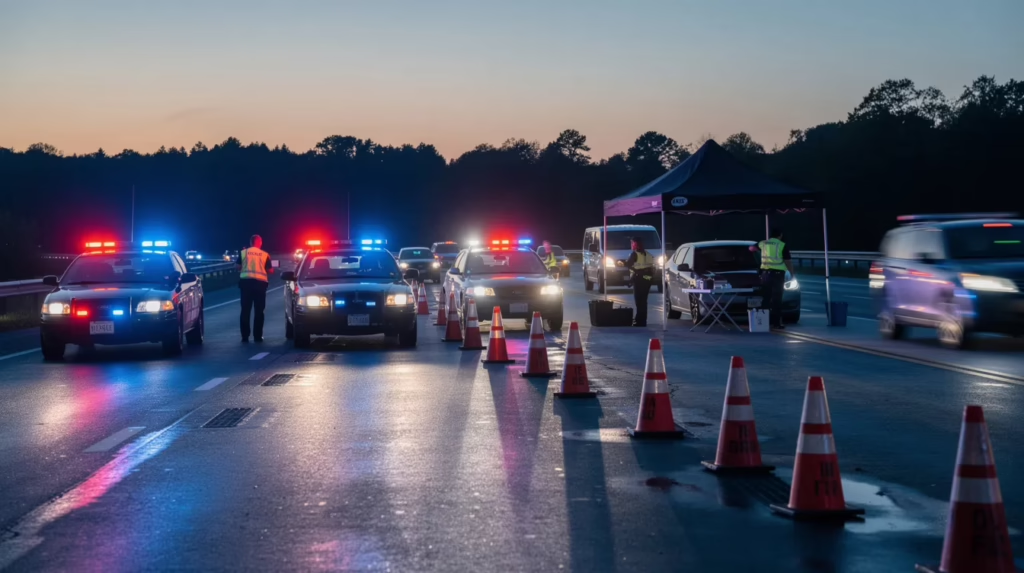
Saturdays have the highest percentage of fatal alcohol related crashes in Utah. Peak times for deadly impaired driving crashes are weekends, particularly Friday through Sunday evenings between 5 p.m. and 2 a.m. Holiday weekends also see elevated numbers of DUI arrests and alcohol related crashes.
The Wasatch Front accounts for roughly 68 percent of total DUI arrests in Utah, spanning Salt Lake, Utah, Davis, and Weber counties. However, rural areas carry a disproportionate share of the danger: while rural counties account for only 17 percent of crashes statewide, they suffer 40 percent of all traffic fatalities, according to the Utah Highway Safety Office. Fatality rates per vehicle miles traveled are significantly higher in rural counties, where longer response times and higher speeds contribute to worse outcomes.
Utah’s decision to adopt the lower limit was grounded in research showing that impairment does not begin at 0.08, it starts much earlier. Understanding how alcohol affects driving at every level is essential to understanding why these crashes keep happening.
Research cited in the Utah Department of Public Safety’s documentation on the 0.05 law shows that divided attention, tracking, vigilance, perception, and reaction time begin to be impaired at BAC levels as low as 0.01 percent. By the time a driver reaches 0.05 percent, measurable impairment in visual functions, lane keeping, decision making, and speed control is already present.
What does that look like behind the wheel? A driver at 0.05 BAC may not realize they are drifting between lanes, may misjudge the speed of an approaching vehicle, or may take a fraction of a second longer to brake. That fraction of a second, at highway speeds, can mean the difference between a near-miss and a fatal collision.
The phrase “buzzed driving is drunk driving” reflects this reality. A person who feels only mildly affected by alcohol is already experiencing cognitive and physical changes that make driving measurably more dangerous. Understanding what alcohol does to your driving ability drink by drink reinforces that there is no safe threshold for mixing alcohol and driving.
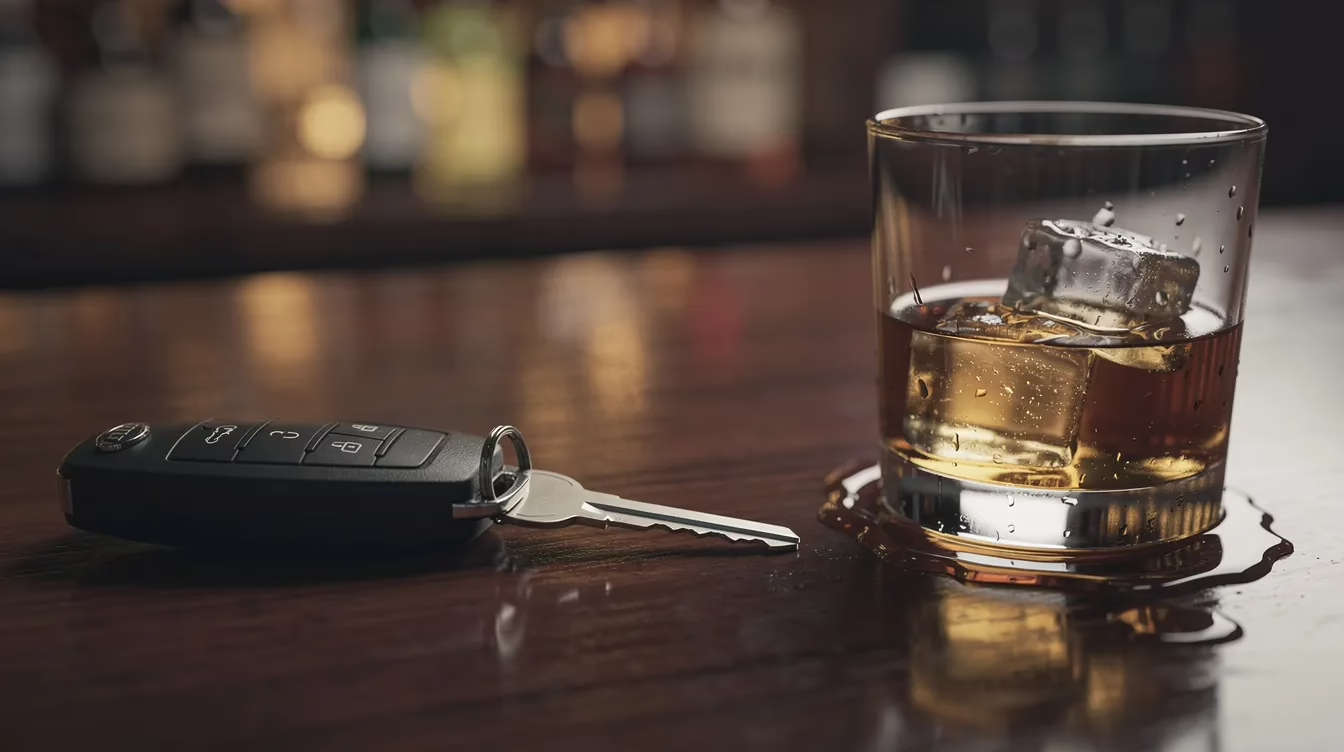
The data on crash outcomes makes the danger concrete. According to the Utah Highway Safety Office, alcohol related crashes are 15.1 times more deadly than others. That figure, drawn from 2020 through 2024 crash data, reflects the reality that impaired drivers are more likely to be traveling at excessive speeds, less likely to brake or take evasive action, and more likely to be unbelted.
Alcohol related fatalities accounted for roughly 18 percent of all traffic fatalities in Utah over the period from 2021 through 2025. While that share is lower than the national average, it still represents dozens of preventable deaths each year. In 2019, Utah recorded 27 alcohol-related fatalities, down from 48 the prior year, but even that lower number represents 27 families who lost someone to a completely avoidable cause.
One of the most persistent and dangerous misconceptions about drinking and driving is the idea that one or two drinks are harmless. The scientific evidence, as compiled by the Utah Department of Public Safety, directly contradicts this notion. Impairment begins with the first drink, and crash risk rises meaningfully at BAC levels well below 0.08.
The arrest data tells a related but distinct story. While impairment begins early, many of those actually arrested for DUI are far beyond the borderline. DUI arrests in Utah averaged a BAC of 0.14 in 2024. The average BAC in DUI arrests is 0.15, three times the legal limit. Only 6 percent of DUI arrests had a BAC between 0.05 and 0.079. This means the typical person arrested for drunk driving in Utah is not someone who had a single glass of wine, they are profoundly impaired.
Both facts matter: low-level impairment is real and dangerous, and the people who do get arrested tend to be significantly over the limit. Prevention must address both ends of the spectrum, while recognizing that alcohol is not the only one of the many things that can affect judgment on the road.
Reducing drunk driving fatalities requires more than law enforcement. It takes coordinated effort from public agencies, nonprofit organizations, and community groups working together on education, victim support, and cultural change.
MADD Utah operates as part of the national Mothers Against Drunk Driving organization but focuses specifically on Utah communities. The chapter provides victim support services, connecting families affected by impaired driving crashes with emotional support, guidance through the legal process, and community resources. MADD Utah also advocates for stronger enforcement and public policy, and runs educational outreach programs in schools and community settings designed to change attitudes about drinking and driving before they lead to tragedy.
The Utah Highway Safety Office serves as the state’s central hub for impaired driving data collection, public awareness campaigns, and coordination with law enforcement. Their “Drive Sober” campaign is one of several public education efforts aimed at reducing alcohol related crashes. The office publishes annual data reports, works with law enforcement agencies on DUI enforcement operations, and coordinates with health agencies to address the broader public safety implications of impaired driving.
Community-level prevention takes many forms across Utah. Local coalitions partner with schools to deliver prevention programs targeting young people before they reach driving age. Safe ride programs and alternative transportation initiatives are promoted during high-risk periods such as holiday weekends and major events. Surveys suggest that Utah’s 0.05 percent BAC law has encouraged more residents to plan for alternative sober rides, indicating that the law has influenced behavior beyond just enforcement.
Restaurant and bar industry partnerships also play a role, with establishments training staff to recognize signs of intoxication and providing information about rideshare options and designated driver programs.
Robert J. DeBry & Associates has been involved in community efforts to reduce drunk driving in Utah, working alongside prevention organizations and supporting advocacy that helps keep impaired drivers off the road.
Robert J. DeBry & Associates supports MADD Utah through participation in educational events, community awareness initiatives, and ongoing advocacy for the rights of drunk driving victims. The firm’s involvement reflects a commitment to addressing impaired driving not just through legal representation but through the kind of upstream prevention work that can save lives before a crash ever occurs.

Being injured or losing a family member in a drunk driving crash is devastating. Knowing what steps to take in the aftermath can make a meaningful difference in protecting your health, your rights, and your ability to seek accountability.
The first priority is always medical care. Even if injuries seem minor, getting evaluated immediately creates a medical record that may be important later. Call 911 to ensure police respond to the scene, a police report documenting the circumstances, including any signs of impairment or BAC test results, is a critical piece of evidence.
If you are physically able, document the scene: photographs of vehicle damage, road conditions, and the positions of the vehicles involved. Gather contact information from witnesses. Notify your insurance company promptly, but avoid making recorded statements about fault before speaking with an attorney. The firm’s guide on what documents you need for a personal injury claim provides additional detail on evidence preservation.
A drunk driving crash can give rise to both criminal prosecution and a separate civil claim. The criminal case is brought by the state and can result in penalties for the impaired driver. A civil claim is brought by the injured person or surviving family members to seek compensation for medical expenses, lost income, pain, and other damages.
Utah follows a comparative negligence framework, meaning fault can be apportioned among the parties involved. If the drunk driver is primarily at fault, the victim’s recovery may be reduced by their own percentage of fault but is not necessarily barred entirely.
There are deadlines for filing civil claims under Utah law. Missing these deadlines can forfeit your right to bring a claim. Understanding how long you have to file is important, and consulting with an attorney early helps ensure no deadlines are missed.
A personal injury attorney can evaluate the specific facts of your case, help preserve evidence, handle communications with insurance companies, and pursue appropriate legal action. Most personal injury firms, including Robert J. DeBry & Associates, handle these cases on a contingency fee basis, meaning you pay nothing unless there is a recovery in your case.
During an initial consultation, you should ask about the attorney’s experience handling drunk driving injury cases, how the process works, what timeline to expect, and what information you need to provide. The firm’s guide on questions to ask a personal injury lawyer can help you prepare.
Drunk driving continues to cause preventable death and serious injury across Utah. While the state’s lower legal limit and active enforcement have contributed to measurable reductions in alcohol related crash fatalities, the data shows that impaired driving remains a significant public safety problem. The numbers, 10,923 DUI arrests in a single year, crashes that are 15.1 times more likely to kill, and an average arrest BAC nearly three times the legal limit, demand continued attention from every corner of the community.
If you want to be part of the solution:
If you or a family member has been injured by an impaired driver, contact Robert J. DeBry & Associates for a free consultation to discuss your situation.
Esta es información general, no constituye asesoramiento jurídico.
What is Utah’s legal blood alcohol limit? Utah’s legal blood alcohol concentration limit is 0.05 percent, the lowest in the nation. Utah lowered its BAC limit from 0.08 to 0.05, with the change taking effect on December 30, 2018. A driver at or above 0.05 percent can be charged with DUI regardless of whether they appear visibly impaired.
How many drunk driving accidents happen in Utah each year? Statewide tracking logs roughly 4,408 alcohol related crashes over recent multi-year cycles, according to the Utah Highway Safety Office. Utah had 10,923 DUI arrests in 2024, averaging about 30 per day.
What should I do if I’m hit by a drunk driver? Seek immediate medical attention, call 911, document the scene if you are able, and preserve all evidence including medical records and the police report. Contact a car accident lawyer to understand your legal options before providing recorded statements to insurance companies.
What are my options for a sober ride in Utah? Rideshare services such as Uber and Lyft, taxis, and designated drivers are all reliable ways to avoid driving after drinking. Surveys suggest that Utah’s 0.05 percent BAC law has encouraged more residents to plan for a sober ride in advance.
How long do I have to file a claim after a drunk driving accident? Utah law imposes deadlines for filing civil claims after a crash. The specific timeframe depends on the type of claim. Consulting with an attorney promptly after the accident helps ensure no filing deadlines are missed. Learn more about filing timelines in Utah.
What organizations help drunk driving victims in Utah? MADD Utah provides victim support services, advocacy, and educational outreach. The Utah Highway Safety Office coordinates statewide prevention campaigns, data collection, and law enforcement operations. Local coalitions and community organizations also provide prevention programs and safe ride initiatives across the state.