

Robert J. DeBry and Associates represents slip and fall accident victims in Provo, Orem, and throughout Utah County. If you were injured on someone else's property because of a hazardous condition that should have been fixed or flagged, you may have a valid personal injury claim. The firm works on a contingency fee basis, meaning you do not pay legal fees unless compensation is recovered on your behalf.
A successful claim often requires proving property owner negligence. That means showing that a dangerous condition existed, that the property owner knew or should have known about it, and that their failure to act caused your injuries. Slip and fall cases can be difficult to prove, which is why early legal help and a thorough investigation matter.
This page covers how Utah premises liability law applies to fall accidents in Utah County, what evidence strengthens a case, the compensation that may be available, and how Robert J. DeBry & Associates handles these claims from the first phone call through resolution.
Slip and fall claims fall under an area of injury law called premises liability. Under Utah law, property owners have a legal duty to maintain reasonably safe conditions for people who are lawfully on their property. When they fail to do so, and someone is hurt as a result, the injured person may be entitled to compensation.
Premises liability requires proving the property owner knew or should have known about a dangerous condition. It is not enough to simply show that a hazard existed. The injured person must also demonstrate that the owner had actual or constructive notice of the problem and failed to take reasonable care to fix it or warn visitors about it.
Property owners must maintain safe premises for visitors. For people classified as “invitees” under the law, such as customers in a store or tenants in common areas, the duty is highest. Owners must inspect their property, repair known dangers, and warn visitors of hazards that cannot be immediately addressed. In Utah, property owners must warn visitors of hazards they are aware of or should reasonably discover through regular inspection.
Property owners are also responsible for maintaining common areas safely. This includes shared walkways, parking lots, lobbies, staircases, and entryways in apartment complexes, condominiums, and commercial buildings.
For licensees, such as social guests, the duty is narrower. Owners must avoid willfully injuring them and must disclose known dangers, but are not necessarily required to inspect for hidden hazards. Trespassers are owed the least duty under Utah law, though specific rules apply to children and certain artificial conditions on property.
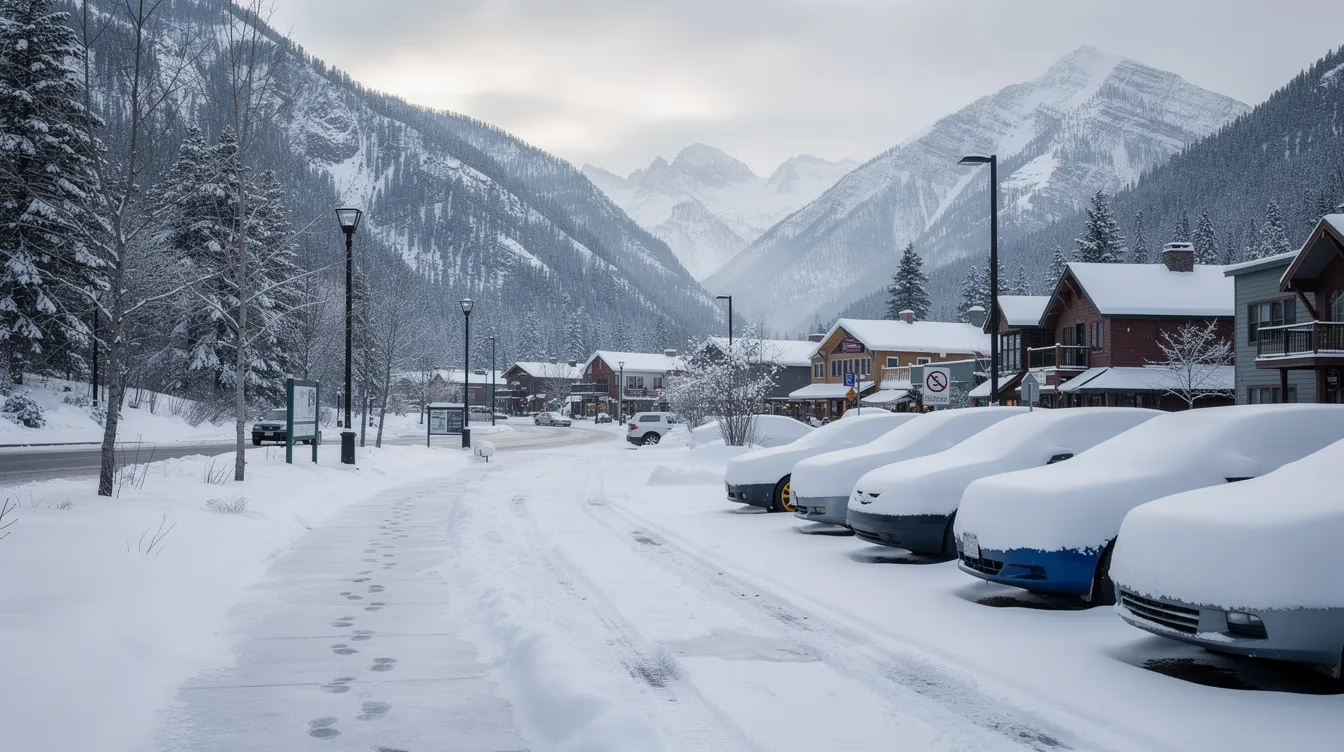
Snow and ice create hazardous conditions in Provo. Utah County’s winter weather leads to frequent ice accumulation on walkways, parking lots, and exterior stairs. Property owners and managers who contract for snow removal bear responsibility when cleared snow is piled in ways that block paths or when ice is left untreated for extended periods.
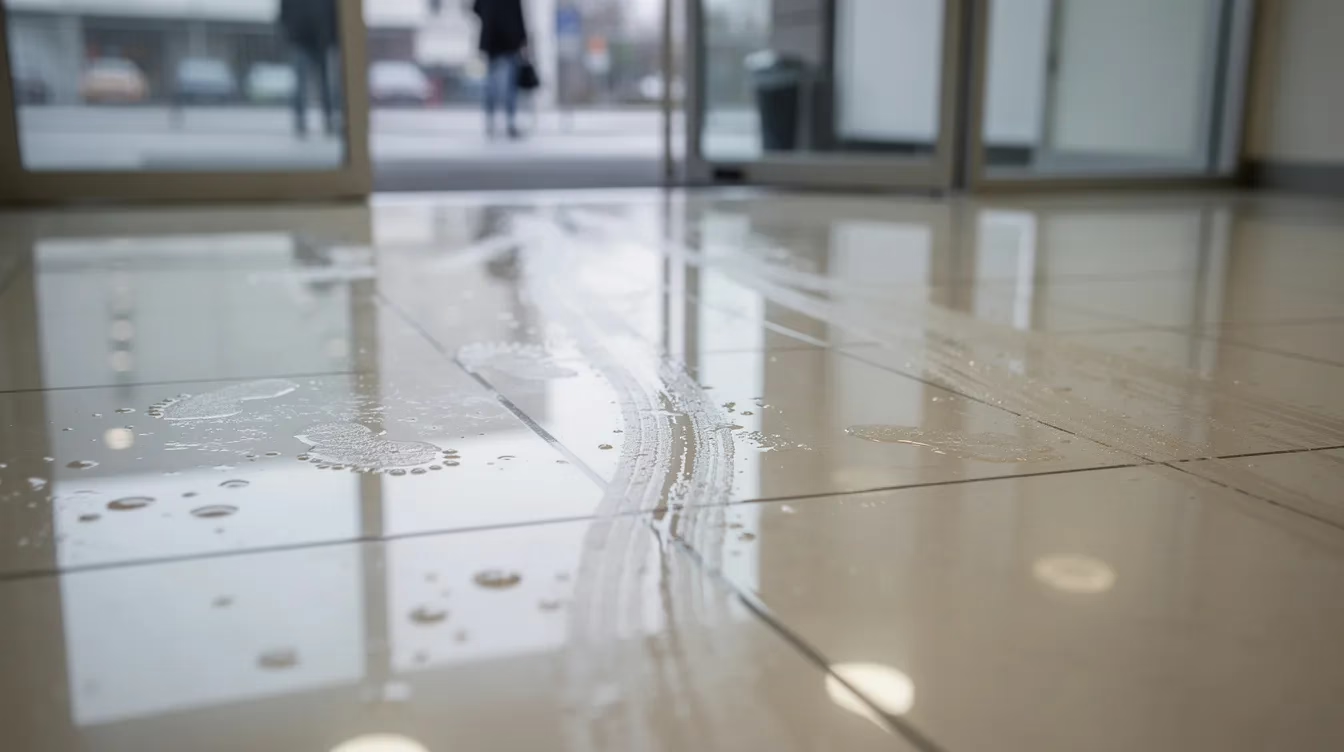
Spills and tracked-in water often cause slip and fall accidents in retail stores, restaurants, grocery stores, and other commercial spaces. Worn flooring can lead to slip and fall incidents, particularly in high-traffic entryways. Damaged stairs are a common cause of falls in Provo, especially in older residential buildings and student housing near university campuses. Poor lighting in hallways, stairwells, and parking garages compounds these risks by making it harder for visitors to spot dangers underfoot.
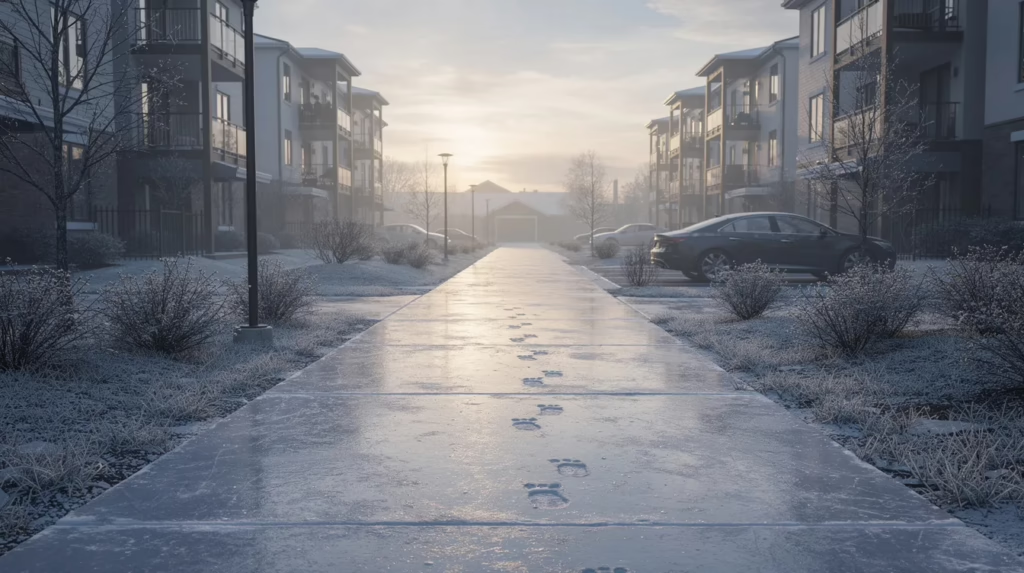
Fall accidents happen across Utah County in locations where high foot traffic combines with property maintenance failures and seasonal weather hazards. Crowded walkways increase the risk of falls in high-traffic areas, especially during winter months when ice and compacted snow go unaddressed.
Downtown Provo and surrounding commercial areas see frequent pedestrian traffic year-round. Common locations for fall accidents include:
Orem, Springville, Spanish Fork, and other cities in Utah County present similar hazard profiles. Slip and fall incidents frequently occur in:
Evidence like photographs and witness statements is crucial for your case. Because hazards can be cleaned, repaired, or altered quickly after a fall, slip and fall cases often require quick investigation and documentation to preserve proof that a dangerous condition existed at the time of the incident.
If you are injured in a fall, take these steps as soon as you are able:
You can file a lawsuit if negligence caused your slip and fall. To build a viable case, your legal team must:
Slip and fall cases can be difficult to prove, and property owners and their insurance companies routinely raise defenses designed to reduce or eliminate liability.
Insurance companies may try to shift blame onto the victim in slip and fall cases. Under Utah Code section 78B-5-818, Utah follows a modified comparative negligence rule. An injured person can recover compensation if their share of fault is less than 50 percent, but the amount recovered is reduced by the percentage of fault assigned to them. If the injured person is found 50 percent or more at fault, they cannot recover at all.
Property owners frequently argue that a hazard was “open and obvious,” meaning the injured person should have seen it and avoided it. Under Utah law, an open and obvious condition does not automatically eliminate the property owner’s liability. Courts have held that if the owner should have anticipated that visitors might encounter the hazard despite its visibility, a duty to warn or remedy may still exist. These are fact-specific determinations that require careful legal analysis.
One of the most significant obstacles in fall claims is that evidence vanishes quickly. Snow melts. Ice is salted. Wet floors are mopped. Broken steps are repaired. Surveillance footage may be overwritten on a scheduled cycle, sometimes within days. Maintenance records can be altered or discarded. Acting quickly after a slip and fall accident, and involving an attorney early, helps preserve evidence before it disappears.
Insurance adjusters working for property owners and insurance providers often use strategies designed to minimize payouts, and the same is true in related personal injury matters involving car accidents and an auto accident claim. Common tactics include:
Lawyers often handle insurance negotiations and communication with adjusters to protect their clients from these tactics, and the same approach may be used to hold negligent drivers accountable in vehicle-injury claims. An experienced legal team can help keep claims on track when insurers push for early, low settlements. Consulting with a personal injury lawyer before speaking with the property owner’s insurer is important, because legal expertise can help protect injured people during claims handling and reduce the risk of saying something an adjuster may use against them, just as in related cases involving negligent drivers whose conduct may include distracted driving, drunk driving, or reckless driving.
Robert J. DeBry & Associates handles premises liability and personal injury cases caused by someone else’s negligence throughout Utah County, including Provo, Orem, Springville, Spanish Fork, Lehi, and surrounding communities, with a proven track record, having helped tens of thousands of clients, and familiarity with local laws affecting Utah County claims. Clients are never treated as just a file. The firm’s approach to slip and fall claims includes:
Compensation may include medical bills, lost wages, and in some cases property damage when a fall breaks personal items like phones, glasses, or other belongings, but the full scope of what may be recoverable extends further. Depending on injury severity and its impact on your daily life, a personal injury claim may seek:
Compensation varies based on injury severity and impact on life. Common injuries in fall accidents include broken bones, traumatic brain injury, spinal injuries, soft tissue damage, and joint injuries. The specific circumstances of each case determine what damages apply.
You have four years to file a slip and fall lawsuit in Utah. Under Utah Code section 78B-2-307, the statute of limitations for most personal injury claims, including premises liability, is four years from the date of the injury.
However, when the fall occurs on government property, such as a city-maintained sidewalk, a county building, or a state facility, significantly shorter deadlines apply. Utah Code section 63G-7-401 requires written notice of a claim against a political subdivision within one year after the claim arises. Missing this deadline can bar the claim entirely.
Even though the general deadline allows four years, prompt legal action is important. Evidence deteriorates. Witnesses forget details. Surveillance footage is overwritten. Medical records are most persuasive when treatment begins close to the date of the fall. Contacting a provo personal injury attorney shortly after the injury protects both your evidence and your legal rights. The firm can also advise on deadlines in related injury claims such as a car crash. If you are looking for a provo car accident lawyer for a separate vehicle-injury matter, act quickly because different claims can involve different deadlines.
This is general information, not legal advice.
Property owners cannot simply blame visitors for every fall accident. While Utah law does consider whether a hazard was “open and obvious,” this does not automatically defeat a claim. Courts have recognized that property owners may still bear responsibility when they should have anticipated that visitors would encounter the danger despite its visibility. Whether a hazard was adequately marked or addressed requires a legal evaluation specific to the facts of each incident.
Yes. Utah comparative fault law allows an injured person to recover compensation if they are less than 50 percent responsible for the accident. The compensation is reduced by the percentage of fault assigned to the injured person. For example, if you are found 20 percent at fault, your recovery is reduced by 20 percent. Attorney evaluation is important to challenge unfair fault allegations and present evidence supporting your account of what happened.
The timeline varies based on injury severity and case complexity. Many slip and fall cases settle before going to trial, sometimes within months after an injured person reaches maximum medical improvement. Attorneys often negotiate settlements before filing lawsuits in slip and fall cases. Other cases require litigation and trial preparation, which can extend the process. An early free consultation helps establish realistic expectations based on the specific circumstances of your case.
Robert J. DeBry & Associates works on a contingency fee basis. You do not pay attorney fees unless compensation is recovered. There are no upfront costs to begin representation. The firm offers a free initial consultation to evaluate potential claims and explain the legal process.
Consult with an attorney before providing any recorded statement. Insurance adjusters may ask leading questions designed to elicit responses that minimize your claim or suggest you were at fault. Even well-intentioned answers can be taken out of context and used against you later. Legal guidance helps protect your rights and avoid statements that could harm your fall case.