

Homeowners insurance typically covers personal injuries that occur on a homeowner's property through two main mechanisms: liability coverage and medical payments coverage. Whether you are a homeowner facing a claim or someone who has been injured on someone else's property, understanding how these coverages work under Utah law can make a significant difference in how an injury claim proceeds and what compensation may be available.
45+ years of experience · 500+ five-star reviews · No fee unless we win
Homeowners insurance may cover medical bills for injuries on property, and liability coverage can pay for legal fees if sued. Most homeowners insurance policies also include provisions that may cover lost wages due to injuries, and death benefits may be included in homeowners liability policies. However, coverage has firm limits, notable exclusions, and important distinctions between the types of injuries that are covered and those that are not.
Key outcomes from this guide:

Personal liability coverage is the portion of a homeowners insurance policy that protects the policyholder against claims for bodily injury or property damage when the homeowner is found legally liable. According to the Utah Insurance Department, homeowners liability insurance cover applies when the homeowner is legally responsible for bodily injury or property damage and includes personal liability insurance to protect against claims or lawsuits that result from allegations of causing bodily injury or property damage.
This personal liability protection helps with personal liability claims when a guest or visitor is injured because of the homeowner’s negligence. When a visitor or guest suffers an injury on the property due to the homeowner’s negligence, liability coverage may pay for medical expenses, legal defense fees, lost wages, and pain and suffering damages up to the policy’s coverage limits. Most homeowners policies provide liability coverage for injuries, and liability coverage typically starts at $100,000 in homeowners policies.
These two terms sound similar but mean very different things in insurance policy language, and confusing them is one of the most common mistakes people make when evaluating homeowners insurance coverage.
Bodily injury liability coverage applies to physical harm: broken bones, burns, concussions, lacerations, and other physical injuries that someone suffers due to the homeowner’s negligence. Liability coverage may include medical bills and legal fees, and it may also cover damages for pain and suffering and lost wages. Most homeowners policies offer liability coverage starting at $100,000. Common situations covered include slips or falls on your property and dog bites.
Personal injury coverage in insurance terminology refers to non-physical harms: defamation, libel, slander, invasion of privacy, wrongful eviction, or false arrest. Legal personal injury claims like defamation require a specific endorsement on a homeowners policy. Standard homeowners insurance policies do not automatically cover these non-physical personal injury claims without that additional coverage endorsement, which may come at extra cost.
When most people ask “does homeowners insurance cover personal injury,” they are typically asking about physical injuries on property. The answer is that homeowners insurance typically covers personal injuries on your property through bodily injury liability coverage, not through the narrower “personal injury” endorsement.
Medical payments coverage, sometimes called Coverage F or MedPay, works differently from liability coverage. This is a no-fault coverage included in most homeowners insurance policies that pays for reasonable medical costs when someone is injured on the homeowner’s property, regardless of who was at fault.
No-fault medical coverage pays for minor injuries without liability claims. Typical per-person limits are modest, often between $1,000 and $5,000. This coverage can pay for emergency room visits, X-rays, and immediate medical care without anyone needing to prove negligence.
Important limitations of medical payments coverage:
When an injury is minor, medical payments coverage may handle the expenses completely. When an injury is serious, the claim typically moves into the liability coverage territory, where negligence must be proven for liability claims to succeed. These two coverages work together as building blocks of the homeowner’s overall insurance coverage for injuries.

Understanding when coverage applies requires looking at the specific circumstances of the injury, the relationship between the injured person and the property owner, and whether the injury occurred on or off the property.
Homeowners are liable for injuries caused by known hazards on their property. Under Utah law, property owners owe a duty of care to maintain reasonably safe conditions for people who enter their premises. When a property owner knows or should have known about a dangerous condition and fails to correct it, that failure can constitute negligence.
Homeowners must maintain safe conditions to avoid liability. Examples of conditions that may trigger liability coverage include:
Negligence must be proven before the homeowner can be held liable for the injury. The injured person must demonstrate that the homeowner had a duty of care, breached that duty, that the breach caused the injury, and that the injury resulted in actual damages. How knowable or obvious a hazard was can significantly affect whether the insurer accepts or disputes the claim based on whether the homeowner is found responsible for the hazard.
The legal protections owed to an injured person depend heavily on why that person was on the property.
Personal liability coverage in most homeowners insurance policies is not limited to incidents that occur on the insured property. Liability coverage may also cover incidents that happen away from home when caused by the insured, family members, or pets owned by the insured.
For example, if a homeowner’s dog bites someone at a public park, the liability portion of the homeowners policy may provide coverage for the resulting bodily injury claim. A pet owner should be aware, however, that some insurers exclude certain dog breeds from coverage or require a separate animal liability policy.
Medical payments coverage may also cover injured persons even away from the property if the injury is caused by the insured or family members, though this varies significantly by insurance policy. Reviewing specific policy language with the insurance carrier is essential to understand the scope of off-property coverage.
When an injury occurs on someone’s property, both the injured person and the homeowner have important steps to follow. How the claim is handled from the earliest moments can affect whether coverage applies and what compensation is available.
Whether you are the injured party or the property owner, prompt action preserves evidence and protects legal rights.
If you have been injured on someone else’s property, following these steps creates a strong foundation for any subsequent claim.
After the incident is reported, the insurance company will typically assign an adjuster to investigate the claim. The adjuster will assess whether the incident is a covered loss under the homeowners policy, whether the homeowner was negligent, and whether the injured party’s own fault contributed to the injury.
Liability coverage may pay for medical bills of injured visitors, legal costs from lawsuits, lost wages, and damages for pain and suffering. Homeowners insurance may cover legal costs from injury lawsuits, including legal defense fees for the homeowner even if the claim is ultimately denied.
Coverage limits for liability insurance typically start at $100,000. Most policies have a liability coverage limit of $100,000, though homeowners can purchase higher limits. Homeowners insurance typically covers up to $100,000 in liability, and if the injury costs exceed that amount, the homeowner may be personally responsible for the difference.
When claims are denied, common grounds include policy exclusions, evidence that the homeowner’s conduct was intentional rather than negligent, involvement of business activities not covered under the standard policy, or determinations that the injured person was primarily at fault.
Utah follows a modified comparative negligence system under Utah Code section 78B-5-818. Under this rule, an injured person’s own fault reduces their recovery proportionally but does not completely bar recovery unless the injured person is 50 percent or more at fault. In homeowners insurance cases, coverage disputes often turn on whether the homeowner is legally responsible under Utah’s comparative negligence rules. If an injured party is found to be 50 percent or more responsible for their own injury, they cannot recover damages.
For example, if a visitor was texting while walking and tripped on a broken step, a jury might find the visitor 30 percent at fault. The visitor’s recovery would be reduced by 30 percent, but they could still receive compensation for the remaining 70 percent of damages.
The general statute of limitations for personal injury claims in Utah is four years from the date of the injury under Utah Code section 78B-2-307. Missing this deadline typically bars the claim entirely, regardless of how strong the evidence of negligence may be. Claims against government entities have shorter notice deadlines.
When an insurance company disputes liability, reduces a payout based on comparative fault arguments, or denies a claim based on policy exclusions, consulting with a personal injury attorney may be necessary to evaluate whether the denial is appropriate or whether additional legal action is warranted.
Coverage disputes between injured parties and insurance carriers are common. Understanding the most frequent challenges helps both homeowners and injury victims prepare.
Many homeowners carry liability limits of $100,000 to $300,000, which may not cover damages from serious injuries. A single catastrophic injury involving surgery, extended rehabilitation, and lost income can exceed these limits quickly.
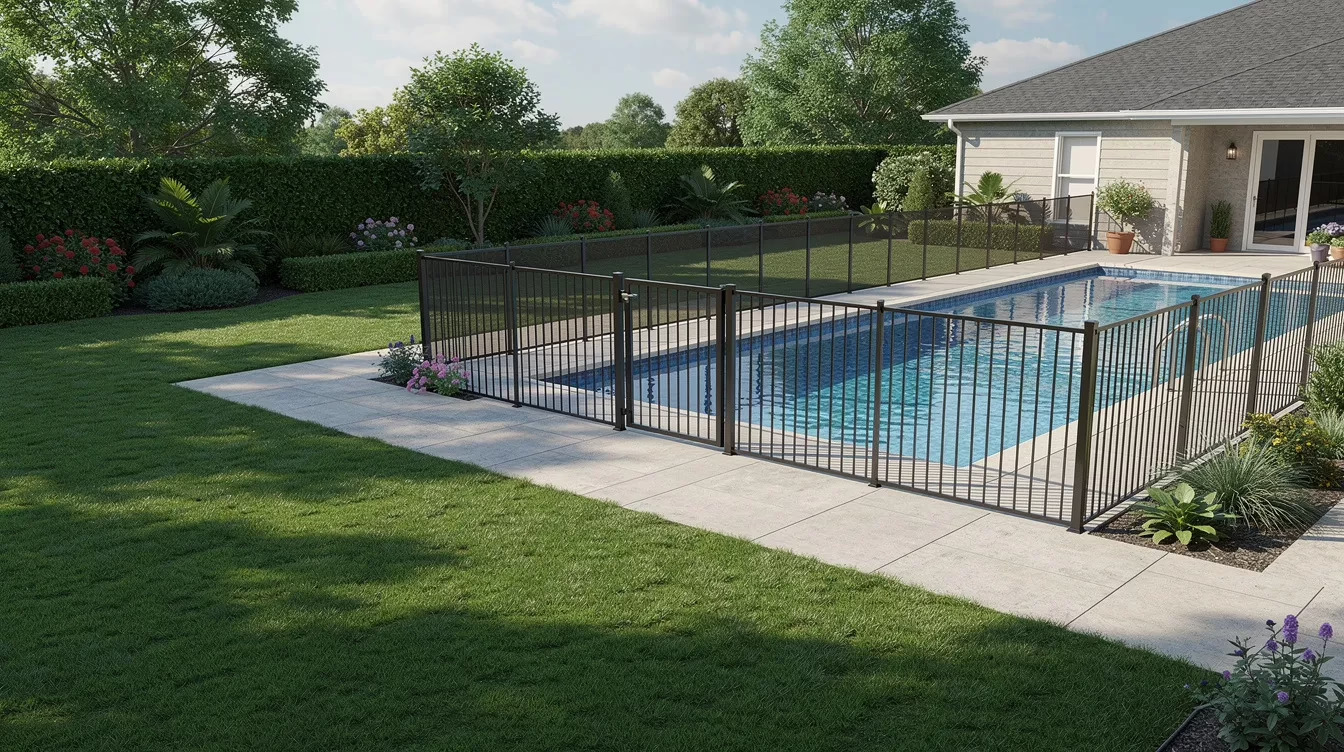
Umbrella insurance provides extra liability protection beyond standard policies. Umbrella policies cover claims exceeding standard homeowners insurance limits and can add an additional layer of financial protection. Homeowners can increase liability limits for better asset protection, particularly if they have a swimming pool, frequently host guests, or own pets.
Homeowners insurance does not cover intentional injuries. Homeowners insurance does not cover injuries from intentional acts or criminal acts. Other common exclusions include:
Reviewing policy terms annually and understanding what the insurance policy does and does not cover helps avoid surprises when an injury occurs.
Insurance companies may deny liability claims for various reasons: disputing that the homeowner was negligent, arguing the injured party was primarily at fault, or claiming the incident falls within a policy exclusion. If a claim is denied, the injured party should:
Not every property owner carries adequate homeowners insurance, and some properties may be uninsured entirely. When the at-fault property owner lacks insurance coverage, the injured party may need to pursue a claim directly against the property owner’s personal assets. Legal action may be necessary in these situations, and recovery depends on the property owner’s financial resources.

Homeowners insurance provides important but limited protection when someone is injured on a property. Liability coverage and medical payments coverage work together to address injury claims, but exclusions, coverage limits, and comparative fault rules all affect what compensation is ultimately available.
If you have been injured on someone else’s property in Utah:
For homeowners, reviewing your insurance policy’s liability limits, understanding exclusions, and considering umbrella insurance for additional protection are practical steps to reduce financial exposure.
This is general information, not legal advice.