

If you were not at fault, the at-fault driver's insurance typically pays for the rental car damage, your medical bills, and other losses such as rental costs while the car is repaired. Gaps are common, though, and rental companies may charge your card before reimbursement is confirmed, leaving you to manage claims across multiple insurers.
If you were in a rental car accident that was not your fault, the at-fault driver’s insurance typically pays for damage to the rental vehicle, your medical expenses, and related rental costs. The aftermath is more complex than a crash in your own car, with multiple insurance layers, rental company charges, and Utah-specific rules all in play. This guide covers who is financially responsible, how the coverage layers interact, what loss-of-use and diminished-value charges mean for you, and the steps to protect your rights. It is general information, not legal advice.
If a rental car is damaged in a crash, responsibility for repairs generally falls on the at-fault driver, whether the damaged vehicle is your own car or a rental. Rental accidents add a third party, the rental company, which has its own financial interest in the vehicle and its own contractual claims against you as the renter. This three-way dynamic between you, the at-fault driver’s insurer, and the rental company is what makes these situations confusing, and knowing who should pay, and in what order, is the best way to avoid unnecessary out-of-pocket costs.
The at-fault driver’s insurance is your first line of protection. Their liability coverage is responsible for property damage to the rental vehicle, your medical expenses, lost wages, and rental costs while the damaged car is repaired. Under Utah insurance regulations, the at-fault insurer must cover the reasonably incurred cost of transportation or a substitute rental vehicle once liability is accepted.
Timeline matters, though. Utah requires insurers to provide a substantive response to claim inquiries within 15 days and to accept or deny liability within 30 days, unless the investigation needs more time. In practice, liability disputes can delay payment for weeks or months.
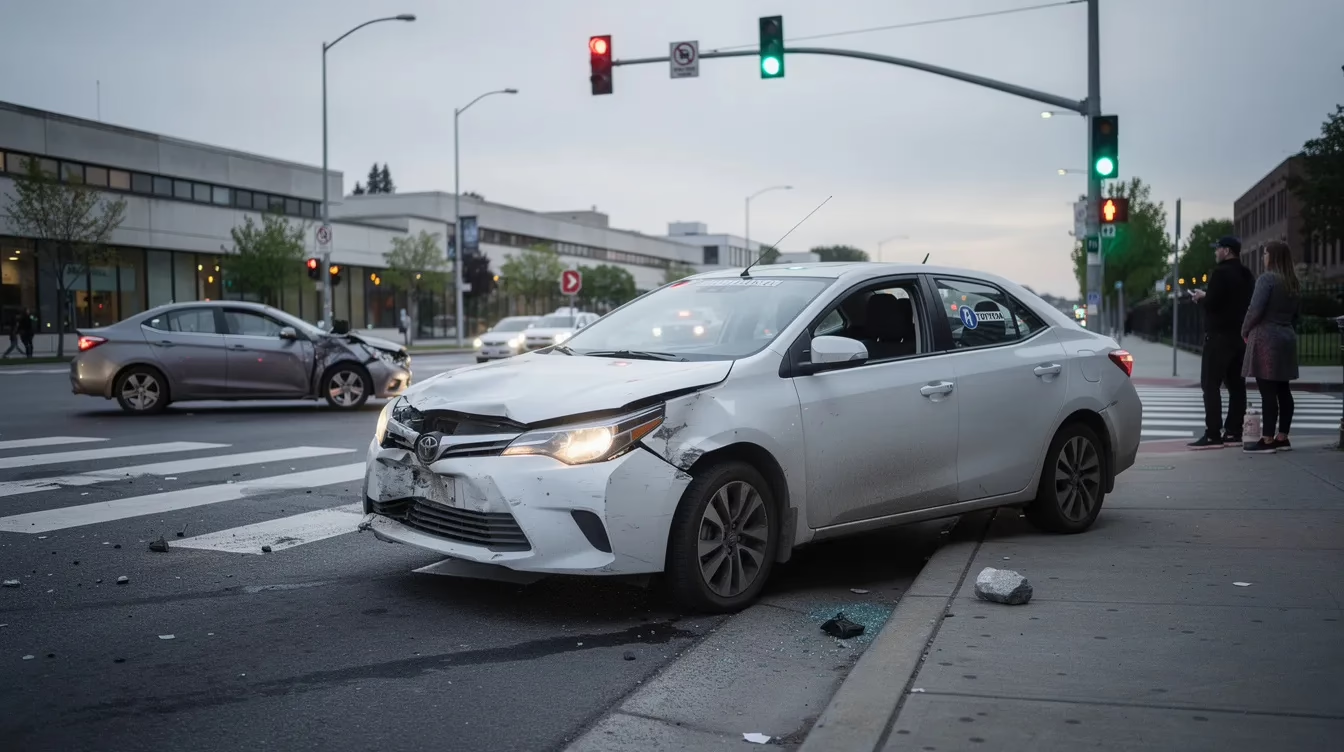
Several scenarios create gaps that the at-fault driver’s insurance alone cannot fill:
You may need to cover rental costs until liability is confirmed, which makes backup coverage essential, as the next section explains.
A rental car accident typically activates several coverage sources. Understanding the hierarchy, the at-fault driver’s insurance, your personal auto policy, credit card benefits, and the rental company’s collision damage waiver, keeps you from paying costs that belong to someone else.
Your personal auto insurance may extend to rental vehicles. If your policy includes collision and comprehensive coverage along with liability, what many drivers call full coverage, it generally extends to physical damage and liability claims involving a rental, subject to your deductible. Your liability coverage also extends to third-party injury and property damage claims while you drive a rental.
Many major credit cards offer rental protection that works like a collision damage waiver, as secondary coverage for damage or theft to the rental vehicle rather than liability protection, and it may cover loss-of-use charges, towing, and administrative fees. Coverage varies widely by card, but common requirements include:
Credit card protection is usually secondary, meaning it pays only after your personal auto insurance and the at-fault driver’s insurer are exhausted. You can seek reimbursement through your card for gaps that remain after primary coverage pays.
A collision damage waiver covers rental car damage regardless of fault by waiving the rental company’s right to charge you for physical damage. It is a contractual protection, not insurance. A few important limits:
When you are not at fault and have adequate personal coverage, a CDW may be unnecessary, though it does provide a simple first-dollar layer that avoids the hassle of filing with multiple insurers.
Protecting your rights after a crash in a rental requires specific actions beyond what you would do in your own car. You are responsible for managing the claim, and the steps you take immediately can determine whether it succeeds.
Document everything to support your claim. Follow these steps in order:
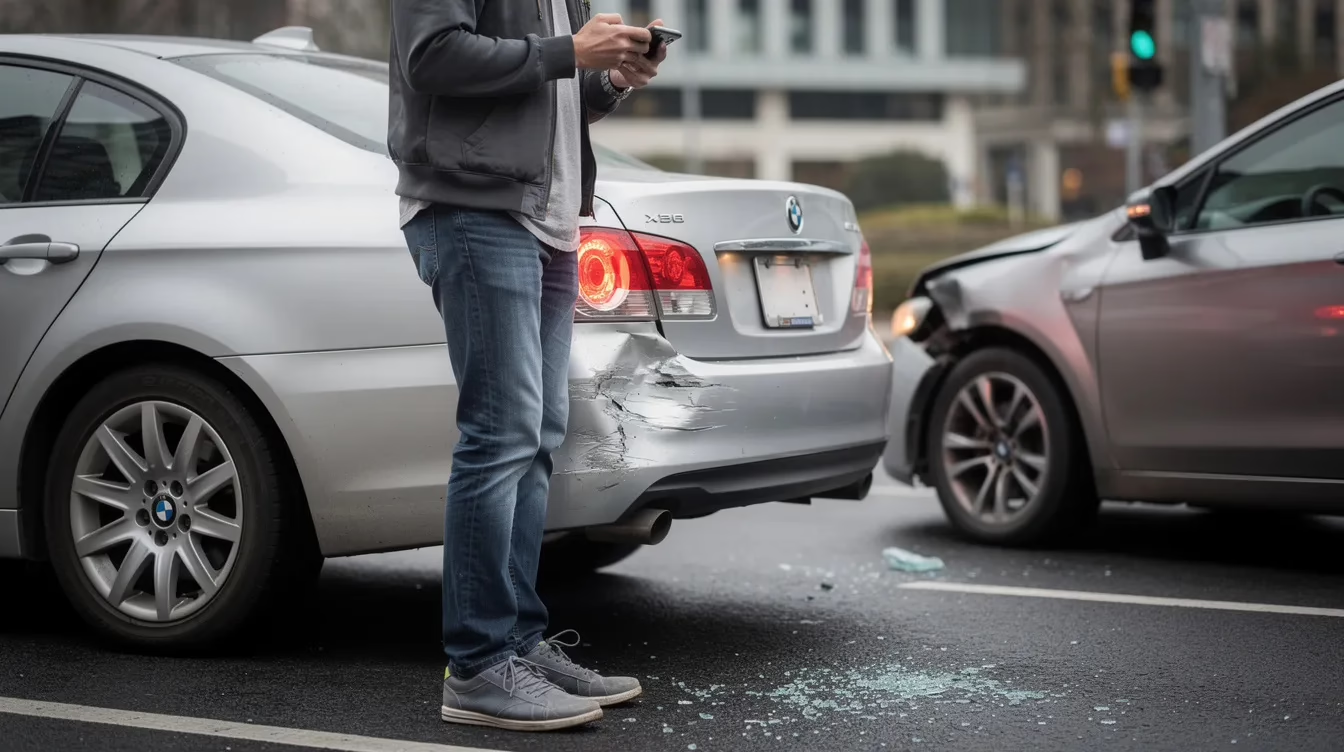
After leaving the scene, promptly contact:
You may need to pay for repairs up front if claims take time to resolve, so organized records of every expense are essential for reimbursement.
After a not-at-fault rental crash, the rental company will likely pursue charges beyond simple repairs. Knowing these charges helps you push the right ones to the at-fault driver’s insurer instead of your wallet.
Loss of use is the daily fee a rental company claims for revenue lost while the damaged vehicle sits in a shop instead of earning rental income. In Utah, insurers typically pay around $25 per day for a compact sedan as a reasonable rate. These charges should be directed to the at-fault driver’s insurance, not billed to you. Document the repair timeline carefully: when the vehicle entered the shop, the estimated completion date, and any delays. Note that if you carry only UMPD coverage for uninsured-driver situations, Utah law generally does not include loss of use in that coverage.
Diminished value is the reduction in a vehicle’s market value that persists even after full repairs, since a car with an accident history is worth less than an identical one without. In Utah, diminished value claims are relatively rare and complicated, and they must be made alongside your property damage and bodily injury claims, because once you settle those you typically lose the right to pursue diminished value separately. If the rental company tries to charge you for diminished value, those costs belong with the at-fault driver’s insurance, not with you as the non-fault renter.
Rental companies may add administrative fees, towing fees, and storage charges after an accident. Under Utah Code 31A-22-312, they must disclose charges clearly in rental agreements and advertising, and any unreasonable or undisclosed fees can be challenged. If the at-fault insurer has accepted liability, direct these charges to that insurer. Rental companies may charge your card upfront, but the 2025 statute limits their ability to require security deposits or hold renters liable for damage outside of misconduct situations.
You should not have to pay for damage you did not cause. Many straightforward not-at-fault rental cases resolve without legal help, but some situations call for it.
Consider consulting a car accident lawyer if you encounter any of these:
As a car accident victim, you can pursue damages even while driving a rental after a crash that was not your fault. An attorney can help you pursue a claim against the at-fault party for rental expenses, medical bills, lost wages, and other damages, and help you avoid settling for less than fair compensation.

This is general information, not legal advice. If you were in a rental car accident that was not your fault, Robert J. DeBry & Associates offers a free consultation to help you understand your options and identify which insurance sources should cover your damages. There are no fees unless your case is won.
Your personal auto insurance may extend to rental vehicles if your auto insurance policy includes collision and comprehensive coverage. Coverage varies, and some policies exclude certain vehicle types, extended rental periods, or business use. Review your policy or contact your insurer before renting to confirm what is included and what your deductible will be.
A collision damage waiver (CDW) is a contractual agreement where the rental company waives its right to charge you for physical damage to the rental car. It is not insurance. Under Utah Code 31A-22-312 (effective May 7, 2025), rental companies must disclose that your own auto insurance or credit card may already provide similar coverage. If you have adequate personal auto or credit card rental protection, a CDW may be unnecessary, though it can simplify the claims process.
A not-at-fault accident generally should not raise your premiums, since you did not cause the crash. Practices vary by insurer, and filing under your own collision coverage, even for a non-fault accident, could affect your record depending on your carrier.
Under Utah regulations, an insurer must provide a substantive response within 15 days of receiving a claim inquiry and must accept or deny the claim within 30 days, unless the investigation reasonably requires more time.
Rental companies may charge your card upfront for damages. Under Utah Code 31A-22-312, for rentals of 30 days or less, they are limited in requiring security deposits or holding authorized drivers liable for damage except in cases of specific misconduct such as intoxication, criminal use, or intentional damage.
Not necessarily. First offers often underestimate the full scope of damages, which may include rental car costs, loss of use, diminished value, medical expenses, and lost wages. Review any offer against your documented losses, and consider consulting a personal injury attorney before accepting, especially if you have ongoing treatment or unresolved rental expenses.
This is general information, not legal advice. Contacting Robert J. DeBry & Associates or submitting a form does not create an attorney-client relationship.