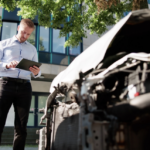
Self-driving cars used to feel like something from the future. Now, they’re already on roads in different forms. Some vehicles help with steering, braking, lane changes, parking, or highway driving. Other vehicles are being tested or developed to operate with less human input.
That raises a big question for Utah drivers: who’s at fault when a self-driving car gets into an accident?
The answer depends on what happened before the crash, who had control of the vehicle, how the technology was being used, and what evidence is available after the accident. In many cases, fault may involve more than one party.
If you were hurt in a crash involving a self-driving vehicle, here’s what you should know.
Self-Driving Doesn’t Always Mean Fully Driverless
One of the first things to understand is that “self-driving” can mean different things. Many vehicles on the road today are not fully autonomous. They may have advanced driver assistance features, but they still require a human driver to stay alert and take over when needed.
The National Highway Traffic Safety Administration explains that some systems can assist with driving tasks, but that doesn’t always mean the vehicle can safely handle every situation on its own. NHTSA also notes that the term “self-driving” can be misleading because it may make people think a car can do more than it actually can.
That distinction matters in an accident. If a driver was supposed to remain engaged, watch the road, and respond to hazards, they may still be responsible for causing a crash.
How Fault Is Usually Determined After a Car Accident
In a typical Utah car accident, fault often comes down to negligence. That means someone failed to act with reasonable care.
Examples can include:
- Speeding
- Running a red light
- Following too closely
- Driving distracted
- Failing to yield
- Driving under the influence
- Making an unsafe lane change
With a self-driving car accident, investigators may still look at those same issues. They may also need to look at the vehicle’s technology, software, sensors, data logs, and warnings.
A self-driving accident can involve questions like:
- Was the vehicle in automated mode?
- Did the driver activate the system properly?
- Did the vehicle warn the driver to take control?
- Did the driver ignore any alerts?
- Did the system fail to detect another vehicle, pedestrian, cyclist, or road hazard?
- Was the vehicle properly maintained?
- Did a manufacturer defect contribute to the crash?
The more advanced the vehicle technology is, the more complex the fault investigation can become.
The Human Driver May Still Be at Fault
In many crashes involving driver assistance technology, the human driver may still be responsible.
That can happen when the driver relies too much on the system. A driver may take their hands off the wheel, look away from the road, use their phone, or assume the vehicle can react to every situation. If the system requires supervision and the driver doesn’t provide it, that driver may be found at fault.
For example, a Utah driver using advanced cruise control on I 15 may still need to watch traffic, road construction, lane markings, and sudden slowdowns. If they fail to take control when traffic stops, they could be responsible for a rear end crash.
A driver may also be at fault if they use the technology in unsafe conditions. Some systems may not work well in heavy snow, poor visibility, faded lane markings, construction zones, or complicated intersections. Utah drivers know how quickly weather and road conditions can change, especially in the mountains or during winter storms.
If the driver knew the system had limits and used it carelessly anyway, that can affect liability.
The Vehicle Manufacturer May Be Responsible
There are also situations where the company that designed, built, or sold the vehicle may share fault.
A manufacturer may be responsible if the crash was caused by a defect in the vehicle or its automated system. This could involve defective sensors, faulty cameras, software errors, braking system failures, steering issues, or problems with how the car responded to road conditions.
For example, if a self-driving system fails to recognize a stopped vehicle ahead and doesn’t brake in time, the manufacturer’s role may need to be investigated. If the system behaved in a way that a reasonable driver would not have, that could point to a product liability issue.
Product liability cases can involve several types of defects, including design defects, manufacturing defects, and failure to warn. If a company marketed a feature in a way that made it seem more capable than it really was, that may also become part of the investigation.
These cases often require technical evidence, expert analysis, and access to vehicle data.
A Software Company or Technology Developer May Be Involved
self-driving technology depends on software. The car may use cameras, radar, lidar, GPS, mapping tools, artificial intelligence, and automated decision making systems.
If software contributed to the crash, a technology developer may become part of the liability conversation. That can happen if the system misread traffic patterns, failed to identify a pedestrian, misunderstood road signs, or made an unsafe decision.
Utah law recognizes automated driving systems as hardware and software capable of performing the driving task under certain conditions. Utah’s autonomous vehicle code defines an automated driving system as a level three, four, or five driving automation system.
The Owner of the Vehicle May Share Fault
The owner of a self-driving car may also be responsible in some cases.
That can happen if the owner failed to maintain the vehicle. Automated systems depend on working sensors, cameras, brakes, tires, software updates, and calibration. If the owner ignored maintenance, disabled safety features, skipped updates, or continued driving after warning lights appeared, they may share fault.
For example, dirty sensors or damaged cameras could affect how the vehicle sees the road. If the owner knew there was a problem and didn’t fix it, that may matter after a crash.
The same idea can apply to rental companies, rideshare companies, fleet operators, or businesses that use autonomous vehicles. If they put an unsafe vehicle on the road, they may be held responsible for the harm it caused.
Another Driver Could Be at Fault
A crash involving a self-driving vehicle doesn’t automatically mean the self-driving car caused it.
Another driver may still be responsible. A human driver in another vehicle may run a red light, drift into a lane, follow too closely, speed, or make an unsafe turn. In that situation, the self-driving vehicle may be involved in the crash without being the main cause.
Investigators need to look at the full accident scene. That can include police reports, witness statements, traffic camera footage, dashcam video, black box data, vehicle logs, skid marks, property damage, and medical records.
Utah Law Is Still Developing Around Autonomous Vehicles
Utah has been preparing for more automated vehicles on the road. The state has laws addressing autonomous vehicles, automated driving systems, and how these vehicles may operate. Utah Code Section 41 26 103 covers operation of motor vehicles equipped with an automated driving system.
In 2026, Utah lawmakers also passed legislation focused on autonomous systems and driverless vehicle liability standards. A Utah House summary stated that SB 292 created a legal foundation for self-driving vehicles to operate in Utah and set liability standards for manufacturers of autonomous cars and taxis.
Because this area of law is still changing, anyone injured in a crash involving a self-driving vehicle should be careful about making assumptions. The details of the vehicle, the technology, and the crash timeline can all affect the outcome.
What Evidence Matters in a self-driving Car Accident?
Self-driving car accident claims can depend heavily on digital evidence. That evidence may disappear, get overwritten, or become harder to access if too much time passes.
Important evidence may include:
- Vehicle data logs
- Automation status at the time of the crash
- Driver input before impact
- Speed and braking data
- Steering data
- Sensor and camera information
- Software update history
- Maintenance records
- Manufacturer warnings
- Dashcam footage
- Police reports
- Witness statements
- Photos and videos from the scene
- Medical records
NHTSA requires certain manufacturers and operators to report specific crashes involving automated driving systems or Level 2 advanced driver assistance systems.
For an injured person, preserving evidence quickly can make a major difference.
What Should You Do After a self-driving Car Accident in Utah?
After any crash, your health comes first. Get medical attention, even if you think your injuries are minor. Some injuries, including concussions, soft tissue injuries, and back injuries, may become more obvious later.
If you’re able, you should also:
- Call law enforcement
- Take photos of the vehicles, road, traffic signals, and surroundings
- Get names and contact information for witnesses
- Write down the make and model of the vehicle
- Ask if automated driving features were being used
- Save insurance information
- Avoid giving recorded statements before getting legal guidance
- Keep all medical bills, repair estimates, and crash related documents
You should also avoid guessing about fault at the scene. A self-driving car accident can involve information you can’t see right away.
Talk to a Utah Car Accident Attorney
Self-driving car accident cases can be complicated. Fault may involve a driver, vehicle owner, manufacturer, software developer, fleet company, another motorist, or several parties at once.
At Robert J. DeBry, our car accident lawyers can help injured Utahns understand their rights after serious car accidents. If you were hurt in a crash involving a self-driving vehicle or advanced driver assistance technology, you don’t have to figure it out alone.
Our team can review the crash, help preserve key evidence, and look at every possible source of compensation. Contact Robert J. DeBry today for a free consultation.