

Winter in Utah can look beautiful, but ice on sidewalks, parking lots, and stairs can create real hazards. A slip and fall on ice settlement in Utah is compensation for injuries caused by an icy fall, and it may include medical expenses, lost wages, pain and suffering, and longer-term effects when a property owner's failure to maintain safe conditions caused the accident. If you've taken a hard fall on icy ground, you're probably dealing with pain, medical bills, missed work, and a lot of uncertainty.
For injured people in Utah who want to understand their legal options after an ice-related fall, this page explains how these claims work, what premises liability requires, what to do after the accident, what settlements usually include, how long the process can take, and how Robert J. DeBry & Associates can help. A serious fall can affect your health, income, and daily life for months or years, so knowing how slip and fall on ice settlements work can help you protect your claim and pursue fair recovery.
Let’s walk through everything you need to know in a clear, practical, and easy way so you can feel confident about what comes next.
Ice hides in plain sight. Even a thin layer can create a hazardous condition and turn a normal step into a dangerous condition. Black ice can form when melting snow refreezes overnight, making the surface even harder to see. Many slip and fall clients share the same experience. They felt stable one moment, then the next moment they were on the ground with sharp pain in their back, hip, wrist, or head.
The biggest issue with ice is that your body has no time to react. You lose traction instantly, and the impact often hits your elbows, knees, tailbone, or head. These injuries can be severe and lead to long recovery periods. It’s common for people to struggle with walking, lifting, driving, or even basic daily activities after a slip and fall on ice.
When injuries are this significant, slip and fall settlements become an important part of getting your life back on track.
This means property owners have a duty to act within a reasonable time to remove snow, clear snow, and treat walkways after ice creates a risk, whether at a commercial property or along areas serving a residential or commercial property.
To establish liability, the key questions are whether the property owner knew about the hazardous condition, whether they had actual or constructive knowledge of it, and whether there was constructive notice that should have led to action. Proving property owner’s negligence is central to any slip and fall claim and personal injury claim.
For example, if a store entrance stays slick after a storm, liability is stronger when the property owner knew about recurring ice or the dangerous condition at that entrance. Weather reports can help show freezing temperatures, temperatures dropped, and icy conditions before the fall.
Some jurisdictions, including Maryland, require proof the owner had actual knowledge or should have known about melting and refreezing hazards in a Maryland slip case. Property owners may also be expected to act when ice forming comes from poor drainage or repeated thaw-and-freeze cycles. By contrast, some states such as Illinois limit claims involving natural accumulation, while cases may be stronger when hazards result from drainage or refreezing issues rather than a purely natural accumulation.
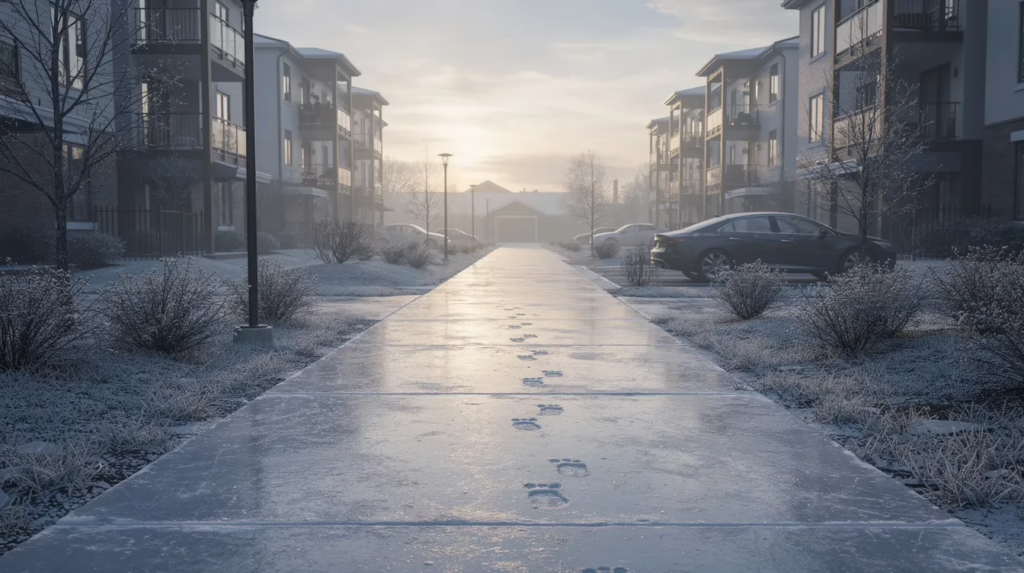
Slip and fall cases in Utah often fall under premises liability. This means property owners have a duty to keep their walkways reasonably safe on public and commercial properties, including office buildings, for anyone who uses them. That includes removing ice, salting slippery areas, fixing drainage issues, clearing snow, and placing warning signs when hazards exist.
To build a strong case, the focus is on a few key questions.
For example, imagine a business with an entrance that always freezes over in the morning. If the property owner failed to address that recurring hazard and customers fall, liability is often stronger. It can also be stronger when an entry area lacked proper matting on a wet or slippery surface. Or think about a parking lot with poor snow removal that creates icy patches throughout the walkway. Property owners are expected to handle that kind of hazard.
Slip and fall settlements often depend on showing that the accident could have been prevented. When a property owner fails to take reasonable steps, your claim becomes stronger.
After a fall, it’s easy to feel embarrassed, confused, or unsure about how to handle the situation. You’re focused on the pain, and your first thought is usually to get up and leave. Still, the steps you take right afterward can make a major difference for your case, and those early decisions often shape a slip and fall case and later settlement negotiations.
Here’s what helps the most. The usual path is to get medical care, report the incident, preserve strong documentation like photos, witness statements, incident reports, weather reports, and historical weather data, and then pursue a fall claim or fall lawsuit if needed.
Even if you’re not in extreme pain at the moment, injuries from ice-related falls often show up later. Adrenaline masks symptoms. Seeing a doctor right away helps connect your fall injuries to the injuries sustained and supports your claim. Slip and fall settlements often depend on strong medical documentation. Medical records can show the injuries caused by a slip and fall accident and whether they involve a serious injury, a broken bone, or even permanent impairment.
If the fall happened at a business, apartment complex, parking lot, or rental property, tell the manager or property owner as soon as possible. Ask the manager, business, or property owner for an incident report. Strong documentation like photos, witness statements, and written reports can enhance claims. A written report supports your claim and shows that the accident happened. It can also support a negligence claim by preserving when and where the fall happened.
Photos, videos, and other evidence are often critical to a successful recovery in a slip and fall claim, and the quality and availability of that proof can strengthen your case in settlement negotiations. Try to capture the exact area where you fell, including the lighting, any lack of salt, puddles, uneven surfaces, or other icy conditions, and make sure the images show the hazard before it changes.
If anyone saw your accident, ask for their contact information and get witness statements, since strong documentation like photos, witness statements, and incident reports can enhance claims. Preserve weather reports or historical weather data showing when snow, ice, or refreezing conditions existed. Surveillance footage, when available, can help establish liability.
Hold onto receipts, medical bills, doctor notes, treatment plans, and anything related to your injury, including records of medical costs. These documents show the financial impact of the fall, which can influence the size of slip and fall settlements.
Complete records also help show the plaintiff’s injuries and support the full value of the claim.
Slip and fall cases are more complex than most people realize, which is why guidance from a slip and fall lawyer can be so helpful. Insurance companies try to minimize payouts, and they often argue that the victim was careless or failed to watch where they were walking. When you have a fall lawyer on your side, you gain someone who handles the communication, protects your rights, and builds a strong case for the settlement you deserve. Robert J. DeBry & Associates is a personal injury law firm that handles these claims on a contingency fee basis, with no upfront fees unless there is a successful recovery. We also offer a free case evaluation.
Every case is unique, but most slip and fall settlements look at the same categories of damages. A settlement is designed to help you recover your financial losses and support your healing process.
Here are the main things that are typically included.
Medical expenses often set the baseline value of a slip and fall claim. This covers emergency care, doctor visits, physical therapy, medication, imaging, future medical needs, and any other treatment linked to your injury. Cases involving surgery, a Tri-Malleolar Fracture, or Complex Regional Pain Syndrome often carry greater value because treatment is more extensive. Fall injuries create enormous costs nationwide, with the CDC estimating roughly $50 billion in annual medical costs.
If your injury prevents you from working, you can pursue compensation for the income you missed. Some people miss days. Others miss months. In serious cases, the injury affects long-term earning ability.
These damages cover pain, emotional distress, and other non-economic damages tied to the accident. Chronic pain, reduced mobility, and long recovery periods impact everyday life. Slip and fall settlements often include compensation for this.
Falls on ice sometimes lead to long-term issues like back pain, joint stiffness, nerve problems, permanent impairment, or the need for ongoing physical therapy. Those limitations can affect your independence and financial security. An attorney will consider how your injuries affect your future.
People often want to know how long it will take to settle their case. The timeline varies because each case has different injuries, evidence, and insurance factors. Deadlines to file a personal injury claim or fall lawsuit also vary by state and can affect your ability to recover damages. Some claims resolve in a few months. Others need more time.
The process usually follows a clear path.
Claims involving a government entity can require faster notice, including written notice within 120 days in some states such as Wisconsin.
Most slip and fall cases settle without going to court, but having a strong legal team signals to insurance companies that you’re serious about your claim, and negotiations often involve insurance adjusters reviewing the evidence and damages.
A slip and fall on ice can disrupt your entire life. It affects your health, finances, relationships, mobility, and ability to work. Slip and fall settlements exist because people deserve support and compensation after a preventable injury. Most settlements focus on compensation, while punitive damages are rare, do not cover a specific loss, and instead punish the at-fault party’s especially reckless behavior. The goal is fair compensation that helps you recover physically, emotionally, and financially.
When you pursue a settlement, you’re standing up for your rights. You’re also sending a message to property owners that safety matters. Many businesses improve their snow and ice removal practices after claims like these. That helps protect others from experiencing the same thing.
Slip and fall cases can be exhausting to navigate on your own, especially while you’re healing. An experienced law firm can evaluate whether a claim is likely to resolve in the average settlement range of $20,000 to $50,000 or involve much larger exposure depending on liability, damages, and the facts of the fall.
Our team has helped people across Utah recover compensation for falls on sidewalks, parking lots, apartment properties, stores, and more. We use a thorough investigation process to gather evidence quickly, document injuries and losses, and build the strong record needed to establish liability after a fall. While the median jury award for premises liability cases is $100,000, the proof behind the claim often matters most.
Some firms advertise that they have recovered millions, but the more important question is whether your legal team can document damages and push for a fair result.
Results vary widely, and severe black-ice cases can sometimes lead to much larger outcomes, including a reported $1.3 million settlement.
You’re never just another case. You’re someone who deserves answers, care, and a fair outcome.
You didn’t choose to fall. You didn’t choose the pain or the stress. A slip and fall accident can lead to anything from minor injuries to catastrophic harm, especially for older adults. Falls are especially dangerous for seniors, with about 300,000 older adults hospitalized each year for hip fractures. What you can choose is support that helps you move forward. If you were injured in a slip and fall on ice, the sooner you reach out, the better your case will be. Evidence disappears, memory fades, and insurance companies get tougher with time.
You’re not alone in this. Our attorneys are here to listen, guide you, and fight for the settlement you deserve. Some serious falls can also lead to wrongful death claims, which is why acting quickly matters.
If you need help after a Slip And Fall Accident on snow and ice, contact Robert J. DeBry & Associates today for a free consultation.