

Riders and passengers under 21 must wear a helmet in Utah. Riders 21 and older are not required to. That makes Utah a partial helmet state, and the age line is where most of the confusion starts, because it affects citations, insurance arguments, and how an injury claim gets handled after a crash.
Under Utah Code 41-6a-1505, a person under 21 cannot operate or ride on a motorcycle on a public road without protective headgear meeting federal safety standards. There are no exemptions for underage riders. Being an experienced rider, holding a valid license, or completing a motorcycle safety course does not change the requirement.
The threshold moved in 2017, when the Legislature raised the mandatory helmet age from 18 to 21. Plenty of older articles still cite the previous age, so if you are checking this against another source, make sure that source postdates the amendment.
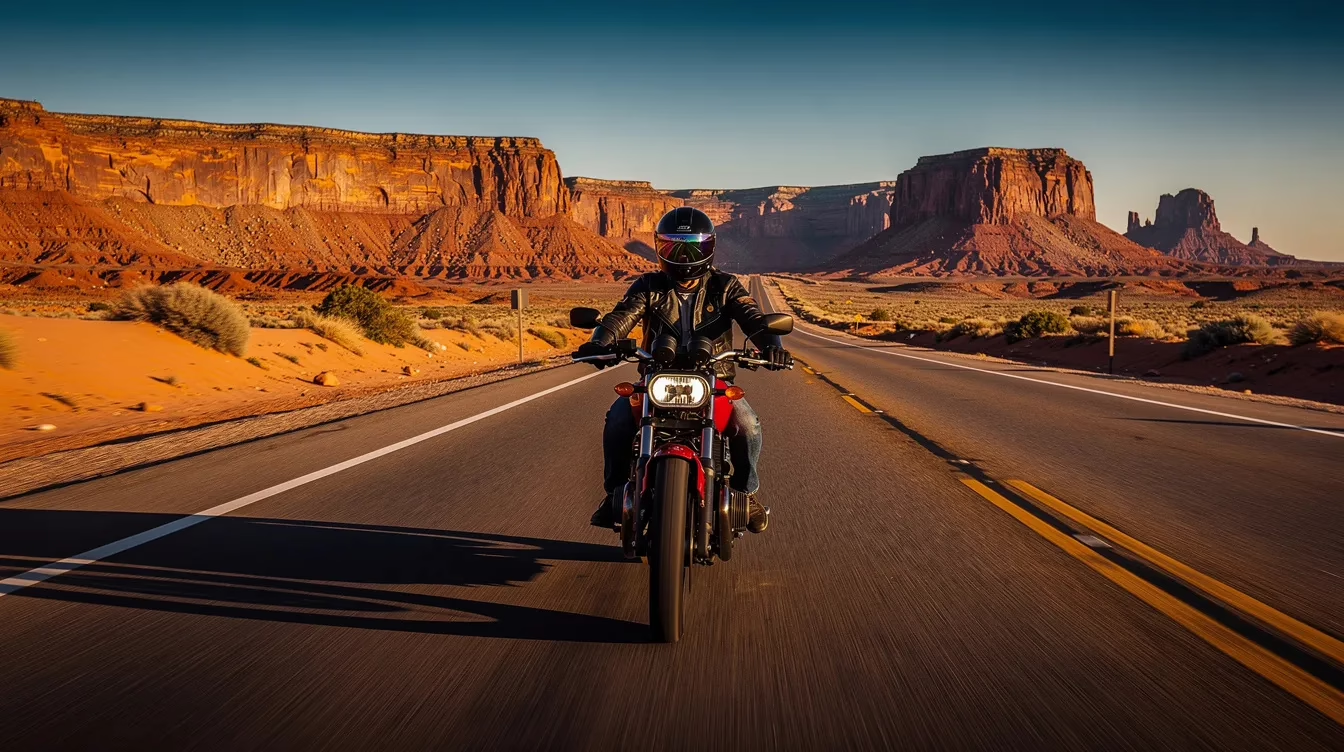
A helmet worn to satisfy the under-21 requirement has to meet the federal motor vehicle safety standard for motorcycle helmets, FMVSS No. 218. Utah adopts that federal specification rather than writing its own.
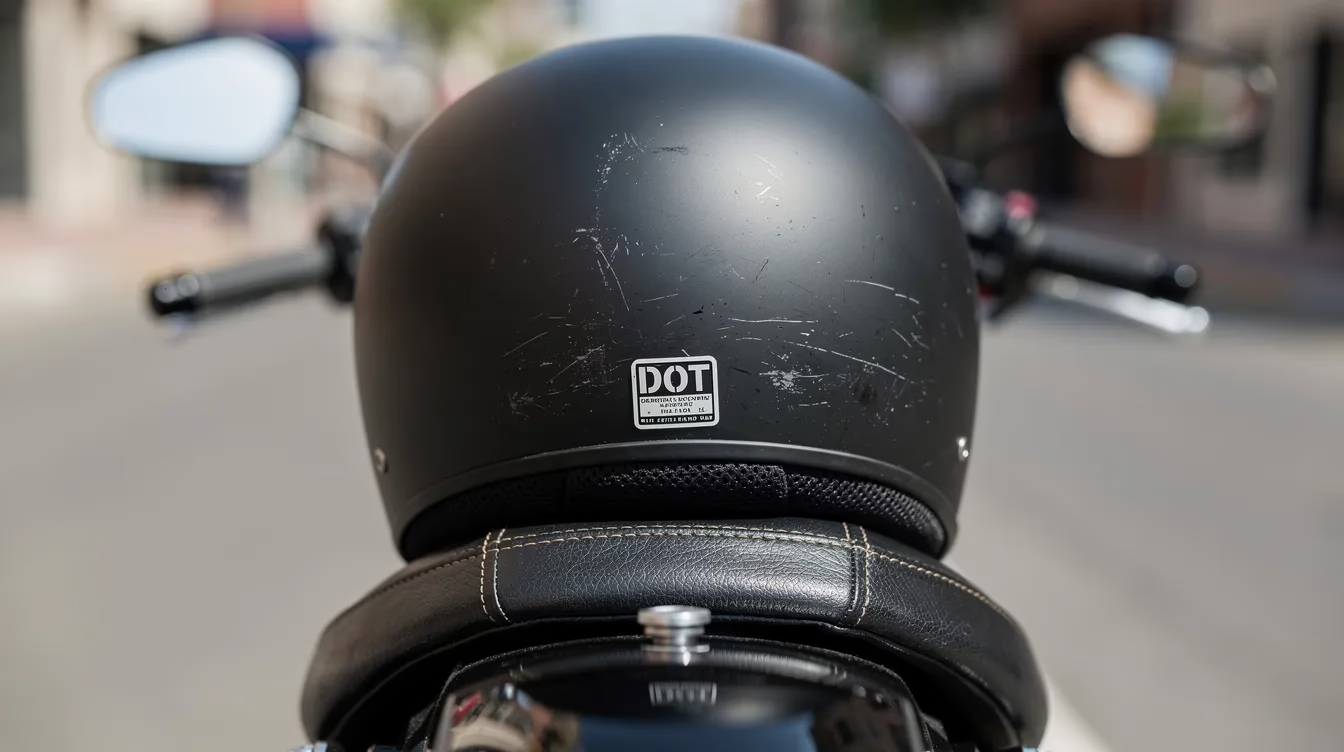
A compliant helmet carries a permanent certification label on the outside rear surface, between one and three inches from the bottom edge. That label includes:
When you are buying, check that those markings are present and legible, and look for solid construction: an expanded polystyrene foam impact liner, a sturdy retention strap with a secure fastener, and a shell with full coverage.
Novelty helmets, the thinner decorative shells, do not satisfy Utah’s requirement. They lack the impact-absorbing liner, the retention system, and the structural integrity needed to pass the federal test criteria. One can look very much like a motorcycle helmet and offer almost none of the protection in a crash.
A rider under 21 stopped without a DOT-approved helmet, or wearing a novelty helmet, can be cited for an infraction. The helmet’s condition, labeling, and certification all get assessed during enforcement, and modifications that compromise safety performance can render an otherwise compliant helmet non-compliant.

Utah Code 41-6a-1505 reaches past traditional motorcycles. The same under-21 requirement applies to several other vehicle categories.
Smaller displacement or lower-speed motorized two and three wheeled vehicles carry the same requirement as motorcycles. If you are under 21 you need protective headgear meeting the federal standard while operating or riding on one, and passengers under 21 are covered the same way.
An autocycle is a three-wheeled vehicle typically operated with a steering wheel rather than handlebars, with seating you do not straddle. Helmet requirements apply to autocycles that are not fully enclosed. If the vehicle has a complete enclosed cab, the requirement does not apply, even to an operator under 21. Three-wheeled motorcycles without an enclosure are covered.
The statute names electric assisted bicycles outright, not just one class of them. An individual under 21 may not operate or ride an electric assisted bicycle, a motor assisted scooter, or a high power electric device on a highway without protective headgear. There is one carve-out: a class 1 electric assisted bicycle or a motor assisted scooter rented from a business or corporate entity. The standard for these devices is not the motorcycle standard. It is 16 C.F.R. Part 1203, the federal bicycle helmet standard, which is the same CPSC certification a shop-bought bike helmet carries.
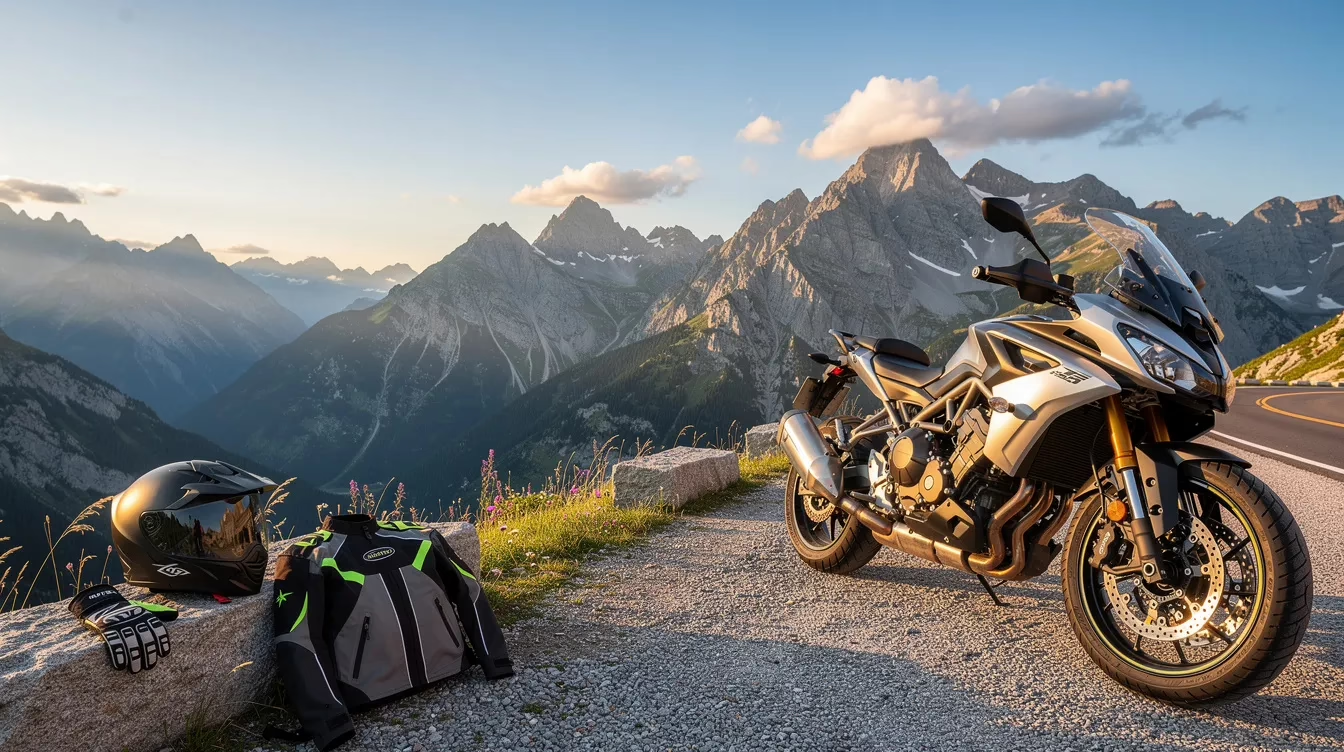
Utah requires eye protection for riders whose motorcycle does not have a windshield meeting state design specifications. This is a separate requirement from the helmet rule and it gets overlooked constantly.
It applies regardless of age. A rider over 21 who is not required to wear a helmet still needs eye protection unless the bike has an adequate windscreen. Acceptable forms include:
A helmet with an integrated visor satisfies both requirements at once. So does a windshield that meets the statutory height and design specifications. Failing to comply can result in a citation, and enforcement applies across every age group on public roads.
A violation of Utah’s helmet law is an infraction, not a misdemeanor. The statute itself caps the fine: a court may not impose more than $110 for a violation on a motorcycle or a high power electric device, or more than $25 for a violation on an electric assisted bicycle or a motor assisted scooter.
The statute also builds in an incentive for voluntary helmet use by older riders: a court reduces a fine by $8 where the rider was 21 or older and wearing compliant protective headgear at the time of the offense. That reduction is not available on a driving under the influence violation.
The statute does not attach points to a driving record specifically for a helmet violation, though any citation becomes part of your record and can factor into insurance rates or be reviewed alongside other violations.
The safety numbers matter more than the fine. Utah’s Highway Safety Office reports 5,887 motorcycle crashes statewide between 2020 and 2024, resulting in 229 fatalities. Roughly 62 percent of operators and 56 percent of passengers in those crashes were wearing helmets, and unhelmeted riders were about 1.78 times more likely to suffer fatal injuries.
This is where the helmet law and personal injury law meet, and where the analysis gets fact-specific.
Utah follows a comparative fault system for motorcycle accidents. Utah Code 41-6a-1505 addresses this directly. The statute provides that failure to wear protective headgear does not constitute contributory or comparative negligence on the part of a person seeking recovery for injuries, and may not be introduced as evidence in civil litigation on the issue of negligence, injuries, or the mitigation of damages. That is meaningful statutory protection for riders.
What happens in litigation and what happens in a settlement negotiation are not the same thing. Adjusters do raise helmet non-use when they are valuing a claim, particularly where there is a head injury, and they argue the injuries were worse because of it. Understanding the difference between what a statute keeps out of a courtroom and what an insurer will still say across a table is a large part of handling these claims well.
There is also a distinction between causing a crash and contributing to how severe the injuries were. How that plays out depends on the facts, which is why this is worth discussing with an attorney who handles motorcycle accident cases in Utah rather than assuming an answer in either direction. We do not make blanket statements about what can or cannot be used against a rider.
Not wearing a helmet does not eliminate your right to compensation. If another party’s negligence caused your crash, you may still be able to recover for medical bills, lost wages, and other damages.
What you can recover turns on who caused the crash and the circumstances of it, not solely on whether you were wearing a helmet. An attorney can help keep the claim focused on the actual cause of the collision, respond to attempts to shift blame onto the rider, preserve evidence from the scene, and apply the protections written into the statute.
Helmet non-use can complicate a claim more for an underage rider, where there is also a violation in the mix, which makes early guidance more valuable rather than less. Whatever your helmet status, documenting everything strengthens your position: the police report, witness statements, medical records, and the condition of your safety equipment.
Evidence deteriorates, witnesses get harder to find, and the insurance company starts building its file on day one. If you or a family member was hurt while riding, a free consultation can help you understand your options before deadlines start closing.
Yes, if you or your passenger are under 21. Utah Code 41-6a-1505 requires operators and passengers under 21 to wear protective headgear meeting the federal DOT safety standard. Riders 21 and older are not required to wear one, though safety officials recommend it for every rider.
21 and older. The Legislature raised the threshold from 18 to 21 in 2017. There are no exemptions for younger riders based on experience, training, or license type.
Yes, for any rider whose motorcycle does not have an adequate windshield, regardless of age or helmet requirements. Goggles, safety glasses, a transparent face shield, or a helmet with an integrated visor all satisfy it. This applies even to riders over 21 who are exempt from the helmet requirement.
One that meets the federal motorcycle helmet standard, FMVSS No. 218. Look for the DOT certification label on the rear exterior. Novelty helmets without proper impact absorption, a retention system, and DOT labeling do not qualify. For electric assisted bicycles and motor assisted scooters the standard is different: 16 C.F.R. Part 1203, the federal bicycle helmet standard.
Not wearing a helmet does not automatically prevent you from bringing a motorcycle injury claim, and Utah Code 41-6a-1505 contains protections governing how helmet non-use is treated in civil proceedings. Insurers may still raise it during settlement negotiations, and how it affects any particular claim depends on the facts, so it is worth having your situation reviewed.
Esta es información general, no asesoramiento jurídico. Ponerse en contacto con Robert J. DeBry & Associates o enviar un formulario no establece una relación abogado-cliente.