

Brake checking is illegal in Utah. No statute uses the phrase, but deliberately slamming your brakes to intimidate or punish a trailing driver qualifies as reckless driving under Utah Code 41-6a-528 and can trigger enhanced penalties under the state's road rage law. Who is actually at fault after a brake-check crash, the lead driver or the rear driver, depends on the specific facts.
Brake checking is illegal in Utah, and while no statute uses the phrase by name, the deliberate act of slamming your brakes to intimidate or punish a trailing driver qualifies as reckless driving and can trigger enhanced criminal penalties. This guide covers how Utah law treats brake checking and tailgating, how fault is determined in these rear-end collisions, and what to do if you were involved in one. It is general information, not legal advice.
Brake checking and tailgating are two aggressive behaviors that frequently trigger rear-end crashes on Utah roads. Understanding how the law defines each is the foundation for determining fault and civil liability after a collision.
Brake checking is the deliberate act of a lead driver suddenly slamming on the brakes when another vehicle is following closely, with the intent to startle, intimidate, or punish the trailing driver. It is distinct from necessary braking, such as stopping for an obstacle or slowing traffic. Because the trailing vehicle has little time to react, a brake-check crash can produce violent impacts at highway speed and can set off chain-reaction crashes in heavy traffic. Common injuries include concussions, spinal damage, broken bones, soft tissue injuries, deep bruising, and traumatic brain injuries, which can mean weeks of treatment and lost income.
Tailgating is defined under Utah Code 41-6a-711 as following another vehicle more closely than is reasonable and prudent given speed, traffic, and road conditions, and the statute expects drivers to keep at least a two-second following distance under normal conditions. Exceptions apply during funeral processions, in congestion where speeds are below 35 mph, and for vehicles in connected platooning systems, and a violation is an infraction carrying a fine and points on your driving record. Tailgating and brake checking are closely connected: a tailgating driver creates a dangerous situation that may provoke a brake check, and the brake-checking driver responds in a way that compounds the danger. Both behaviors violate Utah traffic law and both can contribute to fault.
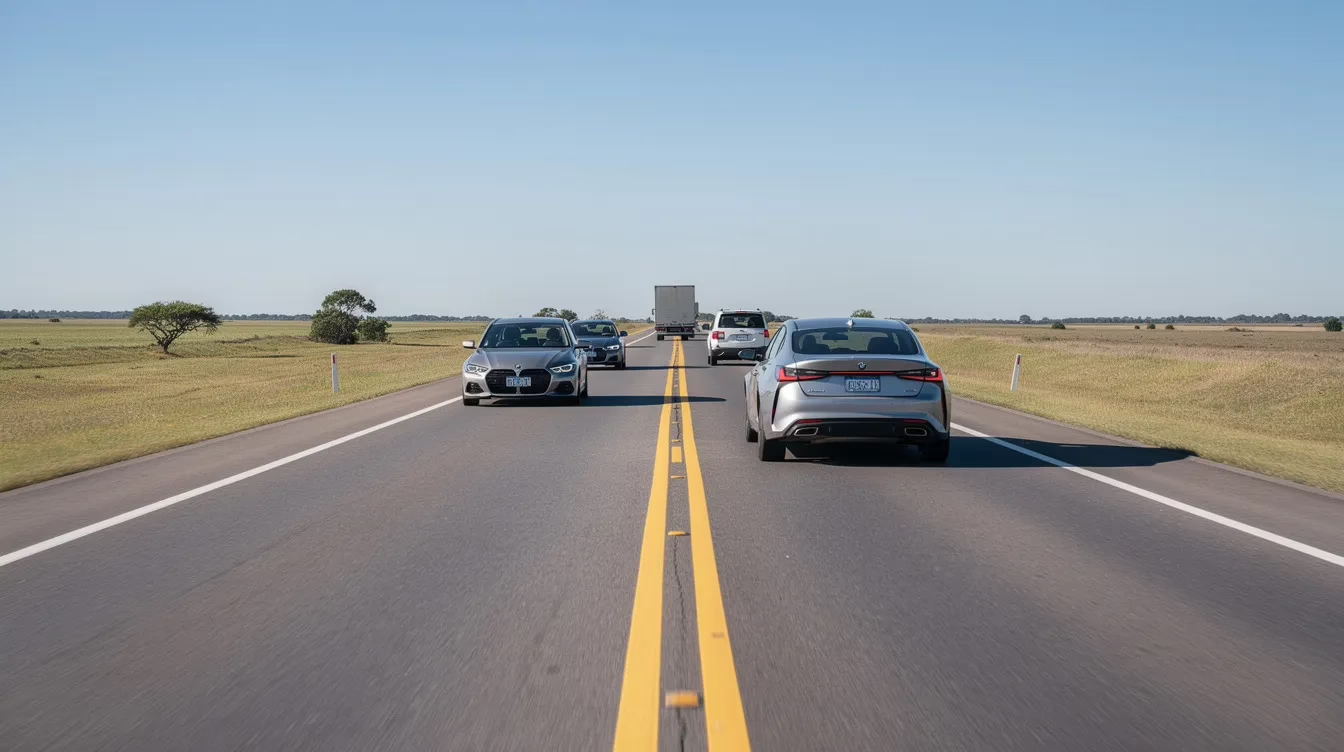
Utah addresses brake checking through several overlapping statutes. No single law names it, but the behavior falls within existing reckless driving and road rage provisions.
Yes, when it constitutes reckless or aggressive behavior behind the wheel. Under Utah Code 41-6a-528, reckless driving is operating a vehicle with willful or wanton disregard for the safety of persons or property, and a driver who intentionally hits the brakes to intimidate or punish a following driver meets that standard. Reckless driving is a Class B misdemeanor that can carry up to six months in jail. Effective July 1, 2024, Utah’s road rage enhancement law allows prosecutors to escalate charges when a driver acts with intent to endanger or intimidate another driver, and in cases involving serious bodily injury the enhancement can elevate the offense to a felony.
Utah Code 41-6a-711 requires drivers to keep a safe distance behind the vehicle ahead, at least a two-second buffer, and makes violations an infraction. For tailgating drivers, this creates a presumption of fault in rear-end crashes: if you were following too closely and could not stop when the vehicle ahead braked, you were likely violating the statute. Insurers and courts look closely at whether the trailing vehicle kept a safe following distance, and if not, that violation becomes strong evidence of negligence.
Utah draws an important distinction between infractions and criminal offenses. Following too closely is an infraction with a fine, but when aggressive behavior escalates, such as a driver slamming the brakes as a deliberate act of road rage, the conduct crosses into reckless driving or an enhanced road rage offense that can be a felony. The key factor is intent: was the braking necessary, or a willful or wanton disregard for safety?
Fault in a brake-check crash is not automatic. Many people assume the rear driver is always responsible, but the reality under Utah law is more nuanced.
In a typical rear end accident, the driver who strikes the other car from behind is presumed at fault, because every driver has a duty to keep a safe following distance and be ready to stop. When the trailing vehicle cannot stop in time, it is generally considered at fault for following too closely. That presumption is rebuttable, though: if strong evidence shows the lead driver caused the crash through intentional or reckless conduct, that driver can be held liable.
Liability shifts to the brake-checking driver when evidence shows the lead driver intentionally braked to intimidate, startle, or punish the other driver with no legitimate traffic reason. In that situation the lead driver’s deliberate act is the proximate cause of the crash and that driver may bear primary fault. Both drivers can still share liability, since the tailgating driver may be partly responsible for following too closely, but the brake-checking driver’s intentional conduct typically carries greater legal weight. The distinction between intentional and necessary braking is central to proving liability.
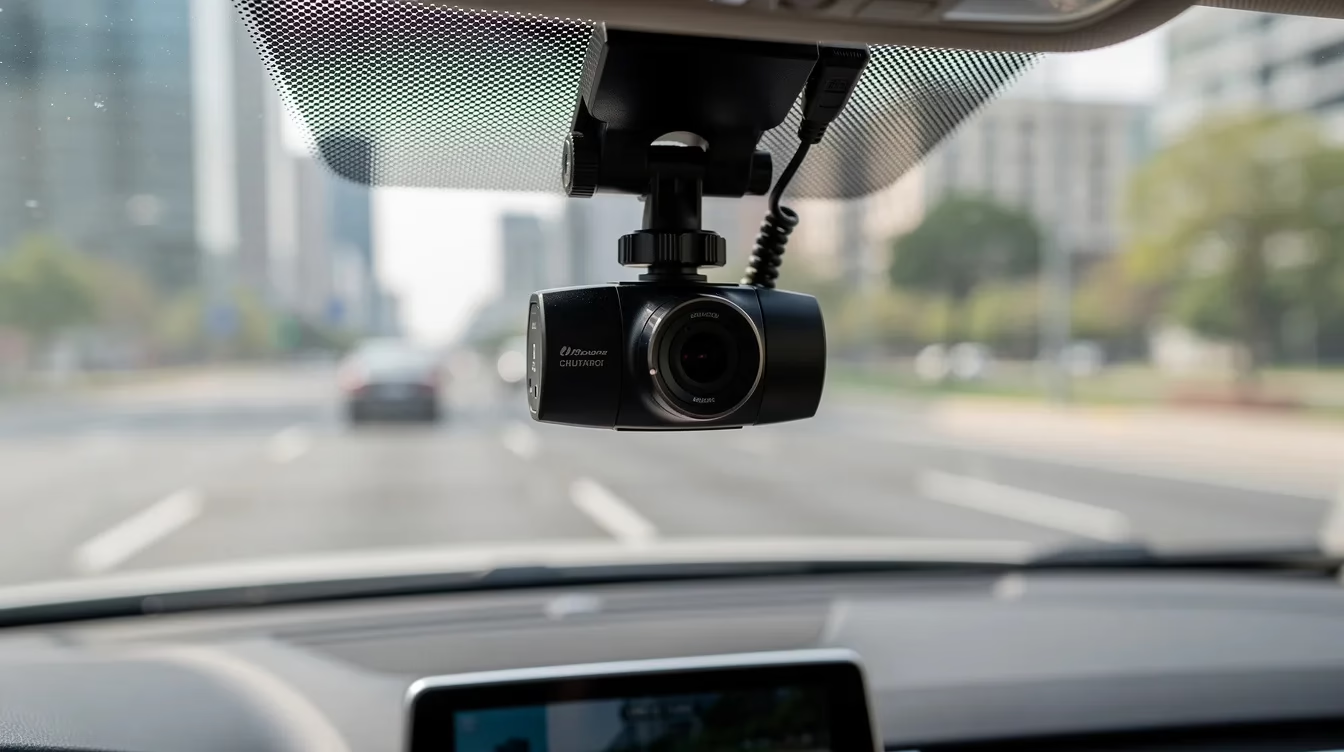
Proving brake checking takes strong evidence. Without it, the rear driver faces the standard presumption of fault. Key evidence includes:
Proving brake checking can be difficult without witness testimony or dashcam footage, so stronger documentation helps build a more persuasive claim.
Utah’s fault system means that even if you were partially at fault, you may still recover, but only up to a point.
Utah follows a modified comparative negligence model under Utah Code 78B-5-818. You can recover damages as long as you are less than 50 percent at fault, and if you are 50 percent or more at fault you are barred from recovery. Any compensation is reduced by your percentage of fault. Utah’s threshold is stricter than the pure comparative fault systems some states use, where a plaintiff can recover even when mostly at fault.
These crashes frequently involve shared fault. For example, if a lead driver brake checks at highway speed with no hazard and the trailing driver was following too closely but could not have anticipated the sudden stop, fault may fall primarily on the brake-checking driver with a smaller share to the tailgater. If the car in front brakes for legitimate congestion and a tailgating rear driver crashes, the rear driver is likely at full fault. And if a lead driver reacts to a hazard and then brake checks a tailgater out of frustration, both drivers may share significant fault.
If fault is split, say 30 percent to you and 70 percent to the other driver, your compensation is reduced by 30 percent, so on a $100,000 claim you would recover $70,000. Insurers often try to assign higher fault to the injured party to reduce payouts, so minimizing your assigned fault is critical to a fair outcome. Brake checking can create civil liability, and a personal injury claim can help victims recover for medical treatment, lost income, and pain and suffering. Understanding how fault affects your claim is essential before accepting any settlement offer.
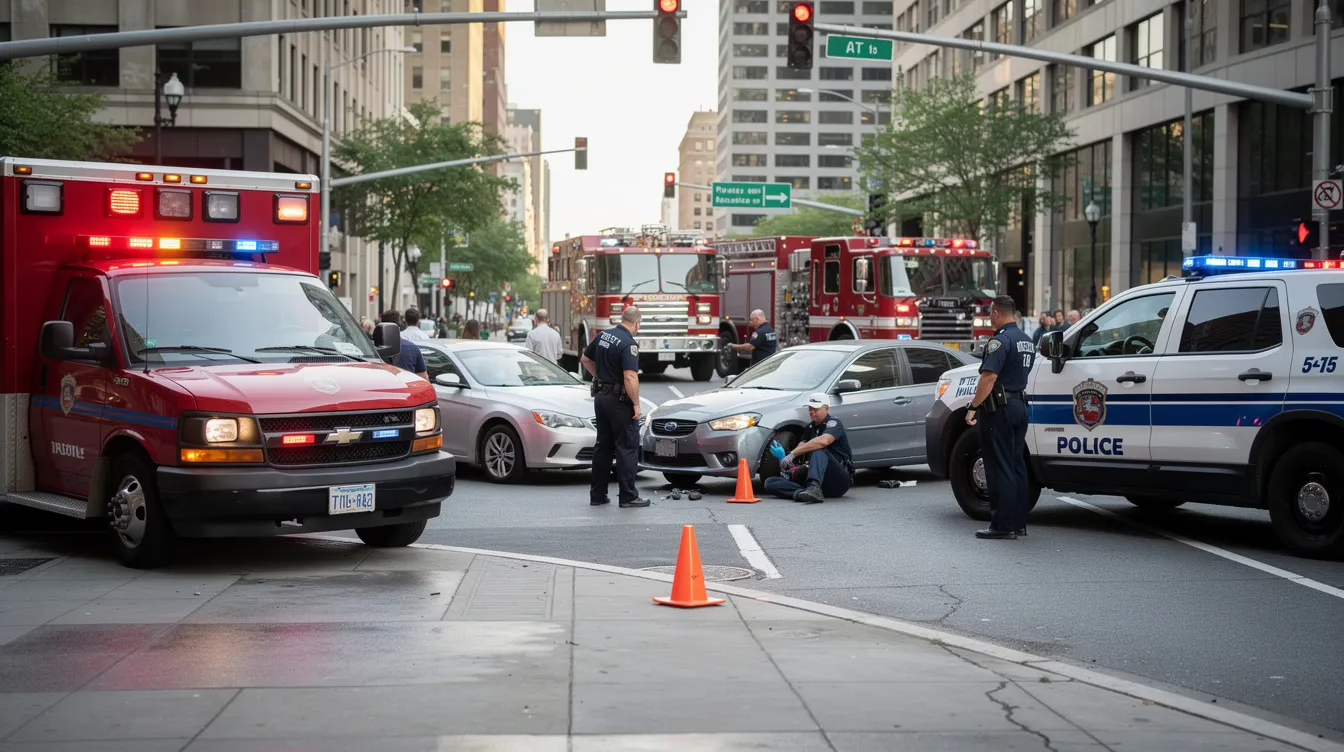
The steps you take immediately after a crash can significantly affect your ability to prove fault and recover compensation.
Notify your insurer promptly, but be cautious about recorded statements, since what you say to an adjuster can affect your claim. If the crash caused serious injuries such as broken bones, traumatic brain injuries, or spinal damage, or if fault is disputed, consider speaking with an experienced car accident attorney who can evaluate your options.
Brake checking is illegal in Utah under reckless driving, aggressive driving, and road rage statutes, even though no law uses the term by name. Fault depends on specific evidence: who acted intentionally, who violated safe following-distance laws, and what proof exists. Utah’s comparative negligence system means both the brake-checking driver and the tailgating driver can share responsibility, and your ability to recover depends on keeping your fault below 50 percent. If you were involved in a brake-checking or tailgating crash, take these steps:
This is general information, not legal advice. For a free, 24/7 consultation about a brake-checking or tailgating crash, contact Robert J. DeBry & Associates.
Yes. While Utah has no statute that uses the phrase brake checking, the behavior is illegal under reckless driving law (Utah Code 41-6a-528) and can trigger enhanced penalties under Utah’s road rage law (Utah Code 76-3-203.17). A brake-checking driver acts with willful or wanton disregard for safety and can face misdemeanor or felony charges.
Fault depends on the circumstances. If the lead driver intentionally brake-checked without a legitimate reason, that driver may bear primary fault. Both drivers can share liability, though, and the tailgating driver may share fault for following too closely. Dashcam footage, witness statements, and police reports determine how fault is allocated.
No. Many people assume the rear driver is always at fault in a rear-end collision, but that presumption can be overcome. If evidence shows the lead driver deliberately slammed the brakes as an act of road rage or aggression, liability can shift to the brake-checking driver.
Stay calm, move to safety, and call 911 if a crash occurred. Do not admit fault. Document the scene with photos, collect witness contact information, and preserve any dashcam footage. Seek medical attention even for seemingly minor injuries, and contact a personal injury attorney to discuss your options.
Under Utah Code 78B-5-818, you can recover damages as long as you are less than 50 percent at fault, and your compensation is reduced by your fault percentage. If you are 50 percent or more at fault, you cannot recover anything.
Proving brake checking typically requires dashcam footage, video from nearby vehicles or surveillance cameras, witness statements, police reports documenting aggressive driving, electronic data from vehicle systems showing sudden braking, and vehicle damage analysis. It can be difficult to prove without witness testimony or dashcam footage, so documentation is critical.
Yes. Brake checking can create civil liability for damages caused in a crash. If you were injured, you may file a personal injury claim against the brake-checking driver to recover medical costs, lost wages, pain and suffering, and other losses, with Utah’s comparative negligence rules determining how much you can recover.
Penalties range from traffic infractions to criminal charges. Reckless driving is a Class B misdemeanor with potential jail time of up to six months, and under Utah’s road rage enhancement the charge can be escalated, potentially to a felony if serious bodily injury results. Drivers may also face fines, citations, and points on their driving record.
Esta es información general, no asesoramiento jurídico. Ponerse en contacto con Robert J. DeBry & Associates o enviar un formulario no establece una relación abogado-cliente.