

What Evidence Do You Need to Win a Personal Injury Claim in Utah?
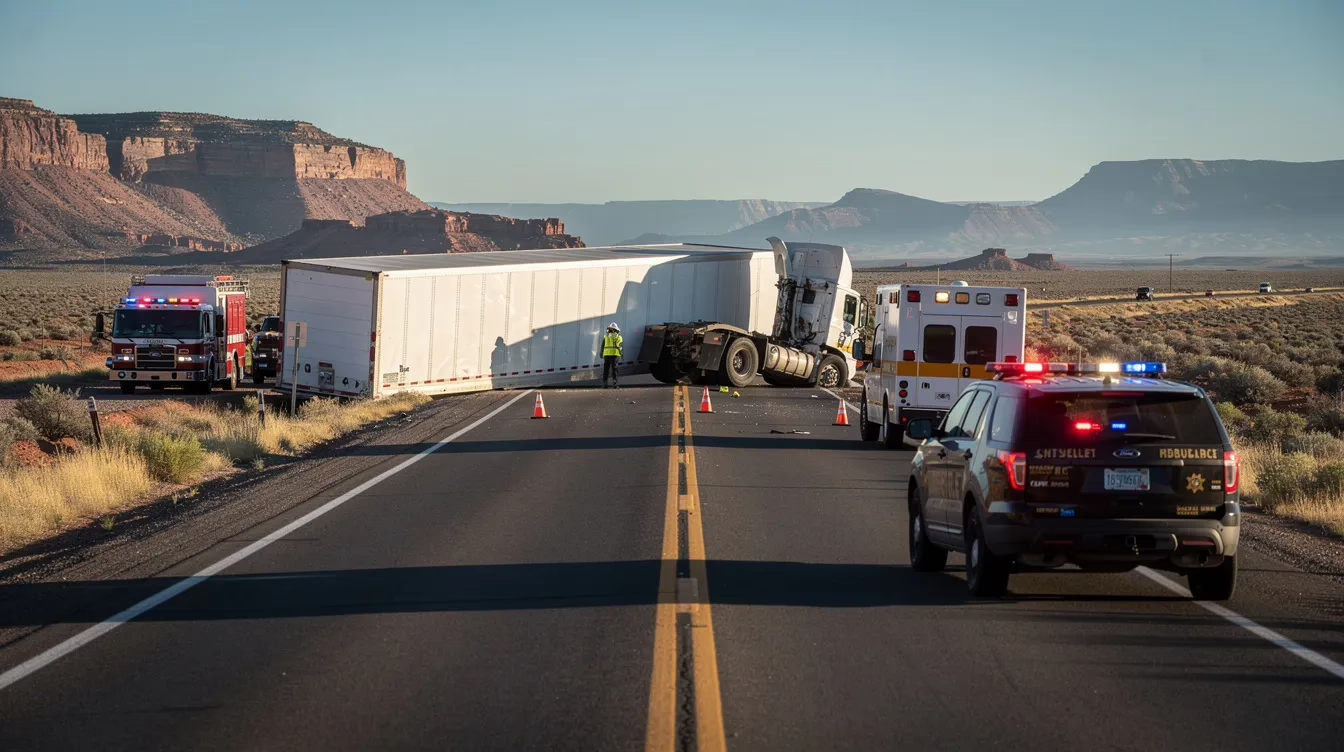
A personal injury claim is only as strong as the evidence behind it. You may know exactly what happened, but knowing and proving are two different things. In Utah, the difference between a full recovery and a denied claim often comes down to what you can document.
To win a Utah injury claim you generally need evidence of four things: that the other party was at fault, that you were injured, what your injuries cost you, and that the crash caused those injuries. The stronger and earlier your documentation, the stronger your claim.
The four things your evidence has to prove
Every personal injury claim rests on the same foundation. Your evidence needs to establish liability (someone else was at fault), injury (you were actually hurt), damages (the injury cost you money and quality of life), and causation (the accident is what caused the injury). Weakness in any one of these is where insurers attack.
The evidence that wins claims
- The police or incident report: an official, contemporaneous record of what happened and who was involved.
- Photos and video: the scene, vehicle damage, your visible injuries, road and weather conditions.
- Medical records and bills: the backbone of any injury claim, tying your treatment to the crash.
- Witness contact information and statements: neutral accounts that corroborate your version of events.
- Proof of lost income: pay stubs, employer letters, or tax records showing missed work.
- A journal of your recovery: a simple record of pain, limitations, and missed activities over time.
How to protect your evidence from day one
Document the scene immediately
If you are able, photograph everything before vehicles are moved: damage, positions, signage, and injuries.
Get medical care and keep every record
Prompt treatment creates the medical evidence your claim depends on. Save every bill, report, and referral.
Preserve everything, change nothing
Keep the damaged vehicle, torn clothing, and any physical evidence as-is. Do not repair or discard until your claim is documented.
Talk to an attorney early
Some evidence such as traffic video, black-box data disappears quickly. A lawyer can move to preserve it before it is gone.
Evidence fades fast. Skid marks wash away, video is overwritten, and memories blur. The strongest claims are built by people who documented early, or called a lawyer who did it for them.
Frequently asked questions
What is the single most important piece of evidence?
There is no one piece, but medical records are usually the backbone. They establish both your injury and its connection to the crash. Strong claims combine medical proof with documentation of fault.
What if I didn’t take photos at the scene?
You can still build a strong claim from the police report, medical records, and witness accounts. An attorney can also track down traffic or surveillance video before it is erased.
Do I need an expert witness?
Not always. Many claims are proven with records and testimony alone. In disputed or serious cases, accident reconstruction or medical experts can make the difference. Your attorney will advise.
Build your claim on solid ground
Let Robert J. DeBry & Associates review your evidence and tell you where your claim stands. Free. Serving injured Utahns statewide, with no fee unless we win.
This article is general information about the personal injury process in Utah and is not legal advice. Reading it does not create an attorney-client relationship. Speak with a licensed Utah attorney about the specific facts of your case.