

It is rarely too late to get a lawyer for a Utah car accident until the statute of limitations expires, which is generally four years from the accident date for personal injury. Once that deadline passes, your right to file is almost always gone. But waiting, even within the deadline, can weaken your case, reduce compensation, and make the claim harder to pursue.
This guide covers the deadlines that apply to Utah car accident claims, including personal injury, property damage, and wrongful death, and explains how waiting affects evidence, witnesses, and case value. Whether your crash happened last week or several years ago, understanding these timelines is essential to protecting your rights. It is general information, not legal advice.

A statute of limitations is the legal deadline for filing a lawsuit. Once that window closes, your claim is time-barred and the court will almost certainly dismiss it. These deadlines exist to keep things fair: over time, evidence deteriorates, memories fade, and defendants deserve eventual certainty. In Utah, the deadlines are codified in Title 78B, Chapter 2 of the Utah Code, and knowing which one applies is the single most important factor in deciding whether it is too late to get a lawyer.
Utah Code 78B-2-307 gives you four years from the date of the accident to file a personal injury lawsuit, which applies to most car accident injuries, including soft tissue injuries, broken bones, and back and neck injuries. Utah’s deadlines by claim type are four years for personal injury, three years for property damage, and two years for wrongful death from the date of death under Utah Code 78B-2-304. Utah courts also recognize a discovery-rule exception: if your injuries did not appear until months or years later, the clock may not start until you discovered, or reasonably should have discovered, the injury and its connection to the crash. That exception is not automatic, and courts require proof you could not have discovered the injury sooner through reasonable diligence.
Separate from the statute of limitations, insurers typically require you to report an accident within a reasonable time or a specific period set by your policy, often 30 days, which matters especially when the at-fault driver is uninsured and you rely on your own policy. Under Utah Code 41-6a-401, drivers in an accident with property damage of $2,500 or more must immediately exchange information and notify law enforcement. Missing an insurance reporting deadline does not automatically bar a lawsuit, but an insurer may use a late report to argue it could not properly investigate and may reduce or deny benefits, so be cautious about recorded statements or signing releases before you understand your rights.
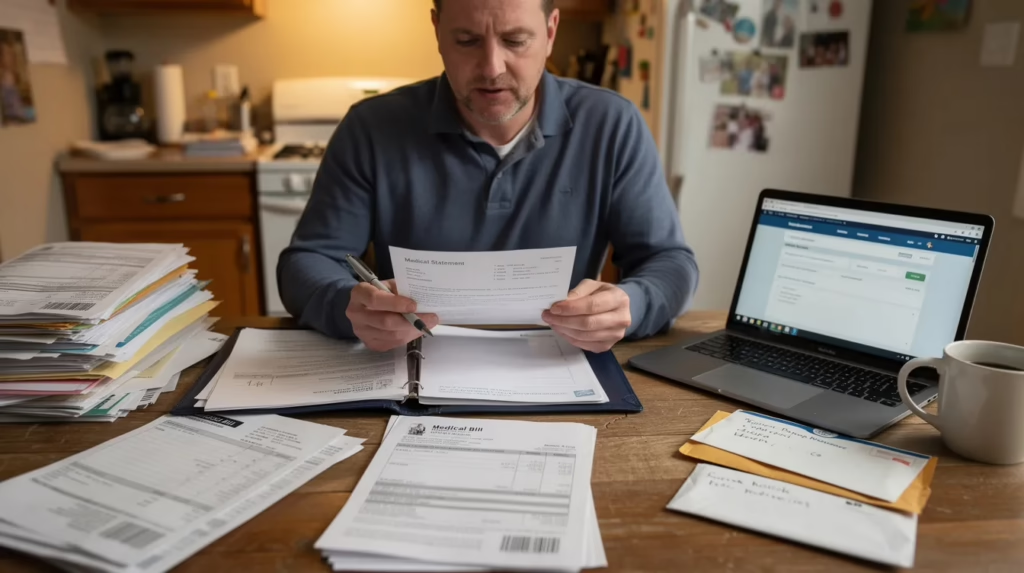
Even well within the statute of limitations, waiting too long erodes the practical building blocks of a strong claim.
Accident-scene evidence disappears quickly. Skid marks wash away, debris gets cleared, and vehicles get repaired or destroyed, often before anyone documents the full damage. Security-camera and dashcam footage is typically kept only 30 to 90 days before being overwritten, and once it is gone it cannot be recovered. An attorney hired early can dispatch investigators to photograph the scene, preserve physical evidence, and send preservation notices to businesses or agencies that may hold relevant video.
Witness memories about speed, lighting, signals, and impact dynamics become less reliable within days to weeks, and witnesses move, change numbers, or become uncooperative. Without representation, witnesses may be contacted first by the insurer, leading to incomplete or skewed statements. Having counsel involved early ensures witness statements are documented while recollections are fresh.
Gaps in treatment undermine claims of injury severity. If you delay care, the insurer will argue your injuries were minor or caused by something else, and pre-existing-condition defenses grow stronger when there is a gap between the crash and your first visit. Prompt records establish a clear connection between the crash and your injuries, which matters especially for soft tissue injuries and herniated discs that may not produce obvious symptoms right away.

The impact of timing depends on how long you have waited.
This is the optimal window. An attorney can dispatch investigators, preserve camera footage before it is overwritten, contact witnesses while memories are fresh, keep you from making damaging recorded statements, and coordinate your medical treatment for proper documentation from day one. Reaching out soon after a crash also gives you time to weigh your options before you decide how to proceed.
Cases are still strong at this stage, particularly if you sought prompt treatment and documented your injuries, since treatment patterns are established and causation is clearer. Some physical evidence may be lost and camera footage is almost certainly gone, and the insurer may have developed its defense, but many attorneys can still build a compelling case from existing medical records, the police report, and available documentation.
Significant challenges arise here. Documentation gaps need explaining, and an attorney may need reconstruction experts or specialty medical opinions to fill evidentiary holes, which increases case expenses. If symptoms were delayed, the discovery rule may extend your window. Some claimants in this range have harmed their case by signing releases or accepting partial payouts. If a release was signed, it is likely too late for that claim, but if no release was signed and the deadline has not passed, an attorney can still evaluate your options.
This is the emergency zone. You need an attorney immediately, not to negotiate but to file a protective lawsuit before the statute runs out. Most attorneys will still take cases here, but with serious caveats: minimal time for investigation, possibly sparse evidence, little room for pre-suit negotiation, and a compressed timeline that limits settlement leverage. For government-entity claims, remember the notice of claim is required within one year on top of the statute of limitations.
Many people delay because they worry about cost, but the timing of when you hire a lawyer does not typically change the fee structure, though it can affect the expenses required to build your case.
Most Utah car accident lawyers work on a contingency fee basis, so you pay nothing upfront and the attorney receives a percentage of your recovery only if the case succeeds. No fee unless we win your case. An attorney can help you understand and calculate the full value of your damages, including medical expenses, lost wages, and pain and suffering, through a free consultation, available 24/7.
While the contingency percentage generally stays the same regardless of when you hire an attorney, delayed cases often cost more to develop, requiring expedited reconstruction experts, specialty medical opinions to establish causation, rush investigation, and accelerated discovery. These expenses are typically deducted from the gross recovery before the contingency percentage is applied, so earlier engagement usually means lower overall case expenses. A lawyer can also negotiate medical liens against your settlement, potentially increasing your net recovery.
Even if you have waited longer than ideal, there are strategies for overcoming timing-related obstacles.
A denial does not mean your case is over. If the statute of limitations has not expired, an attorney can file a lawsuit, conduct formal discovery, and pursue your claim in court. A denial often reflects the insurer’s bet that an unrepresented person will accept the decision, not that the claim lacks merit. Navigating insurance claims with legal counsel can change the outcome entirely.
When witnesses have moved or become unavailable, attorneys rely on the police report, accident reports filed under Utah Code 41-6a-402, and expert reconstruction, and can use public records, social media, and subpoenas to locate missing witnesses. Even secondary sources, such as family or coworkers who heard the person describe the crash, may provide useful testimony.
If your records are incomplete, an attorney will obtain all available hospital, clinic, therapy, and imaging records, and expert medical testimony can connect your injuries to the crash using typical injury-progression patterns, which is especially relevant for delayed-onset conditions. Continuity of care with the same doctor over time also strengthens the causal connection.
If the deadline is near, the most important step is to file a protective lawsuit immediately, which preserves your rights even as investigation and negotiation continue. Once filed, you and your attorney can still pursue a settlement to avoid trial if possible. Understanding how long you have to file is critical-missing deadlines can permanently bar your recovery.
While it is rarely too late to get a lawyer within Utah’s four-year statute of limitations, earlier action significantly strengthens your position, because evidence disappears, memories fade, and insurers build their defenses with every passing week. Here is what to do right now:
This is general information, not legal advice. Utah’s four-year window is comparatively generous, but that should not encourage waiting, since every day of delay narrows your path to full recovery. For a free, 24/7 case evaluation, contact Robert J. DeBry & Associates.
It is rarely too late until Utah’s statute of limitations expires, which is generally four years from the accident date for personal injury under Utah Code 78B-2-307. Once that deadline passes, the court will almost certainly dismiss the case. Property damage has a three-year deadline, wrongful death a two-year deadline, and government claims require a notice of claim within one year.
Not every minor crash needs a lawyer, but a free consultation costs nothing and helps you understand your options. Consider representation if injuries are more than minor, fault is disputed, symptoms appear later, or the insurer denies or undervalues your claim.
It can. Even within the deadline, delay lets scene evidence disappear, camera footage get overwritten (often within 30 to 90 days), and witness memories fade, and gaps in medical treatment give insurers room to dispute causation. Earlier involvement preserves evidence and usually means lower case expenses.
Yes, as long as the statute of limitations has not expired and you have not signed a release. An attorney can file suit, conduct discovery, and pursue the claim in court. If you already signed a release for that claim, it is likely too late to pursue it further.
This is general information, not legal advice. Contacting Robert J. DeBry & Associates or submitting a form does not create an attorney-client relationship.