

Concussion symptoms can appear hours or days after a crash. Adrenaline and the stress of a collision often mask the early signs, so even mild symptoms that surface later can indicate a brain injury that needs evaluation. A concussion can also occur without any direct blow to the head, since the rapid forces in a crash make the brain shift inside the skull.
A concussion after a car accident is one of the most common and most frequently overlooked injuries Utah drivers face. This mild traumatic brain injury can occur even in low-speed collisions and even without a direct blow to the head, because the rapid acceleration and deceleration in a crash cause the brain to shift inside the skull. This guide covers concussion symptoms, the timeline for when they appear, how concussions are diagnosed and treated, and what Utah’s no-fault system means for your claim. It is general information, not legal or medical advice.

A concussion is a mild traumatic brain injury caused by biomechanical forces that make the brain move rapidly inside the skull, and it is a common result of the rapid acceleration or deceleration of the head in a crash. According to the National Library of Medicine, approximately 1.5 million traumatic brain injuries occur each year in the United States, and about 75 percent are classified as mild, meaning concussions. Unlike broken bones or visible wounds, a concussion often produces no outward signs, which is why many crash victims do not realize they were hurt until symptoms develop later.
During a rear-end collision, side-impact crash, or sudden stop, your body decelerates rapidly while your brain keeps moving inside the skull. That internal motion stretches and shears delicate neural tissue, disrupts the ionic balance of neurons, and temporarily impairs brain function. The mechanism is closely related to whiplash injuries, where the head whips forward and backward, except that concussion damage occurs at the cellular level inside the brain itself. Seat belts and airbags prevent many more serious injuries, but they cannot stop the brain from shifting within the skull during sudden deceleration.
A concussion differs from other head injuries mainly in severity and detectability. Skull fractures and brain bleeds typically show up on CT scans and MRIs, but a concussion often produces normal imaging because the injury occurs at a microscopic, cellular level rather than through structural damage. That distinction matters for diagnosis, treatment, and insurance claims, because the absence of findings on standard imaging does not mean the brain injury is not real or serious. The Mayo Clinic confirms that most concussions are mild and do not involve loss of consciousness, yet they still affect memory, balance, mood, and sleep.
Because the brain’s internal movement disrupts function at the cellular level, concussion symptoms can range from subtle physical discomfort to significant cognitive impairment, and not all of them appear at once. Delayed concussion symptoms can surface hours or days later, which is why ongoing self-monitoring after any crash is important.
Physical symptoms can include headache, dizziness, nausea, balance problems, blurred or otherwise impaired vision, ringing in the ears, and neck pain, along with increased sensitivity to light or noise and general fatigue. Cognitive symptoms can include difficulty concentrating and memory loss about the accident, and some people briefly lose consciousness, though most do not. Even mild symptoms should not be dismissed, and immediate medical attention is warranted for any loss of consciousness or worsening symptoms.
Many people walk away from a crash feeling relatively normal, only to notice symptoms hours or even days later, because adrenaline and the body’s stress response temporarily mask neurological symptoms. This pattern of delayed symptoms after a car accident is well-documented by both the CDC and Mayo Clinic. As adrenaline fades, cognitive symptoms often emerge: brain fog, difficulty concentrating, memory problems, and slowed thinking. Emotional symptoms can include irritability, anxiety, and mood changes, and sleep symptoms such as insomnia or excessive drowsiness frequently develop. These delayed symptoms are sometimes the most disruptive to daily life, even though they were not present at the scene.
When symptoms persist beyond two to four weeks, the risk of post-concussion syndrome rises, and the syndrome is generally diagnosed when symptoms last more than three months. Persistent symptoms can include chronic headaches, memory problems, ongoing mood swings, sleep disturbances, difficulty with work or daily tasks, and lasting anxiety or depression. Roughly 15 to 30 percent of concussion patients develop persistent symptoms that can last weeks, months, or longer. Warning signs that require emergency care include repeated vomiting, a worsening headache, seizures, increasing confusion, or slurred speech, and any worsening or persistent symptom warrants prompt medical evaluation.
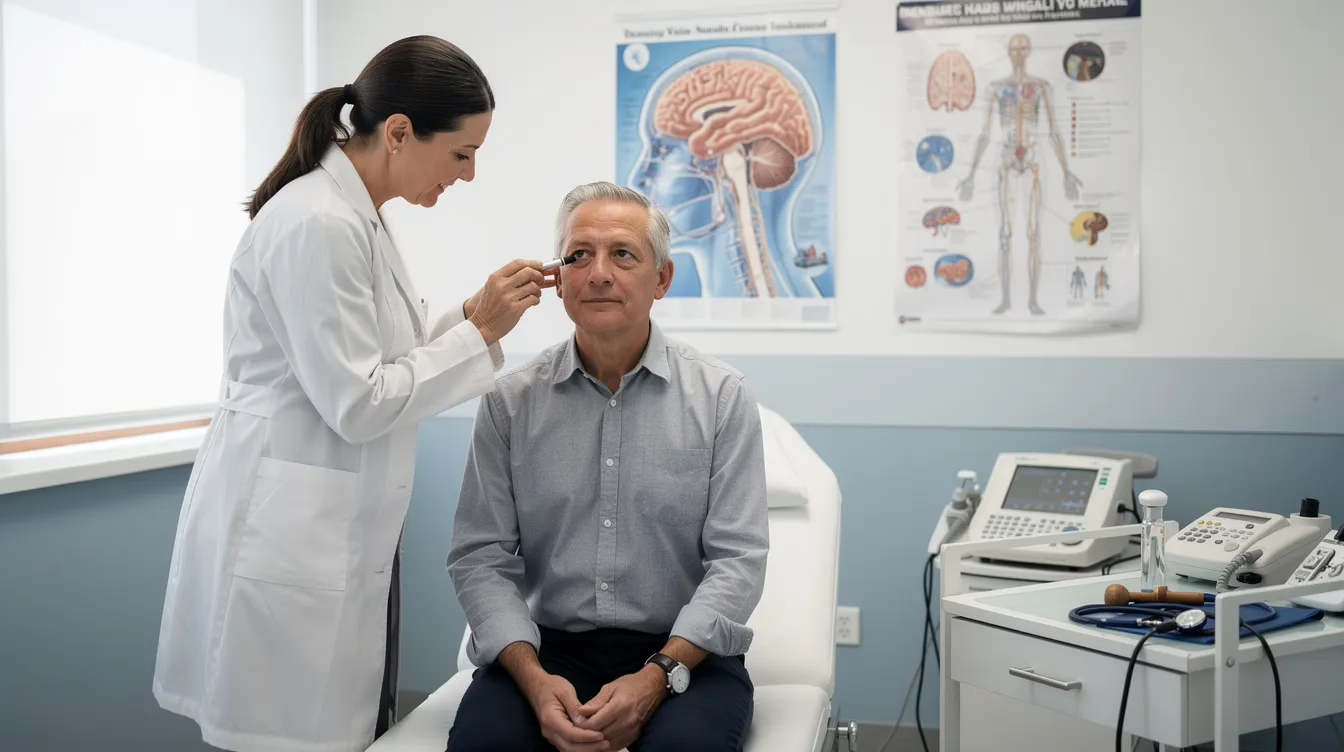
Proper diagnosis serves two purposes: guiding your treatment and recovery, and creating the medical records that establish a documented connection between the crash and your brain injury. Early evaluation and treatment can also improve persistent post-concussion symptoms.
If you have concussion symptoms, whether immediately after a crash or in the days that follow, seek evaluation from a healthcare provider. An emergency room visit is appropriate if you lose consciousness or have repeated vomiting, a worsening headache, or confusion. For other symptoms, a neurological evaluation within 24 to 48 hours is recommended. The diagnostic process typically includes:
Documenting your visit, symptoms, and test results creates a timeline that is critical if you later pursue a concussion claim.
Most people recover within a few weeks, though some experience persistent symptoms. Initial treatment usually includes physical and cognitive rest for 24 to 48 hours, followed by a gradual return to normal activities, and you should avoid a second head injury before you have fully recovered. A general recovery arc looks like this:
Recovery is highly individual, and when symptoms linger, multidisciplinary care often helps, combining aerobic exercise with physical therapy for neck and vestibular issues and cognitive therapy for persistent brain fog or memory problems. If symptoms persist, your provider may recommend neuropsychological testing to formally document cognitive deficits, which becomes especially relevant under Utah’s no-fault system when pursuing claims beyond basic PIP coverage.
Concussions can complicate a car accident claim. Under Utah’s no-fault system, your own Personal Injury Protection (PIP) coverage is the first source of payment, covering up to $3,000 per person in medical expenses under Utah Code 31A-22-307 regardless of fault. When bills exceed that amount, or when you seek compensation for pain, suffering, and lost quality of life, additional legal thresholds apply.
Because delayed concussion symptoms are common, insurers may question the severity of a claim or argue that symptoms appearing days later came from something other than the crash. That is why early documentation is essential: seeing a provider promptly, even for mild symptoms, creates a record linking your symptoms to the collision, and gaps in that record give insurers room to deny or reduce your claim. For guidance on communicating with adjusters, see what to say to an insurance adjuster after a car accident in Utah.
Under Utah Code 31A-22-309, recovering non-economic damages such as pain and suffering requires meeting the serious-injury threshold. A concussion may qualify if it results in loss of consciousness, protracted loss or impairment of a mental faculty, or a medically determined permanent impairment. A documented permanent impairment rating can support a claim that your concussion meets the threshold. A mild concussion that resolves quickly may not qualify, but persistent post-concussion syndrome with documented cognitive or emotional impairment may.
Inconsistent care is one of the most common reasons concussion claims lose value. If you stop attending follow-ups or leave gaps between visits, insurers will argue your symptoms were not serious enough to need ongoing treatment. The fix is consistent follow-up care: attend every appointment, report all ongoing symptoms including sleep disturbances, mood swings, brain fog, and pain, and ask your provider to document functional limitations. Utah’s statute of limitations for personal injury claims is four years from the date of the accident, but building a strong claim requires early and ongoing action rather than waiting.

A concussion is a serious brain injury that demands prompt medical attention and careful documentation, both for your health and for any potential claim. The steps you take in the first days and weeks directly affect your recovery and your legal options:
This is general information, not legal advice. For a free, 24/7 case evaluation, contact Robert J. DeBry & Associates.
Concussion symptoms can appear immediately or be delayed for hours to days. Adrenaline and shock often mask early signs, so symptoms develop gradually as the stress response subsides. That is why a medical evaluation after any car accident matters even if you feel fine at first.
Yes. A concussion can occur without a direct blow to the head. The rapid acceleration and deceleration in a crash cause the brain to move inside the skull, which can stretch and disrupt neural tissue even if your head never contacts the steering wheel, window, or any surface.
If you have a worsening headache, repeated vomiting, increasing confusion, seizures, or loss of consciousness, seek emergency care immediately, as these can signal a more serious brain injury. For other worsening symptoms, such as increasing difficulty concentrating, persistent brain fog, or worsening sleep, contact your provider for a prompt neurological evaluation.
Utah requires PIP coverage of up to $3,000 per person for medical expenses after a crash, regardless of fault. That covers initial concussion treatment including emergency room visits, imaging, and follow-up care. If your bills exceed $3,000 or you seek non-economic damages like pain and suffering, your injury must meet Utah’s serious-injury threshold under Utah Code 31A-22-309.
Consider contacting an attorney if symptoms persist beyond two to three weeks, if you are accumulating significant medical expenses, if the concussion has caused you to miss work, or if your provider has diagnosed post-concussion syndrome or assigned an impairment rating. An attorney can help you understand whether your injury meets Utah’s serious-injury threshold and what compensation may be available.
This is general information, not legal advice. Contacting Robert J. DeBry & Associates or submitting a form does not create an attorney-client relationship.