

When a pedestrian is hit by a car in Utah, the settlement amount depends on injury severity, available insurance coverage, how fault is assigned, and the strength of the medical and legal documentation supporting the claim. There is no single average settlement for pedestrian hit by car cases because every pedestrian accident case turns on its own facts. What matters is understanding how Utah law builds the value of a pedestrian accident claim and which factors push that value higher or lower.
This page explains what a pedestrian accident claim can cover, which insurance pays first, what drives settlement value, and why these claims often take longer than people expect. Readers will come away understanding:
A pedestrian accident claim in Utah can include both economic damages and non-economic damages under personal injury law. Economic damages cover measurable financial losses from the accident. Non-economic damages compensate for intangible losses like pain.
Medical expenses make up the largest category in most pedestrian accident settlements. Medical expenses include costs for treatment and rehabilitation: emergency room visits, hospital stays, surgeries, physical therapy, prescription medications, prosthetics, and doctor visits over the full recovery period, and compensation often rises with the seriousness of the bodily injury. Future medical bills for ongoing care or additional procedures are also recoverable when supported by a medical report or physician testimony.
Lost wages compensation includes immediate and future income loss. If a pedestrian injury keeps someone out of work for weeks or months, the claim accounts for that lost income. When the injury reduces the person’s ability to earn what they earned before, loss of earning capacity becomes part of the claim as well.
Pain and suffering can significantly increase the overall settlement claim value. Utah law allows an injured party to seek non-economic damages for physical pain, emotional distress, disfigurement, permanent disability, and loss of quality of life. These damages do not have a statutory cap in Utah. Emotional distress can be included in non-economic damages claims, and for serious injuries like spinal cord injuries or traumatic brain injury, this category can represent a substantial portion of the total settlement.
Property damage covers personal belongings destroyed in the impact, such as a phone, laptop, glasses, or clothing.
Utah does allow punitive damages in limited circumstances. Punitive damages penalize reckless drivers beyond compensatory damages, but they require proof of willful or malicious conduct, not just ordinary negligence.
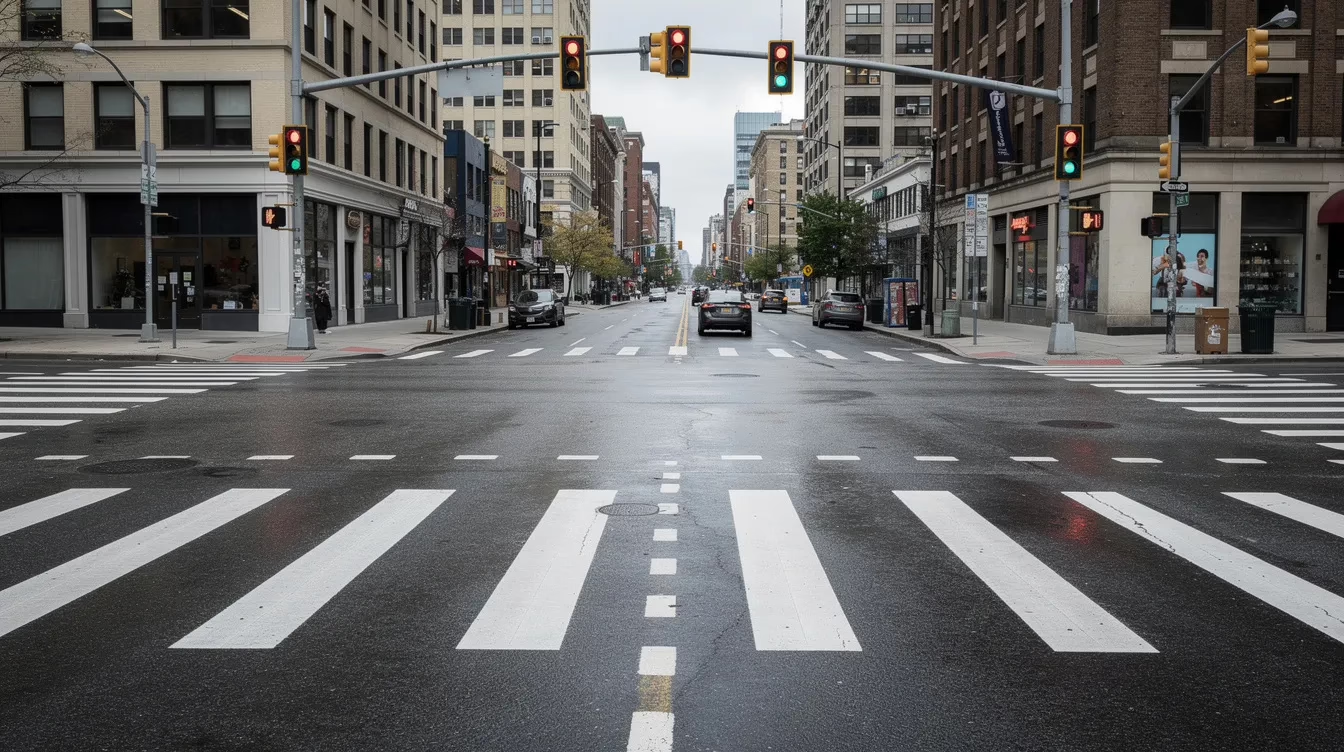

One of the most common questions after a pedestrian is hit by a car is: who pays the medical bills while the claim is pending?
Utah is a no-fault state for auto insurance purposes, which means personal injury protection (PIP) pays first, regardless of who caused the accident. Under Utah’s no-fault law, PIP coverage is mandatory in automobile insurance policies and applies even when the injured person was a pedestrian rather than a vehicle occupant. Utah Code section 31A-22-308 was amended to explicitly include pedestrians injured in Utah by a described motor vehicle under PIP eligibility.
PIP must provide at least a specified minimum amount per person for medical expenses and related coverages, including ambulance, hospital, and rehabilitation costs. PIP also provides for a portion of lost gross income and loss of essential services, generally for up to 52 weeks.
Here is the critical distinction for pedestrian claims: PIP is a first-party coverage, meaning it comes from the auto insurance policy covering the vehicle involved or the pedestrian’s own household auto policy. How exactly PIP routes between policies when the injured person was on foot rather than in a vehicle is a question that depends on the specific policies in play. Anyone in this situation should review their own insurance coverage and the driver’s insurance coverage with a pedestrian accident lawyer to determine which policy is primary.
PIP has limits, and it does not cover non-economic damages like pain and suffering. To pursue a personal injury claim for those broader damages against the at fault driver, Utah Code section 31A-22-309 requires meeting an injury-severity threshold. The injured pedestrian must show at least one of the following: death, dismemberment, permanent disability or impairment based on objective findings, permanent disfigurement, a bone fracture, or medical expenses exceeding $3,000.
If the injury does not meet any of those thresholds, the claim may be limited to PIP benefits only, and the injured pedestrian cannot pursue non economic damages through a lawsuit.
Not every at fault driver carries adequate liability coverage. Utah requires minimum liability insurance, but those minimums may be far below the actual cost of severe injuries. Insurance policy limits often cap the maximum recovery amount available to victims, and when the driver’s policy is at minimum limits, the gap between what is owed and what insurance will pay can be significant.
When the at fault driver is an uninsured driver or flees the accident scene entirely in a hit-and-run, uninsured motorist coverage becomes essential. Under Utah Code section 31A-22-305, a covered person injured by an uninsured or underinsured vehicle may recover uninsured motorist or underinsured motorist benefits through their own policy. Pedestrians who carry auto insurance with uninsured motorist coverage on their own policy may be able to access those benefits even though they were not driving at the time.
This is one reason insurance professionals recommend carrying your own uninsured motorist coverage at levels above state minimums. Insurance coverage limits directly affect settlement amounts, and when the at fault party has no insurance or minimal insurance, the pedestrian’s own coverage may be the only realistic source of fair compensation.
If the at fault driver has personal assets beyond insurance, those may become relevant, but collecting against a driver’s personal assets is more difficult and uncertain than recovering from an insurance company.
For hit-and-run situations specifically, immediate steps matter. Documenting the accident scene, obtaining witness statements, and filing police reports all improve the chances of identifying the driver or successfully claiming uninsured motorist benefits.
There is no reliable single number that represents an average settlement amount for pedestrian accidents, because a pedestrian settlement can vary enormously based on the specific facts of the case. Factors such as state law can significantly influence pedestrian accident settlements. Here is what actually moves the number.
Injury severity is the single most important factor. Minor injuries like bruises and soft-tissue strains produce different outcomes than broken bones requiring surgery or catastrophic injuries like traumatic brain injury or spinal cord injuries requiring lifelong care. Higher medical expenses typically result in larger settlements because the economic loss is greater and provable.
Permanence matters enormously. When a medical provider documents permanent disability or lasting impairment based on objective findings, the claim includes not just past medical treatment but future medical care, reduced earning capacity, and ongoing pain and suffering. Settlement value is influenced by the quality of legal documentation and evidence, and medical records are essential proof of injuries after an accident because they also help show the accident caused the injuries being claimed.
The longer and more intensive the medical treatment, the more thoroughly the injury is documented. Complete medical records showing consistent treatment from the accident through maximum medical improvement build a stronger claim than records with gaps. Gaps in treatment give the insurance company room to argue that the injuries are not as severe as claimed or were caused by something other than the pedestrian accident.
Document all financial losses related to the accident for your claim. Lost wages from missed work, reduced hours during recovery, and permanent changes to earning capacity all require documentation: pay stubs, employer letters, tax returns, and sometimes vocational expert testimony.
When the evidence clearly shows driver negligence, such as running a red light, speeding through a crosswalk, or distracted driving, the claim is stronger. When fault is disputed, the insurance company will use that uncertainty to reduce the settlement amount. Liability and comparative fault can impact the final settlement amount.
Even when injuries are severe and liability is clear, the at fault driver’s liability coverage sets a practical ceiling on what the insurance company will pay. Insurance limits matter, and exploring all available sources of coverage, including underinsured motorist coverage, is essential for pursuing fair settlement value.
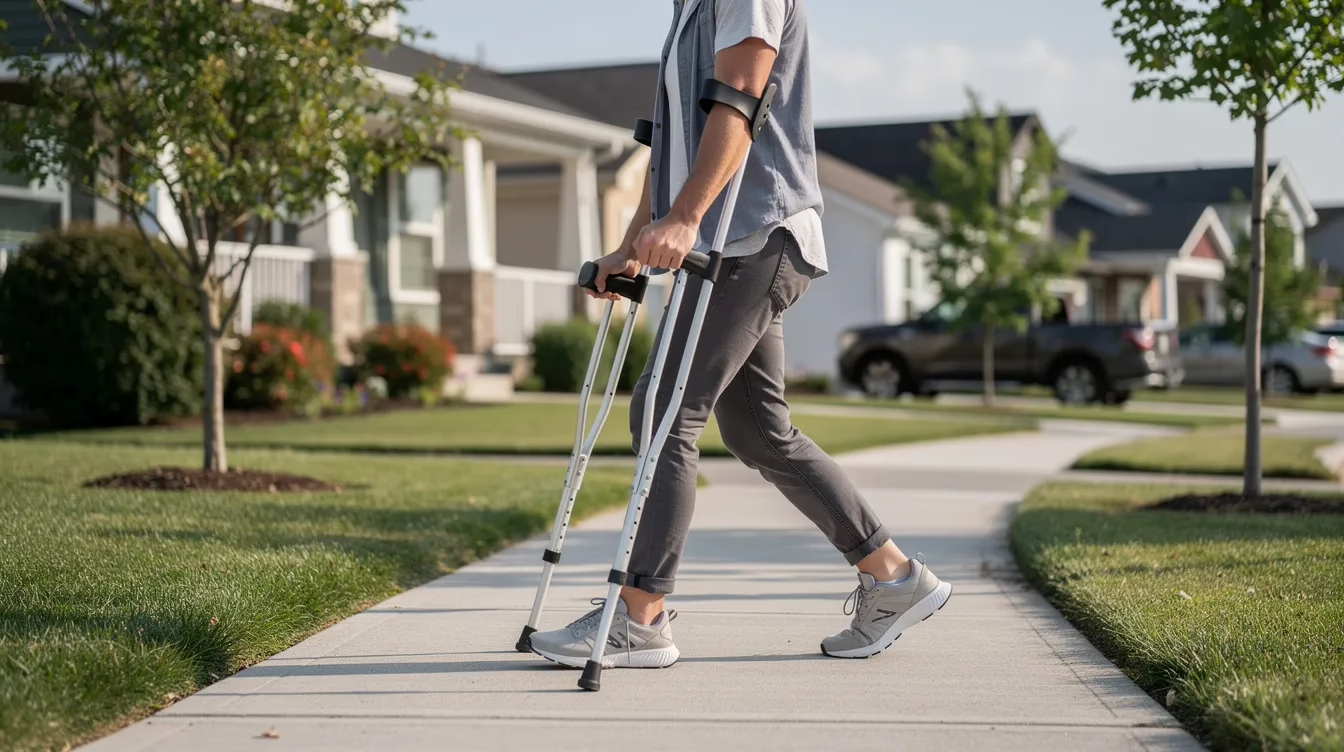
Pedestrian car accidents tend to produce more severe injuries than collisions between two vehicles, for an obvious reason: a person on foot has no seatbelt, no airbag, no crumple zone, and no metal frame absorbing impact energy. The human body absorbs the full force of the collision.
This means pedestrian accident cases disproportionately involve broken bones, spinal cord injuries, traumatic brain injury, internal organ damage, and other serious injuries. The severity difference affects every aspect of the claim: medical expenses are higher, recovery periods are longer, permanent disability is more common, and non-economic damages for pain and suffering are correspondingly greater. Pain and suffering can significantly increase the overall settlement claim value in these cases precisely because the injuries are so much more physically devastating.
This severity pattern also explains why the settlement process for pedestrian claims frequently takes longer. Treatment timelines stretch further, and determining maximum medical improvement requires more time and more specialist evaluations.
Utah follows a modified comparative negligence system under Utah Code section 78B-5-818. If the injured pedestrian is found to share some responsibility for the accident, their recovery is reduced by their percentage of fault assigned. Pedestrians may share fault, reducing their compensation proportionally.
If the pedestrian’s fault reaches 50 percent or more, they cannot recover compensation at all under Utah law. Below that threshold, the reduction is proportional. If a pedestrian is found 20 percent at fault, the recovery is reduced by 20 percent.
Insurance companies often assign fault percentages to reduce payouts. Common pedestrian fault scenarios include crossing outside a marked crosswalk, entering the roadway suddenly in front of an approaching vehicle, or ignoring traffic signals. Utah Code section 41-6a-1002 and section 41-6a-1009 establish duties for both drivers and pedestrians. Drivers must yield to pedestrians in marked crosswalks and slow or stop when necessary. Pedestrians must not suddenly leave a curb into the path of an oncoming vehicle when doing so creates an immediate hazard.
Collecting strong evidence improves your chances of a fair settlement, particularly when fault is disputed. Surveillance footage, police reports, witness statements, and accident scene documentation can all counter attempts by the insurance company to shift blame onto the pedestrian.
One of the most searched questions about pedestrian accident settlements is how long the process takes. The honest answer is that the settlement process cannot produce a reliable number until medical treatment stabilizes.
Maximum medical improvement (MMI) is the point at which a treating physician determines that the injury has healed as much as it will, or that any remaining impairment is permanent. Until that point, neither the injured pedestrian nor the insurance company knows the full scope of medical expenses, future medical needs, or whether the injury will result in permanent disability. Settling before MMI almost always means leaving money on the table. Avoid early settlement offers if you want to maximize compensation.
Utah Code section 78B-2-307 sets a four-year statute of limitations for personal injury claims, including pedestrian accidents. That deadline is the outer boundary for filing a lawsuit, not a timeline for when settlement should happen. The deadline is not the timeline.
Claims involving government entities, such as a city bus or a state-owned vehicle, may have shorter notice requirements. Missing those deadlines can bar the claim entirely.
Several factors routinely extend pedestrian accident settlement negotiations beyond what people expect:
Risk tolerance influences whether to accept a settlement offer. Some injured pedestrians accept a lower offer to resolve the claim faster, while others pursue a higher settlement through extended negotiation or trial. An experienced attorney can help evaluate whether an offer represents fair compensation given the specific circumstances of the pedestrian accident case and negotiate effectively with the insurance company during extended settlement discussions.
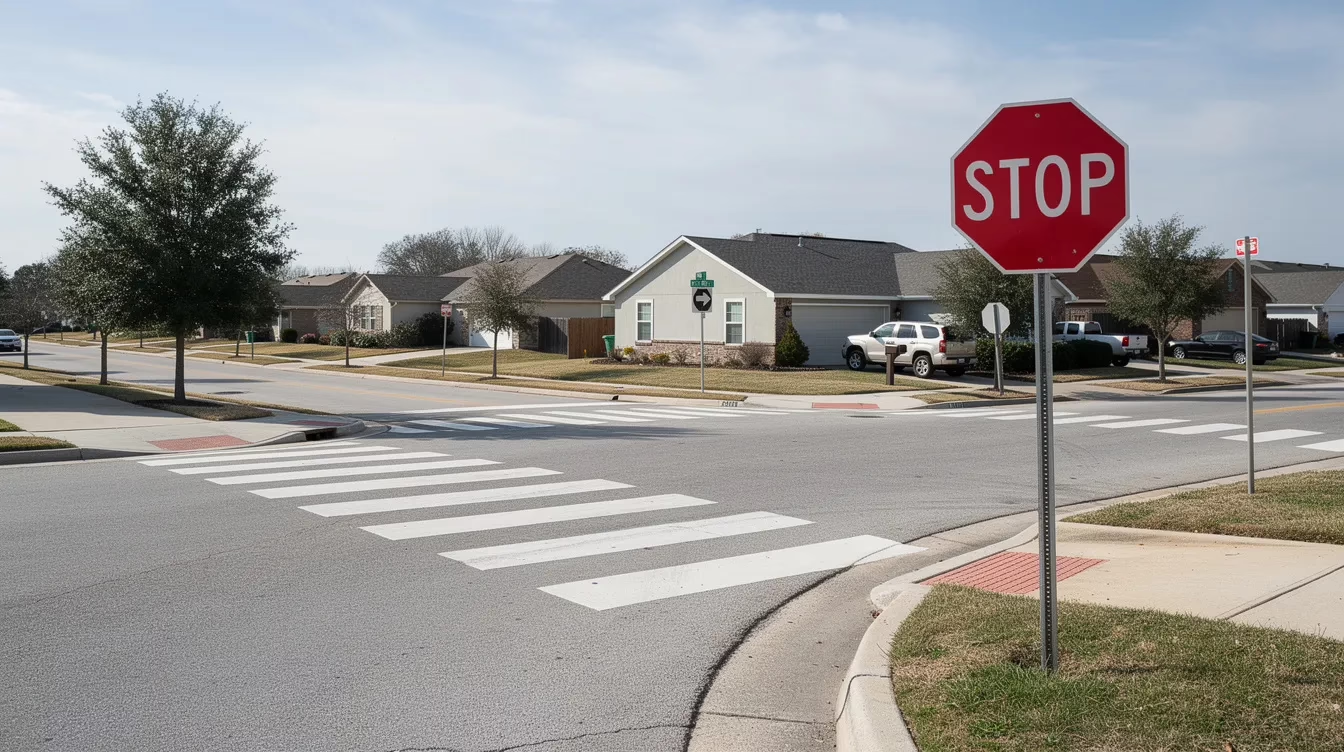
PIP benefits are claimed first. If the injury meets a severity threshold under Utah Code section 31A-22-309, the injured pedestrian can pursue a liability claim against the at fault driver for economic damages (medical expenses, lost wages, future medical care) and non-economic damages (pain and suffering, emotional distress, permanent disability). The total recovery is then reduced by any comparative fault assigned to the pedestrian and limited by available insurance coverage.
PIP coverage from the auto insurance policy involved typically pays first, regardless of fault. After PIP is exhausted, health insurance may cover ongoing costs. The at fault driver’s liability coverage can reimburse those expenses as part of a personal injury claim or lawsuit.
Yes. Under Utah Code section 31A-22-308, pedestrians injured by a motor vehicle in Utah are covered under PIP. The specific policy that is primary depends on the circumstances, which is worth reviewing with a personal injury lawyer.
There is no standard timeline. The claim cannot be accurately valued until medical treatment stabilizes at maximum medical improvement. Disputed fault, severe injuries, and coverage disputes all extend the process. The statute of limitations in Utah is four years, but that is a legal deadline, not a settlement timeline.
A pedestrian can pursue compensation for medical treatment (past and future), lost income, reduced earning capacity, pain and suffering, emotional distress, disfigurement, permanent disability, and property damage to personal belongings. In rare cases involving willful or malicious conduct, punitive damages may be available.
Uninsured motorist coverage on the pedestrian’s own auto policy may provide compensation. For hit-and-run accidents, filing police reports immediately and documenting everything at the accident scene is critical to preserving the claim.
Yes. Under Utah’s comparative negligence law, the recovery is reduced by the pedestrian’s percentage of fault. If the pedestrian is 50 percent or more at fault, they cannot recover compensation at all.
Utah law does not require legal representation, but pedestrian accident claims frequently involve disputed fault, complex insurance coverage questions, and medical lien negotiations. Most pedestrian accident attorneys offer a free consultation to evaluate the claim before any commitment is made. Hiring a lawyer can meaningfully affect the outcome of a claim, particularly when the insurance company is contesting liability or offering a low settlement.